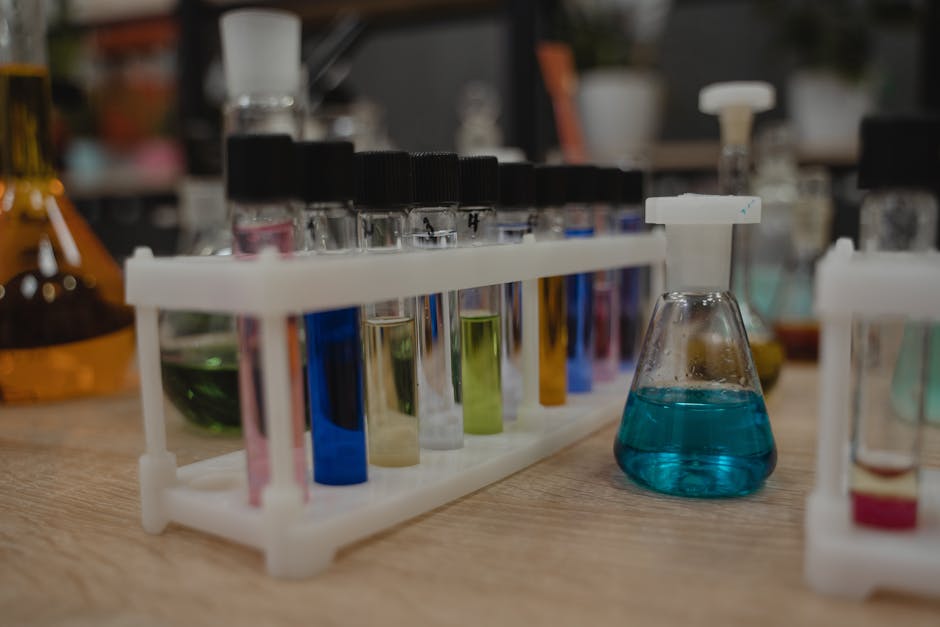
- Self-driving labs can perform over 100 chemical reactions in 24 hours, marking a significant turning point in experimental science.
- These labs use machine learning to adjust variables on the fly, optimizing yields with minimal waste in real-time.
- The emergence of self-driving laboratories could revolutionize pharmaceuticals, green chemistry, and advanced materials development.
- Traditional lab methods rely on manual tweaks and human bias, while self-driving labs can operate around the clock with precision and speed.
- This technology has the potential to accelerate discovery and reduce the time it takes to develop new compounds and materials.
In a single 24-hour cycle, an autonomous chemistry lab successfully executed and optimized more than 100 distinct chemical reactions—without a single researcher touching a pipette. Published in Nature on April 27, 2026, this milestone marks a turning point in experimental science: the emergence of self-driving laboratories capable of not only performing reactions but learning from them in real time. Unlike traditional labs, where weeks can pass between hypothesis and result, this system uses machine learning to adjust variables on the fly—temperature, catalysts, solvents—driving toward optimal yields with minimal waste. The implications stretch across pharmaceuticals, green chemistry, and advanced materials, suggesting a future where discovery is no longer bottlenecked by manual labor or human bias.
The Rise of the Self-Optimizing Laboratory

For decades, chemical synthesis has relied on iterative, labor-intensive processes, with chemists manually tweaking conditions to improve reaction efficiency. But as demand grows for faster development of drugs, sustainable polymers, and energy materials, traditional methods have struggled to keep pace. Now, advances in robotics, sensor integration, and artificial intelligence have converged to create fully autonomous labs that operate around the clock. What makes this new system different is not just its automation, but its closed-loop intelligence: it designs experiments, runs them, analyzes results via spectroscopy and chromatography, and then uses that data to refine the next round. Developed at a fraction of the cost of earlier prototypes—under $100,000—the platform democratizes access to high-throughput discovery, opening doors for smaller universities and startups.
Inside the Autonomous Reaction Engine

The system, built by a multidisciplinary team across the UK and Germany, integrates a robotic arm, microfluidic reactors, real-time mass spectrometry, and an AI engine trained on millions of known reactions. Users input a target molecule, and the platform begins with a broad set of plausible reaction pathways. Within hours, it narrows in on the most efficient route, adjusting stoichiometry, pH, and reaction time with precision unattainable manually. In one test, the lab optimized the synthesis of a common antipyretic compound, reducing reaction time by 40% and increasing yield by 28% compared to standard industrial protocols. Crucially, the system is chemistry-agnostic, having demonstrated success across organic synthesis, catalysis, and photochemical reactions. Its modular design allows rapid reconfiguration, enabling labs to switch focus from drug intermediates to battery electrolytes with minimal downtime.
Why AI-Driven Chemistry Changes Everything
The breakthrough lies not in hardware alone, but in the AI’s ability to navigate vast chemical decision spaces. Traditional optimization follows a one-variable-at-a-time approach, which is slow and often misses synergistic effects. In contrast, the system uses Bayesian optimization and reinforcement learning to model complex interactions between reagents and conditions. According to Dr. Elena Torres, a computational chemist at the Max Planck Institute not involved in the study, “This is the first platform that truly closes the loop between prediction and experimentation at scale.” Data from the Nature paper show the AI identified non-intuitive solvent-catalyst pairings that human experts had overlooked. These ‘dark reactions’—previously hidden in combinatorial complexity—could unlock pathways to more sustainable and selective syntheses, reducing reliance on rare metals and toxic byproducts.
Implications for Industry and Research
The ripple effects of autonomous labs will be felt most acutely in pharmaceutical development, where reaction optimization can shave months off timelines and save millions in R&D. But the impact extends beyond speed. By standardizing and de-risking synthesis, the technology could improve reproducibility—a persistent crisis in chemical research. Smaller labs without access to high-end instrumentation may now compete with industrial giants, leveling the innovation landscape. Environmental chemists see promise too: the system minimizes trial-and-error waste, aligning with green chemistry principles. However, challenges remain in scaling reactions from microfluidic volumes to industrial batches, and in ensuring the AI’s decisions are interpretable to human scientists who must validate and patent new processes.
Expert Perspectives
While many applaud the advance, some experts urge caution. Professor Kwame Adjei of Imperial College London warns that “over-reliance on black-box AI could erode fundamental chemical intuition.” Others, like Dr. Sofia Lin at MIT, argue the technology augments rather than replaces chemists: “It handles the grind, freeing humans to focus on creative design and ethical oversight.” Regulatory bodies also face new questions—how to certify AI-discovered syntheses, or assign intellectual property when an algorithm proposes a novel pathway. These debates mirror earlier shifts in genomics and autonomous vehicles, suggesting that policy must evolve alongside the science.
Looking ahead, the next frontier is integrating autonomous labs with digital twin models—virtual replicas of physical systems—that could simulate months of experimentation in silico before lab deployment. Researchers are also exploring federated learning, where multiple self-driving labs share insights without exposing proprietary data. As AI becomes a co-pilot in discovery, the definition of a ‘chemist’ may expand to include algorithms trained on the sum of human chemical knowledge—ushering in an era where the lab doesn’t just assist science, but leads it.
Source: Nature