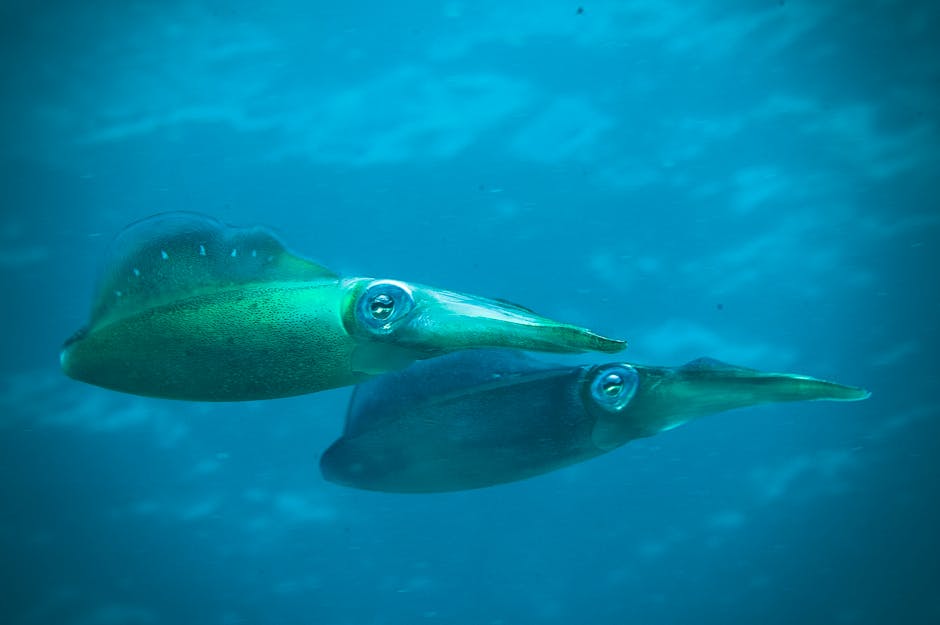
- A 19-metre giant octopus may have ruled the ancient seas 100 million years ago, dwarfing modern squid.
- Fossilized beaks and sucker scars on ancient marine reptiles hint at the existence of this massive cephalopod.
- The giant octopus could have been an apex predator, hunting marine reptiles and large fish in the Cretaceous oceans.
- Soft-bodied invertebrates like cephalopods may have played a more dominant role in ancient marine ecosystems than previously thought.
- Further research is needed to confirm the presence of this giant octopus and its place in cephalopod evolution.
In the depths of the Cretaceous oceans, a colossal predator may have reigned supreme: a giant octopus stretching up to 19 metres in length, dwarfing even the largest known squid today. While no intact fossil of such a creature has been unearthed, paleontologists have pieced together compelling evidence from fossilized beaks and sucker scars preserved in ancient marine reptiles. This hypothetical leviathan, potentially belonging to a lineage of vampyropods, could have been one of the ocean’s apex predators, lurking in the shadows and hunting marine reptiles and large fish. If confirmed, this would reframe our understanding of cephalopod evolution and suggest that soft-bodied invertebrates once played a far more dominant role in marine ecosystems than previously acknowledged.
The Rise of the Cephalopod Leviathan

The idea of a 19-metre octopus dominating the oceans 100 million years ago might sound like science fiction, but it emerges from rigorous analysis of rare fossil evidence. During the mid-Cretaceous period, Earth’s oceans teemed with large marine reptiles such as plesiosaurs and ichthyosaurs, which were thought to occupy the uppermost tiers of the food chain. However, fossilized remains of these reptiles have been found bearing circular scars that closely resemble the sucker imprints of cephalopods. These patterns, discovered in deposits in North America and Europe, suggest attacks by enormous, squid-like or octopus-like creatures. Researchers analyzing the spacing and size of these scars concluded that the responsible animal could have had arms spanning up to six metres—implying a total body length of around 19 metres when fully extended. This places the creature well beyond the size of any living cephalopod, including the colossal squid (Mezzoteuthis psychropolaris), which reaches up to 14 metres.
Fossil Clues and the Case for a Giant Octopus

The primary evidence for this ancient giant comes not from bones—octopuses have none—but from fossilized beaks and attack traces. In 2015, a fossilized cephalopod beak discovered in Lebanon was identified as belonging to Jeletzkya douglassae, an ancient vampyropod related to modern octopuses and vampire squids. Though the specimen itself was small, its structure suggested a much larger body size when extrapolated using modern analogues. More telling are the so-called ‘attack fossils’—well-preserved skin impressions of plesiosaurs showing rows of paired circular marks. These match the size and arrangement of suckers from large cephalopods. One such fossil, studied at the Canadian Fossil Discovery Centre, displayed scars consistent with a predator at least ten times larger than today’s giant Pacific octopus. While some scientists argue these marks could result from post-mortem scavenging, others assert the symmetry and depth of the impressions indicate active predation.
Why a Giant Octopus Makes Evolutionary Sense
The Cretaceous oceans were vastly different from today’s, with warmer temperatures, higher sea levels, and abundant marine life—conditions that may have supported gigantism in certain species, a phenomenon known as deep-sea gigantism. In modern oceans, cephalopods like the giant squid thrive in deep, nutrient-rich waters where large size offers advantages in predation and thermal regulation. Similarly, 100 million years ago, the absence of large predatory whales (which evolved later) may have created an ecological vacuum that giant cephalopods could have exploited. Additionally, the metabolic efficiency of cephalopods—coupled with their intelligence and adaptability—may have allowed them to evolve into apex predators. Research published in Nature highlights how cephalopod body plans are highly scalable, meaning there may be no hard biological limit preventing an octopus from reaching such enormous proportions under the right environmental pressures.
Revising the Cretaceous Food Web
If giant octopuses were indeed apex predators, this forces a dramatic revision of the Cretaceous marine food web. For decades, paleontologists have viewed large reptiles as the dominant hunters, with cephalopods relegated to mid-level roles. Evidence of a 19-metre octopus not only challenges that hierarchy but suggests a more complex and dynamic ecosystem. Marine reptiles may have been both hunters and hunted, engaged in an evolutionary arms race with intelligent, soft-bodied invertebrates. This shift in perspective highlights the fragility of fossil interpretation—what we see is often limited by what can be preserved. Soft-bodied animals rarely fossilize, meaning their ecological roles are frequently underestimated. The possibility of such a giant octopus underscores how much remains unknown about ancient marine ecosystems.
Expert Perspectives
Opinions among paleontologists remain divided. Dr. Mairi Atkinson, a marine paleoecologist at the University of Edinburgh, argues that “the sucker scar evidence is compelling and too consistent to dismiss as random marks.” She believes we may have underestimated cephalopod gigantism in Earth’s past. Conversely, Dr. James Camarata of the Scripps Institution of Oceanography cautions that “extraordinary claims require extraordinary evidence,” noting that no complete body fossil of such a creature has been found. He suggests the scars might result from smaller cephalopods feeding on carcasses rather than active predation by a single giant species.
As fossil analysis techniques improve—particularly in imaging and 3D reconstruction—scientists may one day uncover definitive proof of these ancient giants. For now, the 19-metre octopus remains a tantalizing hypothesis, a shadow in the fossil record that challenges our assumptions about life in Earth’s ancient oceans. The search continues in Cretaceous rock formations worldwide, where the next discovery could rewrite the story of marine evolution once more.
Source: BBC