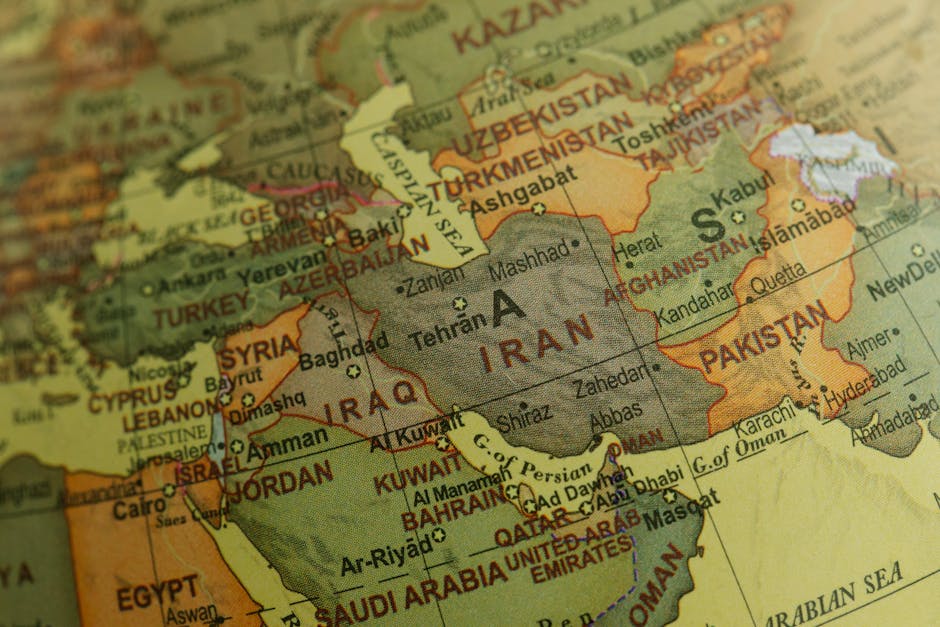
The deployment of two U.S. destroyers in the Strait of Hormuz has sparked a new round of tensions between Iran and the United States. The Iranian Revolutionary Guard Corps (IRGC) issued a stark warning, stating, “This is the last warning,” amid concerns over the potential for military confrontation. The Strait of Hormuz, a narrow waterway connecting the Persian Gulf to the Gulf of Oman, is crucial for global oil trade, with about 20% of the world’s oil supply passing through it daily. The U.S. naval presence is seen as a significant escalation, potentially disrupting the delicate balance of power in the region and affecting international commerce.
The Strategic Significance of the Strait of Hormuz

The Strait of Hormuz is not only a vital artery for global oil supply but also a symbol of regional power and influence. The recent U.S. naval maneuvers are a clear demonstration of the United States’ commitment to maintaining maritime security and ensuring the free flow of commerce. However, Iran views these actions as a direct threat to its sovereignty and strategic interests. The timing of the U.S. deployment is particularly sensitive, coming amid ongoing negotiations over the Iran nuclear deal and heightened tensions in the Middle East. The international community is closely watching, as any disruption in the strait could have far-reaching economic and geopolitical consequences.
U.S. Warships in the Strait: An Escalation of Tensions

Two U.S. destroyers, the USS Nitze and the USS Laboon, sailed into the Strait of Hormuz, a move that has been interpreted as a show of force and a response to recent Iranian activities in the region. The U.S. Navy stated that the deployment was to ensure the safety and security of commercial shipping and to deter any aggressive actions by Iran. Iranian officials, however, have vehemently condemned the move, accusing the U.S. of provoking conflict and violating international norms. The IRGC’s warning signals a growing impatience and a readiness to respond to what they perceive as American aggression.
The Underlying Causes and Potential Outcomes
The current tensions in the Strait of Hormuz are rooted in a complex web of geopolitical and economic factors. Iran has long sought to control the strait as a means of exerting leverage over its regional rivals and the international community. The U.S., on the other hand, has a vested interest in keeping the strait open to maintain global energy security and economic stability. Analysts suggest that the recent U.S. naval presence could be a response to Iran’s increased activity in the Gulf, including the alleged harassment of commercial vessels and the development of its missile capabilities. The potential for a military clash remains a serious concern, as any conflict could lead to a significant disruption in oil supplies and a spike in global energy prices.
Regional and Global Implications
The implications of the current standoff in the Strait of Hormuz are profound. If Iran follows through on its threats, it could disrupt the flow of oil and gas, causing economic turmoil in countries heavily dependent on Middle Eastern energy exports. The shipping industry, already facing challenges due to the pandemic and supply chain disruptions, is bracing for potential increases in insurance premiums and rerouting costs. Additionally, the conflict could further destabilize the already volatile Middle East, potentially drawing in other regional powers and global superpowers. The international community, including the United Nations and major oil-importing nations, is urging both sides to de-escalate the situation and engage in dialogue to resolve their differences.
Expert Perspectives
Dr. Sarah Jones, a Middle East security expert at the University of Oxford, warns that the U.S. naval presence could backfire, pushing Iran to take more aggressive actions. “The U.S. is trying to send a strong message, but it might be interpreted as a provocation, leading to a cycle of escalation,” she said. In contrast, Admiral John Smith, a former U.S. Navy commander, argues that the deployment is necessary to prevent Iranian aggression and protect international shipping. “The U.S. has a responsibility to ensure the safety of commercial vessels and to uphold international law,” he stated.
As the situation remains tense, the international community is closely monitoring developments in the Strait of Hormuz. The question now is whether both sides will find a diplomatic solution or if the current standoff will lead to a more dangerous confrontation. The coming weeks will be crucial in determining the future stability of the region and the global economy.