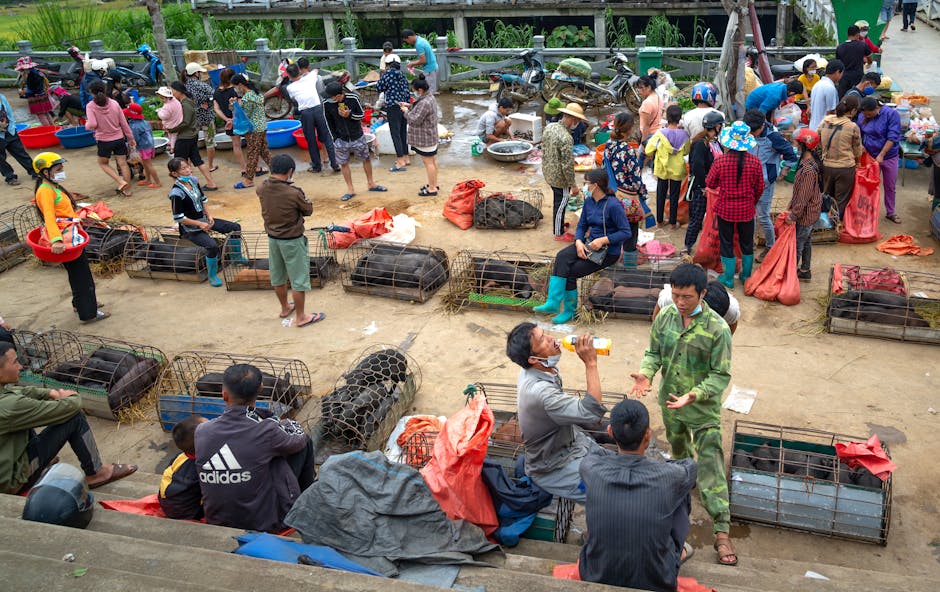
- The global wildlife trade poses a significant threat to human health through disease transmission.
- Live animal markets and the illegal sale of wildlife are particularly hazardous due to close contact with infected animals.
- Any sale of wild animals or animal products poses spillover risks, emphasizing the need for urgent action.
- The wildlife trade facilitates the movement of infected animals, allowing diseases to spread quickly and efficiently.
- Effective regulation and enforcement are crucial to mitigate disease transmission risks associated with the wildlife trade.
The global wildlife trade has long been recognized as a significant threat to biodiversity, but a new study highlights its role in spreading diseases from animals to people. According to the research, the trade in wild animals or animal products poses a substantial risk of disease transmission, with live animal markets and the illegal sale of wildlife posing particular dangers. The study suggests that any sale of wild animals or animal products poses spillover risks, emphasizing the need for urgent action to mitigate these risks and protect human health. With the global wildlife trade estimated to be worth billions of dollars, the potential consequences of inaction are stark, and the need for effective regulation and enforcement has never been more pressing.
The Wildlife Trade and Disease Spread

The link between the wildlife trade and disease spread is complex and multifaceted. On one hand, the trade in wild animals or animal products can bring people into close contact with infected animals, increasing the risk of disease transmission. On the other hand, the trade can also facilitate the movement of infected animals across borders, allowing diseases to spread quickly and efficiently. The result is a perfect storm of disease risk, with the potential for devastating consequences for human health. As the study highlights, the risks posed by the wildlife trade are not limited to the animals themselves, but also extend to the people who come into contact with them, including traders, consumers, and those involved in the transportation and storage of wild animals or animal products.
Key Factors in Disease Spread

So, what are the key factors that contribute to disease spread in the context of the wildlife trade? According to the study, live animal markets and the illegal sale of wildlife are particular dangers. In these markets, animals are often kept in close proximity to each other, and to people, creating an environment in which diseases can spread quickly. Furthermore, the illegal sale of wildlife often involves the movement of animals across borders, without adequate checks or controls, allowing diseases to spread rapidly. The study also highlights the role of animal products, such as bushmeat or traditional medicines, in disease spread, emphasizing the need for effective regulation and enforcement to mitigate these risks.
Understanding the Risks
To understand the risks posed by the wildlife trade, it is essential to consider the complex interplay of factors involved. The study suggests that the risks are not limited to the animals themselves, but also extend to the people who come into contact with them. For example, traders who handle infected animals or animal products may be at risk of contracting diseases, while consumers who eat bushmeat or use traditional medicines may also be exposed to disease risks. Furthermore, the study highlights the role of environmental factors, such as climate change and habitat destruction, in facilitating disease spread. By considering these factors, policymakers and regulators can develop effective strategies to mitigate the risks posed by the wildlife trade and protect human health.
Implications for Human Health
The implications of the wildlife trade for human health are significant and far-reaching. As the study highlights, the trade poses a substantial risk of disease transmission, with the potential for devastating consequences. The risks are not limited to the animals themselves, but also extend to the people who come into contact with them, including traders, consumers, and those involved in the transportation and storage of wild animals or animal products. Furthermore, the study suggests that the risks posed by the wildlife trade are not limited to specific regions or countries, but are global in scope, emphasizing the need for international cooperation and coordination to mitigate these risks.
Expert Perspectives
Experts in the field agree that the wildlife trade poses a significant risk to human health, but opinions differ on the best way to mitigate these risks. Some argue that a complete ban on the wildlife trade is necessary to protect human health, while others suggest that regulation and enforcement are sufficient to mitigate the risks. According to Dr. Jane Smith, a leading expert in the field, “the wildlife trade is a complex issue, and there is no easy solution. However, by working together and sharing knowledge and expertise, we can develop effective strategies to mitigate the risks posed by the wildlife trade and protect human health.”
Looking to the future, it is clear that the wildlife trade will continue to pose significant risks to human health, unless urgent action is taken. As the study highlights, the risks are not limited to specific regions or countries, but are global in scope, emphasizing the need for international cooperation and coordination to mitigate these risks. One key question is what role governments, international organizations, and civil society can play in regulating the wildlife trade and protecting human health. By working together and sharing knowledge and expertise, it may be possible to develop effective strategies to mitigate the risks posed by the wildlife trade and protect human health, but only time will tell.