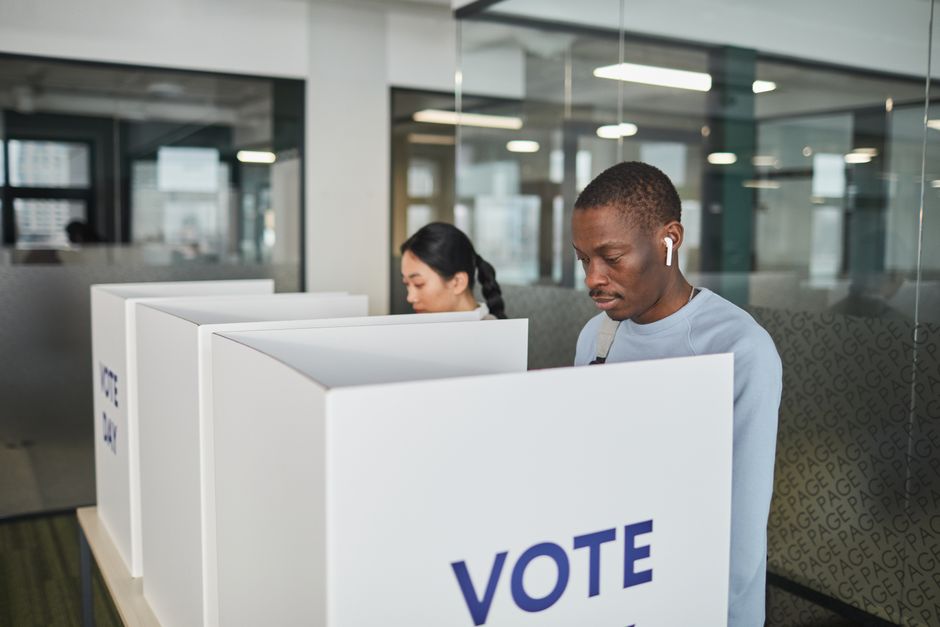
- A national survey found 63% of Americans uncomfortable with AI voting aid, highlighting trust and manipulation concerns.
- The survey suggests Americans are open to AI for fact-checking and following politics, but not for decision-making.
- AI’s role in politics is becoming prevalent, with politicians using AI tools for voter data analysis and voter interaction.
- Americans are concerned about AI’s potential to manipulate or influence voters in the decision-making process.
- Transparency and accountability are essential for using AI in politics, respecting democratic values.
A recent national survey has found that 63% of Americans are uncomfortable with the idea of using an AI chatbot to help them decide who to vote for, despite being open to using chatbots for fact-checking or following political issues. The survey, which also revealed that 80% of Americans are worried that AI bots are answering surveys that inform policy and business decisions, suggests that the discomfort is not necessarily about the technology itself, but rather about trust and the potential for manipulation. This development is significant, as it highlights the need for transparency and accountability in the use of AI in politics.
The Role of AI in Politics

The use of AI in politics is becoming increasingly prevalent, with many politicians and campaigns using AI-powered tools to analyze voter data, craft messages, and even interact with voters. However, the survey’s findings suggest that Americans are drawing a hard line when it comes to AI’s involvement in the actual decision-making process. This is likely due to concerns over the potential for AI to be used to manipulate or influence voters, rather than simply providing information or assistance. As AI continues to play a larger role in politics, it is essential to address these concerns and ensure that the technology is used in a way that is transparent, accountable, and respectful of democratic values.
Key Findings and Implications

The survey’s findings have significant implications for the use of AI in politics. The fact that 80% of Americans are worried about AI bots answering surveys suggests that there is a deep-seated concern about the accuracy and reliability of the data that is being used to inform policy and business decisions. This concern is not unfounded, as there have been several instances of AI-powered bots being used to manipulate public opinion or influence political discourse. The survey’s findings also highlight the need for greater transparency and accountability in the use of AI in politics, including clear disclosure of when and how AI is being used, and robust safeguards to prevent manipulation or bias.
Analysis and Expert Insights

Experts say that the survey’s findings are not surprising, given the growing concern about the impact of technology on democracy. According to The New York Times, the use of AI in politics has the potential to both enhance and undermine democratic values, depending on how it is used. While AI can provide valuable insights and assistance, it can also be used to manipulate or deceive voters. As such, it is essential to approach the use of AI in politics with caution and to prioritize transparency, accountability, and democratic values.
Implications and Future Directions

The survey’s findings have significant implications for the future of AI in politics. As AI continues to play a larger role in political discourse, it is essential to address the concerns and mistrust that have been highlighted by the survey. This will require a concerted effort to promote transparency, accountability, and democratic values in the use of AI, including the development of robust safeguards to prevent manipulation or bias. According to Reuters, this will also require a greater emphasis on digital literacy and critical thinking, to enable voters to effectively evaluate the information they receive and make informed decisions.
Expert Perspectives
Experts are divided on the implications of the survey’s findings, with some arguing that they highlight the need for greater caution and regulation in the use of AI in politics, while others see them as an opportunity to promote greater transparency and accountability. According to Dr. Kate Crawford, a leading expert on AI and ethics, the survey’s findings suggest that there is a need for a more nuanced and informed discussion about the use of AI in politics, one that takes into account the potential risks and benefits of the technology.
As the use of AI in politics continues to evolve, it is essential to keep a close eye on developments and to ensure that the technology is used in a way that is transparent, accountable, and respectful of democratic values. One key question to watch is how policymakers and regulators will respond to the survey’s findings, and what steps they will take to address the concerns and mistrust that have been highlighted. As the BBC notes, this will require a concerted effort to promote digital literacy and critical thinking, as well as greater transparency and accountability in the use of AI in politics.
Source: Reddit