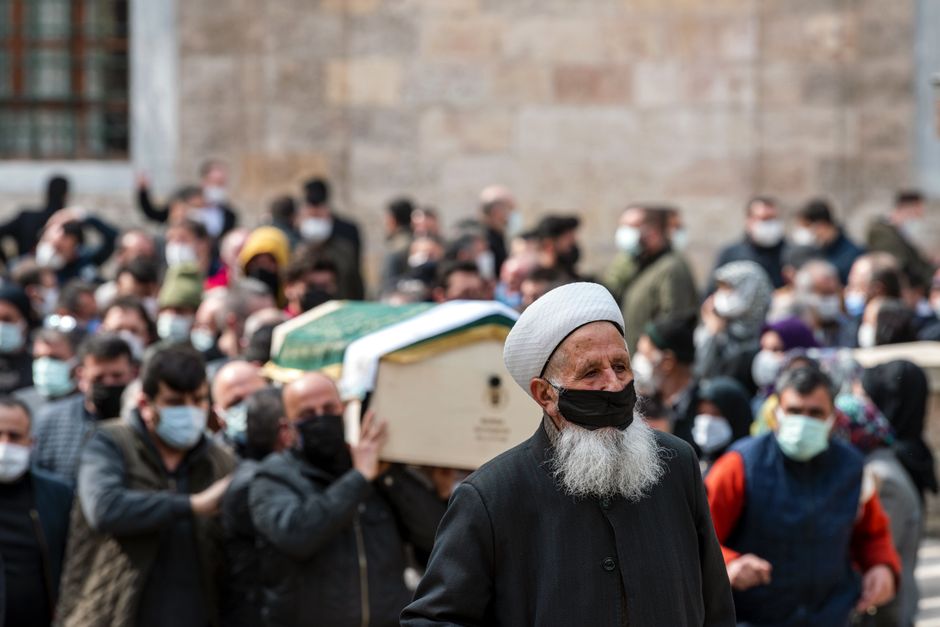
- Iran is holding a six-day funeral for Ayatollah Ali Khamenei, nearly four months after his death.
- The funeral marks a crucial moment in Iran’s history, with a potential power struggle looming.
- The six-day ceremony will feature processions, prayers, and eulogies in various cities across Iran and Iraq.
- High-ranking officials, clerics, and dignitaries from Iran and other countries are attending the funeral.
- The funeral may have implications for the region’s politics and stability beyond Iran’s borders.
Iran has begun a six-day funeral for Ayatollah Ali Khamenei, the country’s former supreme leader, nearly four months after his death. The funeral procession, which started on July 4, will see ceremonies take place across Iran and Iraq before Khamenei’s burial in the city of Mashhad. This significant event marks a crucial moment in Iran’s history, as the country navigates a period of transition and potential power struggle.
The Significance of Ayatollah Khamenei’s Funeral

The funeral of Ayatollah Khamenei is a highly anticipated event, not only in Iran but also across the Middle East. Khamenei’s death has created a power vacuum, and the funeral is seen as an opportunity for the Iranian government to showcase its strength and unity. The six-day ceremony will feature various events, including processions, prayers, and eulogies, which will be attended by high-ranking officials, clerics, and dignitaries from Iran and other countries. The funeral’s significance extends beyond Iran’s borders, as it may have implications for the region’s politics and stability.
Key Details of the Funeral

The funeral procession will take place in several cities across Iran, including Tehran, Qom, and Mashhad. The ceremonies will be led by prominent clerics and will feature recitations of the Quran, prayers, and eulogies for Khamenei. The Iranian government has declared a national holiday to allow citizens to participate in the funeral events. The burial will take place in Mashhad, a city considered sacred by Shia Muslims, where Khamenei will be laid to rest alongside other prominent Iranian leaders. According to reports, the funeral procession route has been announced, and security measures have been put in place to ensure a smooth and safe ceremony.
Analysis of the Power Struggle

The death of Ayatollah Khamenei has created a power struggle in Iran, with various factions vying for control. The funeral is seen as an opportunity for these factions to demonstrate their strength and influence. The Iranian government has been working to ensure a smooth transition, but the power vacuum created by Khamenei’s death has raised concerns about the country’s stability. Experts believe that the funeral will be a crucial test for the Iranian government, as it seeks to maintain control and stability in the face of potential challenges. For more information on Iran’s power structure, visit Wikipedia.
Implications of the Funeral

The funeral of Ayatollah Khamenei will have significant implications for Iran and the wider region. The event may lead to increased tensions between Iran and its neighbors, particularly Saudi Arabia and Israel. The power struggle in Iran may also have implications for the country’s relations with other nations, including the United States and Europe. Furthermore, the funeral may lead to increased scrutiny of Iran’s human rights record and its treatment of minority groups. As the situation unfolds, it is essential to monitor developments and assess the potential consequences of this significant event.
Expert Perspectives
Experts have offered varying perspectives on the significance of Ayatollah Khamenei’s funeral. Some believe that the event will mark a new era for Iran, with the potential for reform and change. Others, however, are more skeptical, arguing that the funeral will be used to consolidate power and maintain the status quo. According to some analysts, the funeral may be an opportunity for Iran to re-engage with the international community and address concerns about its nuclear program and human rights record. As one expert noted, the funeral is a “chance for Iran to reset its relations with the world and move forward in a positive direction.” However, others argue that the power struggle in Iran will continue, and the funeral will be just one aspect of a larger and more complex situation.
As the funeral comes to a close, it is essential to consider what the future holds for Iran and the wider region. The power struggle in Iran is likely to continue, and the country’s relations with its neighbors and the international community will be closely watched. The funeral of Ayatollah Khamenei marks a significant moment in Iran’s history, and its implications will be felt for years to come. As the situation unfolds, it is crucial to monitor developments and assess the potential consequences of this event. One key question is how the Iranian government will navigate the challenges ahead and whether it will be able to maintain stability and control in the face of potential opposition and external pressures.
Source: CNBC