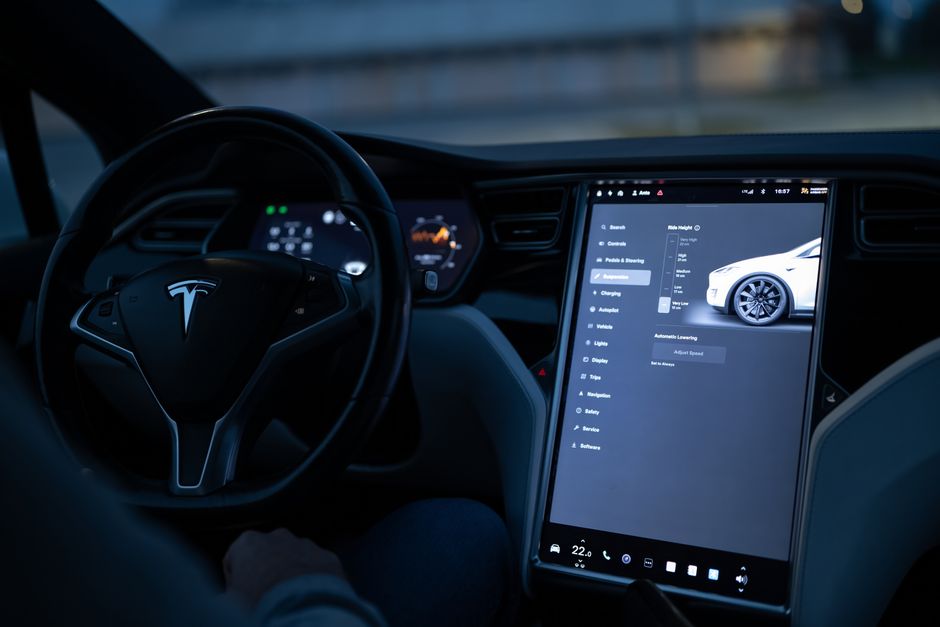
- Tesla’s Autopilot system is under investigation after a fatal crash in Texas, raising concerns about semi-autonomous vehicle safety.
- The National Highway Traffic Safety Administration (NHTSA) will lead the investigation into the crash, a series of incidents involving Tesla’s Autopilot system.
- Tesla’s Autopilot system uses cameras, radar, and sensors to assist with steering, acceleration, and braking, but critics argue it is not foolproof.
- The crash is the latest in a series of high-profile incidents involving Tesla’s Autopilot system, which has been the subject of controversy in recent years.
- The investigation into the crash will examine the safety and effectiveness of Tesla’s Autopilot system and its regulations surrounding its use.
Tesla, the electric vehicle manufacturer, is facing a federal investigation into a crash that killed a woman in Texas on Friday. The car’s driver-assistance system, known as Autopilot, was in use when the crash occurred, according to the police. The incident has raised concerns about the safety of semi-autonomous vehicles and the regulations surrounding their use. The National Highway Traffic Safety Administration (NHTSA) will lead the investigation into the crash, which is the latest in a series of incidents involving Tesla’s Autopilot system.
Background on Tesla’s Autopilot System

Tesla’s Autopilot system has been the subject of controversy in recent years, with several high-profile crashes raising questions about its safety and effectiveness. The system, which uses a combination of cameras, radar, and sensors to assist with steering, acceleration, and braking, has been touted by Tesla as a key feature of its vehicles. However, critics have argued that the system is not foolproof and can be prone to errors, particularly in complex driving scenarios. The NHTSA has previously investigated several crashes involving Tesla’s Autopilot system, including a fatal crash in Florida in 2016.
Key Details of the Crash

According to the police, the crash occurred on Friday when the Tesla vehicle, which was traveling at a high speed, failed to stop at a red light and collided with another vehicle. The driver of the Tesla, a woman from Texas, was killed in the crash, while several other people were injured. The police have confirmed that the Autopilot system was in use at the time of the crash, but it is not yet clear whether the system was functioning properly or whether the driver had taken her hands off the wheel. The NHTSA will investigate the crash and determine whether the Autopilot system was a contributing factor.
Analysis of the Incident

The incident has raised questions about the safety of semi-autonomous vehicles and the regulations surrounding their use. While Tesla’s Autopilot system has been shown to be effective in reducing the risk of accidents in certain scenarios, it is not perfect and can be prone to errors. The NHTSA has previously warned that drivers should not rely solely on the Autopilot system and should always be prepared to take control of the vehicle. The incident has also highlighted the need for clearer regulations and guidelines on the use of semi-autonomous vehicles, particularly in complex driving scenarios. As NHTSA investigates the crash, it will be important to consider the broader implications for the development and deployment of autonomous vehicles.
Implications of the Crash

The crash has significant implications for Tesla, the automotive industry, and the development of autonomous vehicles. If the NHTSA determines that the Autopilot system was a contributing factor to the crash, it could lead to increased regulatory scrutiny and potentially even a recall of vehicles equipped with the system. The incident could also have broader implications for the development of autonomous vehicles, as it highlights the need for clearer regulations and guidelines on their use. As the New York Times has reported, the incident has raised concerns among investors and consumers about the safety and reliability of Tesla’s vehicles.
Expert Perspectives
Experts have weighed in on the incident, with some arguing that it highlights the need for more stringent regulations on the use of semi-autonomous vehicles. “The incident is a wake-up call for the industry and regulators to take a closer look at the safety of semi-autonomous vehicles,” said one expert. Others have argued that the incident is an isolated incident and that the Autopilot system is still a safe and effective technology. “The Autopilot system has been shown to be effective in reducing the risk of accidents, and this incident should not be taken as a reason to abandon the technology,” said another expert.
As the investigation into the crash continues, it will be important to watch for any developments or updates from the NHTSA and Tesla. The incident has raised important questions about the safety and reliability of semi-autonomous vehicles, and it will be crucial to consider the broader implications for the development and deployment of autonomous vehicles. One key question is whether the incident will lead to increased regulatory scrutiny of the automotive industry, and what the implications will be for the development of autonomous vehicles in the future.
Source: The New York Times