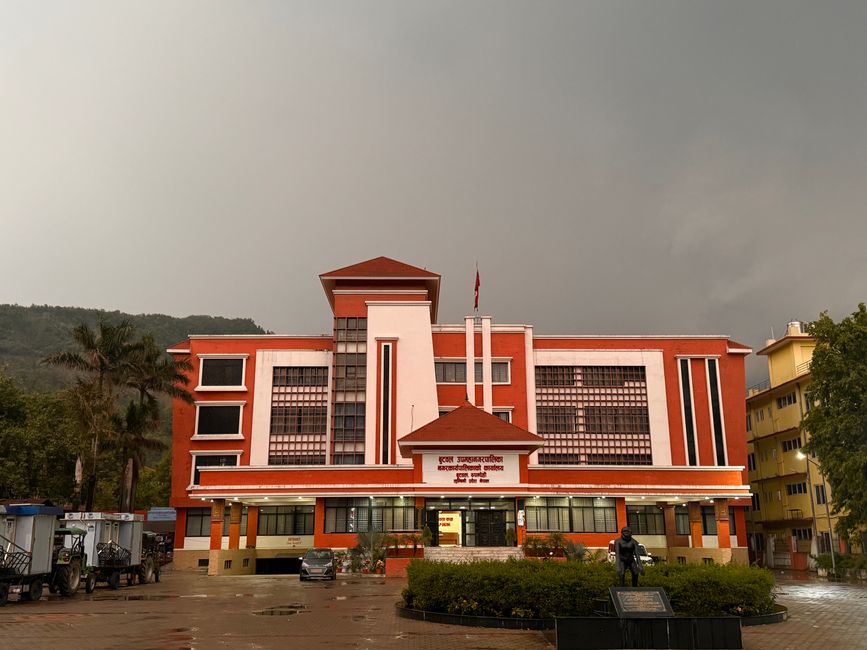
- Nepal establishes a new science ministry to boost scientific research and development.
- The new ministry aims to address socio-economic challenges by promoting science and technology in Nepal.
- The establishment of the science ministry is expected to strengthen Nepal’s scientific capacity and support innovation.
- The new ministry will focus on creating a conducive environment for scientific research and innovation in Nepal.
- Nepal’s new science ministry is seen as a key step towards achieving sustainable development goals.
Nepal has established a new science ministry, marking a significant step towards strengthening the country’s scientific capacity. The move is expected to boost scientific research and development in Nepal, with a focus on addressing the nation’s socio-economic challenges. According to a recent report published in Nature, the new ministry will play a crucial role in promoting science and technology in Nepal.
Background and Significance

The establishment of the new science ministry is a timely move, given the growing recognition of the importance of science and technology in driving economic growth and development. Nepal has long faced challenges in terms of limited scientific capacity, inadequate infrastructure, and a brain drain of skilled professionals. The new ministry is expected to address these challenges by creating a conducive environment for scientific research and innovation, and by providing support for the development of science and technology in the country. This move is also seen as an opportunity for Nepal to leverage science and technology to achieve its sustainable development goals.
Key Developments and Initiatives

The new science ministry is expected to implement a range of initiatives aimed at strengthening scientific capacity in Nepal. These initiatives include the establishment of new research institutions, the provision of funding for scientific research, and the development of programs to promote science education and awareness. The ministry will also work to create partnerships with international organizations and countries to access new technologies and expertise, and to promote collaboration and knowledge sharing. Furthermore, the ministry plans to focus on areas such as agriculture, health, and renewable energy, which are critical to Nepal’s socio-economic development.
Analysis and Implications

The establishment of the new science ministry has significant implications for Nepal’s development trajectory. By strengthening scientific capacity, Nepal can better address its development challenges, such as poverty, inequality, and climate change. The new ministry can also play a key role in promoting innovation and entrepreneurship, which can help to drive economic growth and create jobs. Moreover, the ministry’s focus on science education and awareness can help to build a more informed and scientifically literate population, which is essential for making informed decisions about the country’s development. According to WHO, investing in science and technology can have a significant impact on a country’s health and well-being.
Impact and Future Directions

The new science ministry is expected to have a positive impact on various sectors in Nepal, including agriculture, health, and education. The ministry’s initiatives are expected to improve the quality of life of the Nepalese people, and to contribute to the country’s overall development. However, the ministry will need to address several challenges, including limited funding, inadequate infrastructure, and a shortage of skilled professionals. To overcome these challenges, the ministry will need to work closely with other government agencies, international organizations, and the private sector to leverage resources and expertise.
Expert Perspectives
Experts have welcomed the establishment of the new science ministry, seeing it as a crucial step towards promoting science and technology in Nepal. According to some experts, the new ministry can play a key role in addressing Nepal’s development challenges, such as poverty and inequality. Others have emphasized the need for the ministry to work closely with other government agencies and international organizations to leverage resources and expertise. As noted by Nature, the new ministry will need to balance the need for basic scientific research with the need for applied research that can address the country’s socio-economic challenges.
Looking ahead, it will be important to monitor the progress of the new science ministry and its initiatives. The ministry will need to work closely with other government agencies, international organizations, and the private sector to leverage resources and expertise. Additionally, the ministry will need to ensure that its initiatives are aligned with the country’s development priorities, and that they are having a positive impact on the lives of the Nepalese people. As the country moves forward, it will be essential to address the challenges facing the new science ministry, and to ensure that it is able to achieve its goals and make a meaningful contribution to Nepal’s development.
Source: Nature