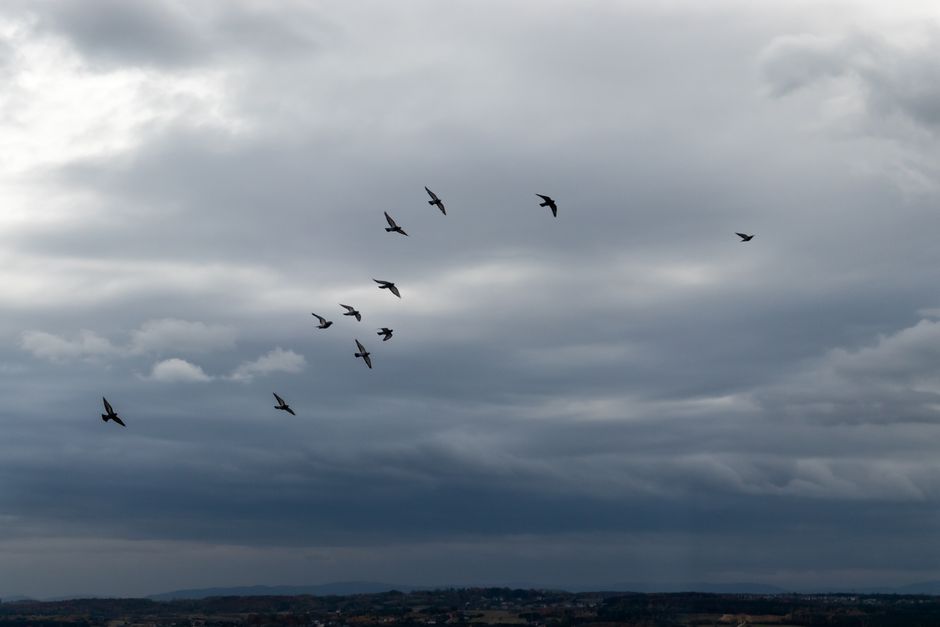
- Researchers discovered that pigeons lock their eyes in place when flying, a previously unknown behavior.
- Pigeons’ eyes remain remarkably still while in flight, even during sharp turns or quick changes in direction.
- This unique behavior may be an adaptation to help pigeons maintain balance and orientation while flying.
- The study used advanced technology, including bird-mounted headsets and backpacks, to track pigeons’ eye movements.
- The findings could have implications for the development of more advanced navigation systems.
Researchers at a prominent university have made a surprising discovery about the way pigeons use their eyes when flying. Using bird-mounted headsets and backpacks, the team found that pigeons lock their eyes in place when on the wing, a behavior that was previously unknown. This finding, published in a recent study, sheds new light on the unique ways in which birds navigate and interact with their environment while in flight.
Current Understanding of Pigeon Flight

The study, which used advanced technology to track the eye movements of pigeons in flight, revealed that the birds’ eyes remain remarkably still, even when making sharp turns or quick changes in direction. This is in contrast to many other animals, including humans, which move their eyes to track objects and navigate their surroundings. The researchers believe that this unique behavior may be an adaptation that helps pigeons to maintain their balance and orientation while flying, and could have implications for the development of more advanced navigation systems.
The History of Bird Flight Research

The study of bird flight has a long and fascinating history, with researchers using a variety of techniques to understand the complex movements and behaviors of birds in the air. From the early days of bird watching and observation, to the use of advanced technologies such as GPS tracking and computer simulations, scientists have been working to uncover the secrets of bird flight. The use of bird-mounted headsets and backpacks in this latest study represents a significant advancement in this field, allowing researchers to gather detailed information about the behavior of birds in flight.
The Researchers Behind the Study

The team of researchers behind the study, led by a prominent expert in the field of bird behavior, brought together a range of skills and expertise to make this discovery possible. With backgrounds in biology, physics, and engineering, the team was able to design and build the advanced technology used in the study, and to analyze the complex data that it produced. The researchers are motivated by a desire to understand the complex and fascinating behaviors of birds, and to use this knowledge to develop new technologies and innovations.
Implications of the Study

The discovery that pigeons lock their eyes in place when flying has significant implications for our understanding of bird behavior and navigation. It also has potential applications in the development of more advanced navigation systems, such as those used in drones and other unmanned aerial vehicles. The study’s findings could also inform the design of more efficient and effective flight systems, and could have implications for the study of other animals that use similar navigation techniques.
The Bigger Picture
The study of bird flight and behavior is an important area of research, with implications for our understanding of the natural world and the development of new technologies. By uncovering the secrets of bird flight, researchers can gain insights into the complex and fascinating behaviors of these animals, and can use this knowledge to develop innovative solutions to real-world problems. The discovery that pigeons lock their eyes in place when flying is a significant contribution to this field, and highlights the importance of continued research and study in this area.
The future of bird flight research is exciting and full of possibilities, with new technologies and innovations emerging all the time. As researchers continue to study the complex behaviors of birds, they are likely to uncover even more surprising and fascinating secrets about these amazing animals. For more information on bird flight and behavior, readers can visit the New Scientist website, which features a range of articles and resources on this topic.
Source: New Scientist