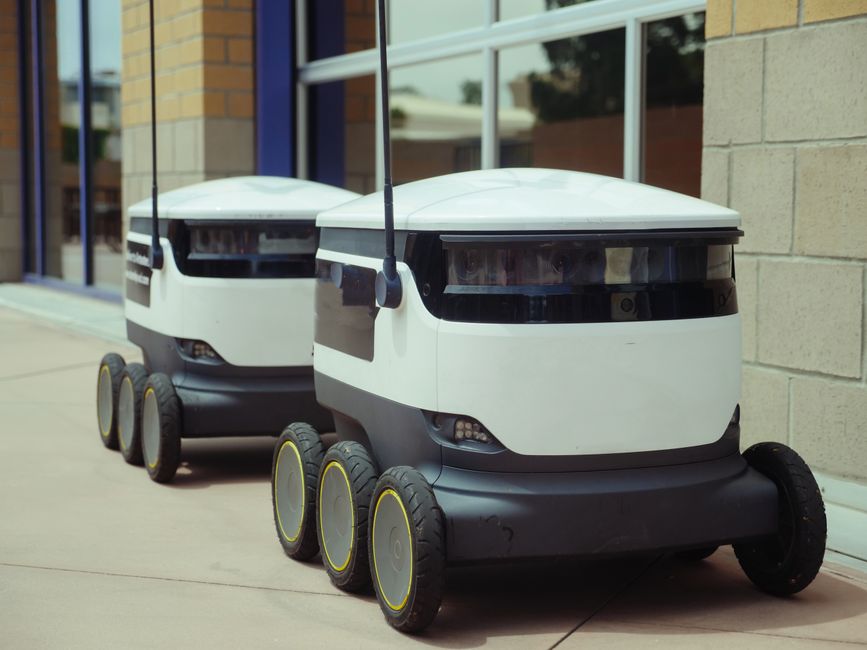
- JD.com’s CEO warns that robots will replace 700,000 delivery workers due to automation in the delivery sector.
- Robots and automated systems are increasingly prevalent in the delivery industry, driven by advances in technology and cost reduction.
- Companies such as JD.com, Amazon, and UPS are investing heavily in automation to improve efficiency and reduce costs.
- The trend of automation in delivery has significant implications for human workers, potentially leading to job displacement.
- Advances in technology will continue to drive the adoption of automation in the delivery industry, with far-reaching consequences.
JD.com’s boss has warned that robots will replace 700,000 delivery workers in the near future, citing the inevitability of automation in the industry. The comments, made by the Chinese e-commerce company’s CEO, highlight the growing trend of robotics and artificial intelligence in the delivery sector. As companies seek to reduce costs and increase efficiency, the use of robots and automated systems is becoming increasingly prevalent, with significant implications for human workers. This development is likely to have far-reaching consequences for the economy and job market, making it a critical issue to watch in the coming years.
The Rise of Automation in Delivery

The use of robots and automated systems in delivery is not a new phenomenon, but it is becoming increasingly widespread. Companies such as JD.com, Amazon, and UPS are all investing heavily in automation, with the aim of reducing costs and improving efficiency. This trend is being driven by advances in technology, which have made it possible to develop sophisticated robots and automated systems that can perform a range of tasks, from sorting and packaging to delivery and navigation. As the technology continues to improve, it is likely that we will see even more widespread adoption of automation in the delivery industry, with significant implications for human workers.
Key Players and Developments

JD.com is at the forefront of the automation trend in delivery, with the company already using robots and automated systems in a number of its warehouses and delivery centers. The company’s CEO has stated that the use of robots will help to reduce costs and improve efficiency, allowing the company to offer faster and more reliable delivery services to its customers. Other companies, such as Amazon and UPS, are also investing in automation, with Amazon recently announcing plans to use robots to deliver packages in a number of cities across the United States. As the trend towards automation continues to grow, it is likely that we will see even more companies investing in robotics and artificial intelligence.
Analysis and Implications

The replacement of human delivery workers with robots has significant implications for the economy and job market. While automation may bring cost savings and improved efficiency for companies, it also has the potential to displace large numbers of workers, leading to unemployment and social unrest. According to a report by the International Labor Organization, the increasing use of automation and artificial intelligence could lead to the displacement of up to 75 million jobs worldwide by 2025. As such, it is critical that governments and companies take steps to mitigate the negative impacts of automation, such as providing training and support for workers who are displaced by robots.
Implications for Workers and the Economy

The replacement of human delivery workers with robots will have significant implications for workers and the economy. As robots take over jobs that were previously performed by humans, there is a risk of widespread unemployment and social unrest. This could have a negative impact on the economy, as consumer spending and economic growth are driven in part by the availability of jobs and the income of workers. Furthermore, the displacement of workers could also have a negative impact on social cohesion and community stability, highlighting the need for governments and companies to take a proactive and responsible approach to managing the impacts of automation.
Expert Perspectives
Experts are divided on the issue of automation and job displacement, with some arguing that the benefits of automation, such as increased efficiency and productivity, outweigh the costs, while others argue that the negative impacts on workers and the economy cannot be ignored. According to a report by the New York Times, some experts believe that automation could lead to the creation of new jobs and industries, as workers are freed up to pursue more creative and innovative endeavors. However, others argue that the negative impacts of automation will be significant, and that governments and companies must take steps to mitigate these impacts and ensure that the benefits of automation are shared by all.
As the trend towards automation continues to grow, it is critical that we watch closely to see how companies and governments respond to the challenges and opportunities presented by this technology. Will we see a concerted effort to mitigate the negative impacts of automation, or will the benefits of this technology be allowed to accrue primarily to corporations and shareholders? The answer to this question will have significant implications for workers, the economy, and society as a whole, making it a critical issue to watch in the coming years.
Source: Reddit