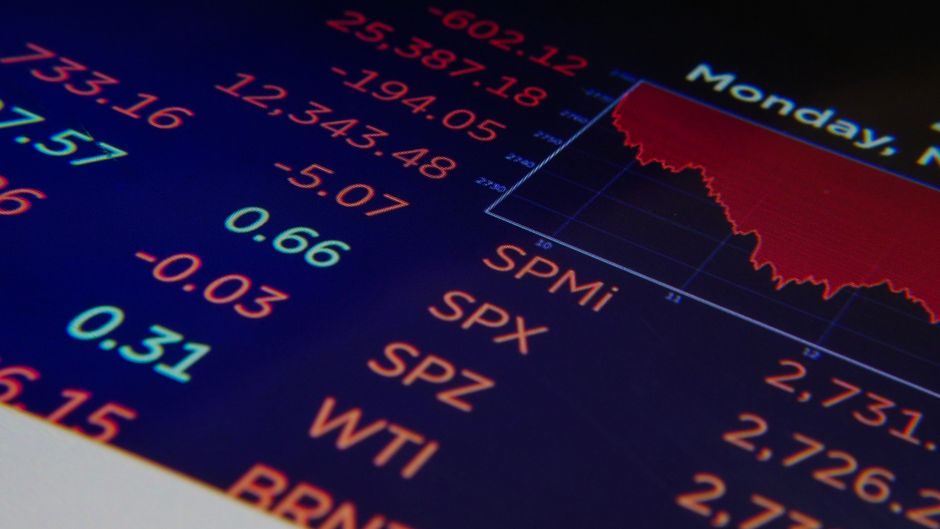
- Federal Reserve Chairman Kevin Warsh has adopted a more hawkish tone on inflation, sending shockwaves through financial markets.
- Warsh’s words carry significant weight as the central bank’s leader, sparking a frenzy of activity among investors and analysts.
- The Fed’s newfound hawkishness has sparked a sell-off in stocks and bonds, as investors reassess interest rates and monetary policy.
- Warsh’s tough talk has marked a significant turning point in the market narrative, leaving markets to ponder the implications.
- The dollar has strengthened in response to the perceived shift in the Fed’s stance, adding to market complexity.
Federal Reserve Chairman Kevin Warsh’s tough talk on inflation Wednesday sent shockwaves through financial markets, as investors scrambled to adjust to a more hawkish tone than expected. With Warsh at the helm, the Fed is poised to take a more aggressive stance on inflation, leaving markets to ponder the implications of this shift. As the central bank’s leader, Warsh’s words carry significant weight, and his remarks have sparked a frenzy of activity among investors and analysts alike.
Markets React to Warsh’s Hawkish Turn

The current situation is one of heightened uncertainty, as markets struggle to come to terms with the Fed’s newfound hawkishness. Warsh’s comments on inflation have sparked a sell-off in stocks and bonds, as investors reassess their expectations for interest rates and monetary policy. The dollar, meanwhile, has strengthened in response to the perceived shift in the Fed’s stance, adding to the complexity of the market landscape. As the dust settles, it is clear that Warsh’s tough talk has marked a significant turning point in the market narrative.
The Road to a Hawkish Fed

The story behind Warsh’s hawkish turn is one of evolving economic conditions and shifting priorities. With inflation showing signs of life, the Fed has been forced to reevaluate its approach to monetary policy. Warsh’s predecessor had taken a more dovish stance, but the changing economic landscape has necessitated a reassessment of this approach. The result is a more hawkish Fed, one that is willing to take a tougher line on inflation in order to ensure price stability. This shift has been months in the making, but Warsh’s comments have brought the issue to the forefront of market consciousness.
Key Players in the Hawkish Shift

Warsh is, of course, the main protagonist in this story, but he is not alone. Other key players, including Fed officials and policymakers, have also played a role in shaping the central bank’s stance. These individuals are motivated by a desire to maintain price stability and ensure the long-term health of the economy. Warsh, in particular, has been vocal about the need for the Fed to take a more proactive approach to inflation, and his comments have resonated with like-minded officials. As the Fed navigates this new landscape, these individuals will continue to shape the course of monetary policy.
Consequences of a Hawkish Fed

The consequences of Warsh’s hawkish turn are far-reaching, with implications for investors, consumers, and the broader economy. A more aggressive approach to inflation will likely lead to higher interest rates, which could impact borrowing costs and consumer spending. The strong dollar, meanwhile, could have a negative impact on exports, adding to the complexity of the economic landscape. As stakeholders adjust to this new reality, they will need to navigate a more challenging market environment, one that is marked by increased uncertainty and volatility.
The Bigger Picture
Warsh’s hawkish turn is not just a story about the Fed or monetary policy; it is also a reflection of the broader economic landscape. The global economy is at a crossroads, with inflation, trade tensions, and geopolitical uncertainty all contributing to a complex and challenging environment. In this context, the Fed’s stance on inflation takes on added significance, as it has the potential to impact not just the US economy, but also the global economy. As investors and policymakers look to the future, they will need to consider the implications of Warsh’s hawkish turn in the context of these broader trends.
As the market continues to evolve, one thing is clear: Warsh’s tough talk on inflation has marked a significant turning point. With the Fed poised to take a more aggressive stance, investors and stakeholders will need to adapt to a new reality, one that is marked by increased uncertainty and volatility. As we look to the future, it will be important to watch how the Fed’s stance evolves, and how the market responds to this shift. For now, one thing is certain: the era of easy money is behind us, and a new era of monetary policy has begun.
Source: CNBC