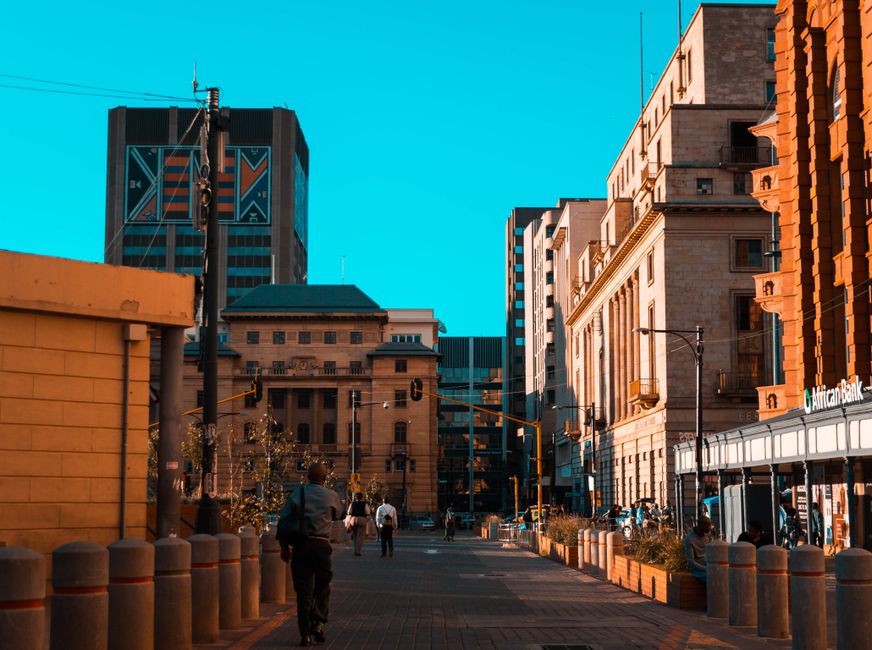
- South Africa’s immigration crackdown exposes the dependence of many small businesses on migrant labour in Johannesburg’s inner city.
- The crackdown aims to reduce undocumented migrants, but may lead to widespread job losses and economic instability.
- Up to 70% of workers in Johannesburg’s inner city are estimated to be undocumented migrants.
- The government’s stricter regulations are forcing business owners to verify employees’ immigration status.
- The economic and social implications of the crackdown are still unclear and a subject of ongoing debate.
What happens when a government cracks down on undocumented employment in a city where many small businesses rely on migrant labour? In Johannesburg’s inner city, the answer is a deeply divided community. The South African government’s push to curb undocumented employment has exposed the dependence of many small businesses on migrant labour, raising questions about the economic and social implications of such a crackdown. As the city grapples with the consequences, residents and business owners are left wondering what the future holds.
Understanding the Crackdown

The South African government’s decision to crackdown on undocumented employment is aimed at reducing the number of undocumented migrants in the country. However, the move has sparked debate and raised concerns about the potential consequences for small businesses and the economy as a whole. According to reports, many small businesses in Johannesburg’s inner city rely heavily on migrant labour, with some estimates suggesting that up to 70% of workers in the area are undocumented migrants. As the government begins to enforce stricter regulations, many business owners are faced with the daunting task of verifying the immigration status of their employees, leading to fears of widespread job losses and economic instability.
Evidence of Dependence on Migrant Labour

Data from the South African Statistics Agency suggests that the country’s economy is heavily reliant on migrant labour, with many industries, including construction, agriculture, and manufacturing, depending on undocumented workers to fill labour gaps. Additionally, a report by the World Health Organization highlights the importance of migrant labour in the healthcare sector, where many undocumented migrants work as caregivers and nurses. As the government cracks down on undocumented employment, there are concerns that these industries will be severely impacted, leading to a decline in economic output and an increase in unemployment.
Counter-Perspectives and Criticisms

Not everyone agrees that the government’s crackdown on undocumented employment is the right approach. Some critics argue that the move is overly restrictive and will lead to widespread suffering among migrant communities, who will be forced to return to their home countries or live in fear of deportation. Others argue that the government should focus on creating jobs and stimulating economic growth, rather than targeting migrant workers. Additionally, there are concerns that the crackdown will drive undocumented migrants underground, making them more vulnerable to exploitation and abuse. As the debate continues, it is clear that there are no easy answers, and the government must carefully consider the potential consequences of its actions.
Real-World Impact

The real-world impact of the government’s crackdown on undocumented employment is already being felt in Johannesburg’s inner city. Many small businesses are struggling to cope with the new regulations, and some have been forced to close their doors. The consequences are not limited to the business community, however, as migrant workers and their families are also feeling the effects. With many facing the prospect of deportation or job loss, there are concerns about the potential for social unrest and instability. As the situation continues to unfold, it is clear that the government’s actions will have far-reaching consequences for the city and its residents.
What This Means For You
So, what does the South African government’s crackdown on undocumented employment mean for you? If you are a business owner or resident in Johannesburg’s inner city, it is essential to understand the potential implications of the new regulations. With many small businesses relying on migrant labour, there is a risk of economic instability and job losses. Additionally, the crackdown raises important questions about the treatment of migrant workers and the need for a more comprehensive approach to managing migration. As the situation continues to evolve, it is crucial to stay informed and engaged, and to consider the potential consequences of the government’s actions.
As the debate surrounding the South African government’s crackdown on undocumented employment continues, one question remains: what is the best way to manage migration and promote economic growth, while also protecting the rights of migrant workers? The answer is complex, and there are no easy solutions. However, by engaging with the issue and considering the perspectives of all stakeholders, we can work towards a more nuanced understanding of the challenges and opportunities presented by migration, and develop a more effective approach to managing its impact.
Source: Al Jazeera