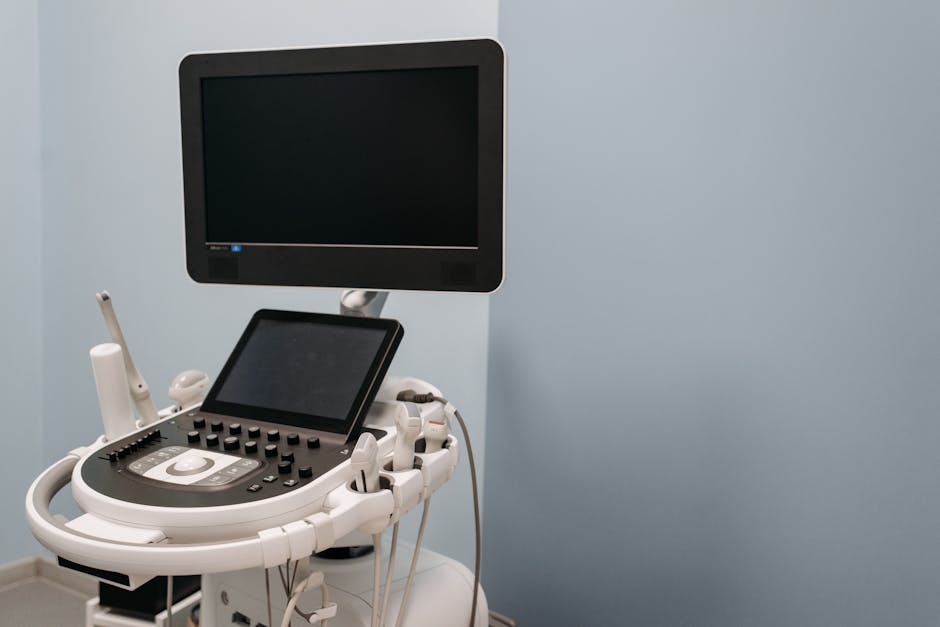
- MIT researchers created an AR system to make medical ultrasounds more accurate and easier to interpret.
- The new technology provides a 3D AR image of the object being scanned, overcoming limitations of 2D ultrasound images.
- The AR system uses a virtual-reality headset, allowing technicians to see a precise 3D digital representation of the object.
- This breakthrough has the potential to revolutionize medical imaging and improve diagnosis and treatment of patients.
- The AR system aims to overcome challenges associated with interpreting 2D ultrasound images and reduce errors or misinterpretations.
Researchers at the Massachusetts Institute of Technology (MIT) have developed an innovative augmented reality (AR) system designed to make medical ultrasounds easier to interpret. The new technology allows technicians to visualize a 3D AR image of the object being scanned, providing a more accurate and precise representation of the tissue. This breakthrough has the potential to revolutionize the field of medical imaging, enabling healthcare professionals to diagnose and treat patients more effectively. The MIT team’s development is a significant step forward in addressing the challenges associated with interpreting 2D ultrasound images.
Current State of Medical Ultrasound Technology

The current state of medical ultrasound technology requires technicians to mentally reconstruct 2D images into a 3D representation of the tissue. This process can be time-consuming, requires a high level of expertise, and may lead to errors or misinterpretations. The MIT researchers’ AR system aims to overcome these limitations by providing a more intuitive and user-friendly interface. Using a virtual-reality headset, technicians can see a precise 3D digital representation of the object being scanned, making it easier to identify and analyze specific features or abnormalities. The new system has the potential to improve the accuracy and efficiency of medical ultrasound imaging.
Historical Context: The Evolution of Medical Imaging

The development of medical imaging technologies has been a long and winding road, marked by significant advancements and innovations. From the early days of X-ray imaging to the current use of magnetic resonance imaging (MRI) and computed tomography (CT) scans, medical imaging has played a crucial role in diagnosing and treating various medical conditions. The introduction of ultrasound technology has further expanded the possibilities of medical imaging, offering a non-invasive and relatively low-cost method for visualizing internal organs and tissues. The MIT researchers’ AR system represents the latest milestone in this journey, leveraging cutting-edge technology to enhance the interpretation and analysis of medical ultrasound images.
Key Players: The Researchers Behind the Innovation

The development of the AR system for medical ultrasounds is the result of a collaborative effort between MIT researchers and other experts in the field. The team, led by prominent researchers in the field of medical imaging, has been working tirelessly to design and test the new technology. Their motivation is driven by the desire to improve patient outcomes and enhance the overall quality of medical care. By providing a more accurate and efficient method for interpreting medical ultrasound images, the researchers aim to empower healthcare professionals and ultimately save lives. The team’s dedication and expertise have been instrumental in bringing this innovative technology to the forefront of medical imaging.
Consequences: The Impact on Healthcare Professionals and Patients

The introduction of the AR system for medical ultrasounds has significant implications for healthcare professionals and patients alike. For technicians, the new technology offers a more intuitive and user-friendly interface, reducing the time and effort required to interpret medical ultrasound images. This, in turn, can lead to improved accuracy and efficiency, enabling healthcare professionals to diagnose and treat patients more effectively. Patients will also benefit from the enhanced imaging capabilities, as the AR system provides a more precise and detailed representation of their internal organs and tissues. This can lead to better patient outcomes, improved treatment plans, and enhanced overall quality of care.
The Bigger Picture
The development of the AR system for medical ultrasounds is part of a broader trend towards leveraging technology to enhance medical imaging and improve patient care. As the field of medical imaging continues to evolve, we can expect to see further innovations and advancements in the years to come. The use of artificial intelligence and machine learning algorithms, for example, has the potential to revolutionize the analysis and interpretation of medical images. The MIT researchers’ AR system represents an important step forward in this journey, demonstrating the potential of technology to transform the field of medical imaging and improve patient outcomes.
As the medical imaging community continues to explore the possibilities of AR and other emerging technologies, it is likely that we will see significant advancements in the years to come. The MIT researchers’ development is a testament to the power of innovation and collaboration, highlighting the potential for technology to enhance medical imaging and improve patient care. As we look to the future, it will be exciting to see how the AR system for medical ultrasounds is adopted and integrated into clinical practice, and what further innovations emerge as a result of this groundbreaking research.
Source: MedicalXpress