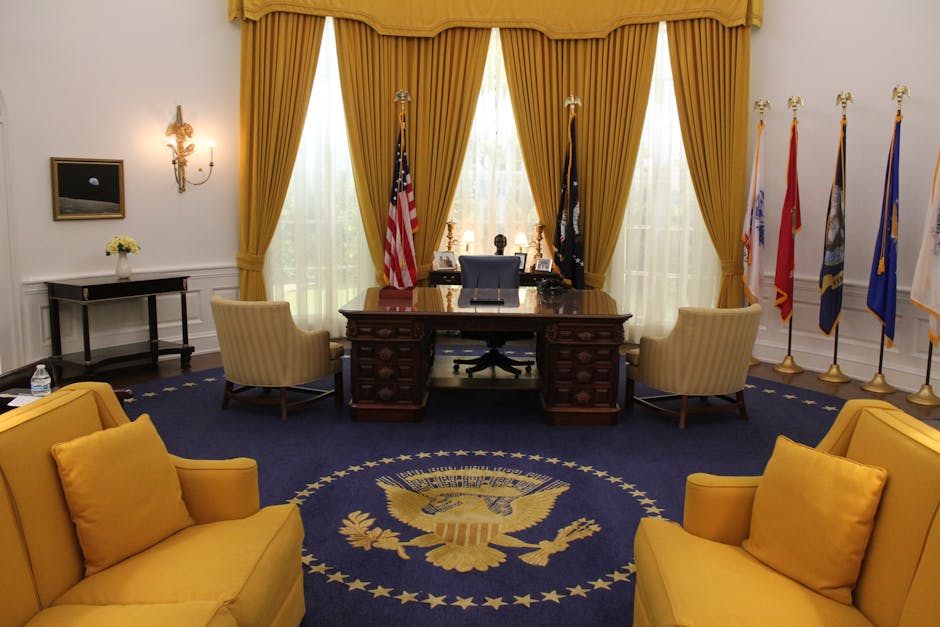
- President Trump’s proposal to take government stakes in AI companies marks a significant shift in his position on regulating the industry.
- The move could give the government a greater say in the direction of the AI industry, with implications for companies like Google, Amazon, and Facebook.
- The US is struggling to maintain its lead in the global AI race, with Trump’s proposal raising questions about the balance between innovation and regulation.
- The proposal reflects growing concerns about the potential risks and consequences of unchecked AI development, including job displacement, bias, and national security threats.
- Regulators are under increasing pressure to ensure that the benefits of AI are shared by all, while minimizing its negative consequences.
President Trump is considering taking government stakes in artificial intelligence giants, a move that reflects a significant shift in his position on regulating the industry. The president’s announcement has sparked a heated debate about the role of government in the tech sector and the potential implications for the future of AI development. As the US struggles to maintain its lead in the global AI race, Trump’s proposal has raised questions about the balance between innovation and regulation. The development is significant, as it could potentially give the government a greater say in the direction of the AI industry, with implications for companies like Google, Amazon, and Facebook.
Background and Context

The idea of government stakes in AI companies is not new, but Trump’s endorsement of the concept marks a significant turning point in the debate. The president’s position on AI regulation has evolved over time, from a largely hands-off approach to a more interventionist stance. This shift reflects growing concerns about the potential risks and consequences of unchecked AI development, including job displacement, bias, and national security threats. As the AI industry continues to grow and expand, regulators are under increasing pressure to ensure that the benefits of AI are shared by all, while minimizing its negative consequences. The US is not alone in grappling with these challenges, as governments around the world struggle to develop effective AI policies.
Key Details and Players

Trump’s proposal to take government stakes in AI companies is still in its early stages, and many details remain unclear. However, the president’s announcement has already sparked a reaction from industry leaders and lawmakers. Some have expressed concerns about the potential impact on innovation and the risks of government overreach, while others see the move as a necessary step to ensure that the AI industry serves the public interest. The proposal is likely to face significant scrutiny and debate in the coming months, as lawmakers and regulators weigh the potential benefits and drawbacks of government intervention in the AI sector. Companies like Google and Amazon are likely to be closely watching the developments, as they could potentially be affected by the outcome.
Analysis and Implications

The potential implications of Trump’s proposal are far-reaching and complex. On the one hand, government stakes in AI companies could provide a much-needed injection of funding and support for the industry, helping to drive innovation and growth. On the other hand, the move could also be seen as a threat to the independence and autonomy of AI companies, potentially stifling innovation and limiting their ability to operate freely. The proposal also raises important questions about the role of government in the tech sector and the potential risks of overregulation. As the debate unfolds, it will be important to consider the potential consequences of government intervention in the AI industry, including the impact on jobs, economic growth, and national security.
Industry Impact and Reaction

The potential impact of Trump’s proposal on the AI industry is significant, with implications for companies, investors, and workers. The move could potentially create new opportunities for investment and growth, but it could also lead to increased regulatory burdens and costs. The industry reaction has been mixed, with some companies expressing concerns about the potential risks of government overreach, while others see the move as a necessary step to ensure that the AI industry serves the public interest. As the debate unfolds, it will be important to consider the potential consequences of government intervention in the AI industry, including the impact on jobs, economic growth, and national security. The tech industry is likely to be closely watching the developments, as they could potentially be affected by the outcome.
Expert Perspectives
Experts are divided on the potential implications of Trump’s proposal, with some seeing it as a necessary step to ensure that the AI industry serves the public interest, while others express concerns about the potential risks of government overreach. According to AI experts, the key to successful AI regulation is striking the right balance between innovation and oversight. As the debate unfolds, it will be important to consider the potential consequences of government intervention in the AI industry, including the impact on jobs, economic growth, and national security.
Looking ahead, the outcome of Trump’s proposal is far from certain, and the debate is likely to continue in the coming months. As the AI industry continues to evolve and grow, it will be important to consider the potential implications of government intervention and the need for effective regulation. One key question is how the government will balance the need for oversight with the need to promote innovation and growth. As the tech news continues to unfold, it will be important to watch for developments in the AI sector and the potential implications for the economy and society as a whole.
Source: The New York Times