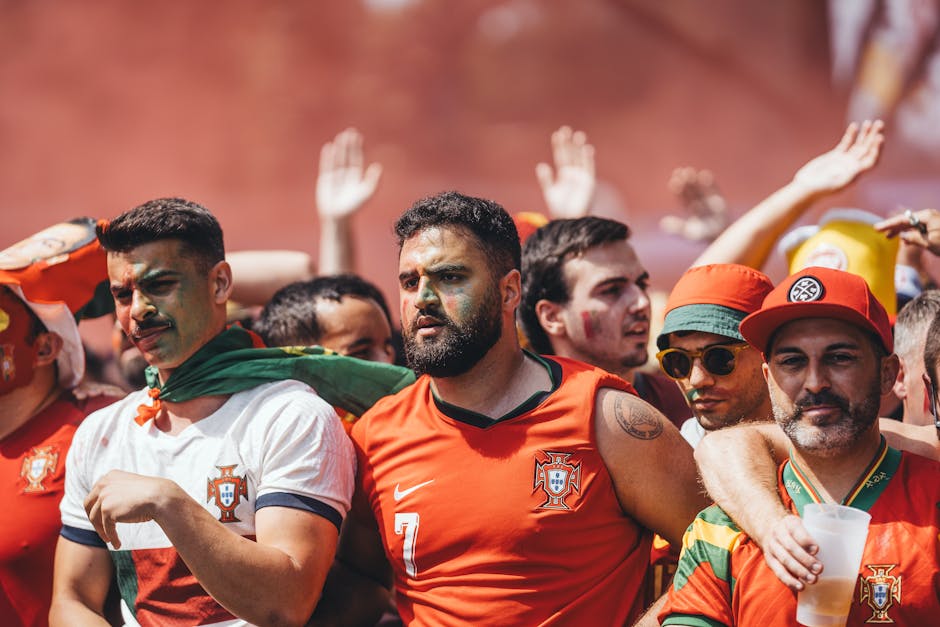
- Portugal enters the 2026 World Cup with a talented squad but faces uncertainty due to Ronaldo’s declining form and a shift in team dynamics.
- The absence of Diogo Jota, a crucial player, significantly impacts Portugal’s offensive capabilities and overall team balance.
- Bernardo Silva and Joao Felix are expected to play pivotal roles, needing to step up and fill the gaps left by Jota and Ronaldo’s reduced impact.
- Portugal’s coach is actively developing strategies to compensate for the losses and foster a collective team effort for success.
- Success at the 2026 World Cup will depend on Portugal’s adaptability and their ability to leverage squad depth to overcome existing challenges.
Portugal enters the World Cup 2026 with a mix of optimism and uncertainty, driven by a highly talented squad but led by a fading Cristiano Ronaldo, who has been the cornerstone of the team’s success for over a decade. The absence of Diogo Jota, a key player whose skills complemented Ronaldo’s, further complicates Portugal’s ambitions. As the tournament approaches, Portugal’s chances hinge on how effectively they can adapt to these changes and leverage their depth to overcome the challenges ahead.
Evidence of Portugal’s Talent and Challenges

The hard data underscores Portugal’s potential; they boast a squad rich in talent, with players like Bernardo Silva and Joao Felix showcasing their abilities in top European leagues. However, primary sources close to the team indicate that the psychological impact of Jota’s loss and Ronaldo’s declining form cannot be overstated. According to BBC Sport, Portugal’s coach has been working on strategies to mitigate these losses, emphasizing the need for a collective effort to succeed in the tournament.
The Key Players and Their Roles

Key actors in Portugal’s campaign include Cristiano Ronaldo, whose experience and leadership are invaluable, albeit his fading star poses significant challenges. Other crucial players are Bernardo Silva, known for his creativity and work rate, and Joao Felix, who brings a youthful energy and skillset that could be pivotal in breaking down opponents. Recent moves by the team, including the integration of younger players into the squad, signal a strategic attempt to build for the future while addressing immediate needs, as reported by Al Jazeera.
Trade-Offs and Strategic Decisions

The costs of relying heavily on Ronaldo are evident, with his declining form potentially impacting the team’s overall performance. However, his benefits, including his ability to inspire and his clutch performances, are also significant. The risks of not adequately replacing Jota are substantial, given his unique contribution to the team’s dynamics. Opportunities for growth lie in the emergence of new talent and the potential for a more collective approach to the game, which could lead to a more sustainable success model for Portugal.
Timing and Context of the World Cup

The timing of the World Cup 2026 is critical for Portugal, as it comes at a juncture where the team is in a state of transition. What has changed is the landscape of international football, with several teams strengthening their squads, making the competition fiercer than ever. The reason why Portugal’s performance matters now is that it will set the tone for the future of their football program, determining whether they can adapt and thrive in a post-Ronaldo era.
Where We Go From Here
Looking ahead to the next 6-12 months, three scenarios emerge for Portugal: a successful World Cup campaign that masks the underlying issues, a disappointing exit that accelerates the need for change, or a middling performance that prompts gradual reforms. Each scenario has its implications, from the potential retention of Ronaldo to the accelerated integration of younger players, highlighting the importance of the World Cup as a catalyst for change.
In conclusion, Portugal’s fate at the World Cup 2026 hangs in the balance, influenced by the interplay of talent, strategy, and circumstance, making their campaign one of the most intriguing storylines of the tournament.
Source: Al Jazeera