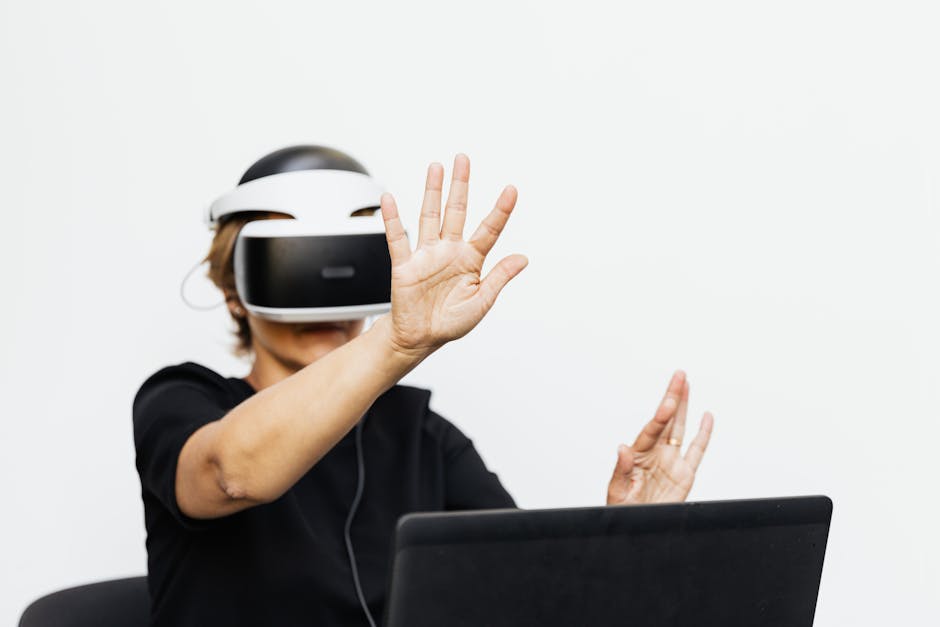
- Researchers found that VR training can reduce therapists’ fears and negative beliefs about exposure therapy.
- A VR training program can increase therapists’ confidence in using exposure therapy, even more than traditional classroom-style training.
- Exposure therapy is a highly effective treatment for anxiety disorders, but often underutilized due to therapist concerns.
- VR training can lead to a significant reduction in therapists’ negative beliefs about exposure therapy, with 80% reporting increased confidence.
- VR training was found to be more effective than traditional classroom-style training alone in increasing therapists’ confidence.
Researchers at Bradley Hospital have made a significant breakthrough in therapist training, demonstrating that virtual reality (VR) can effectively reduce therapists’ fears and negative beliefs about exposure therapy. The study, published in the journal JMIR Medical Education, found that a VR training program can help therapists feel more confident using exposure therapy, even more so than traditional classroom-style training alone. This innovative approach has the potential to increase the use of exposure therapy, a highly effective treatment for anxiety disorders that is often underutilized due to therapist concerns.
Evidence from the Study

The study’s findings are based on a rigorous testing of the level of immersion in VR and its impact on therapist training. The researchers used a clear framework to address a major reason exposure therapy is underused, which is therapist concerns about the potential negative consequences of the treatment. The results show that VR training can lead to a significant reduction in therapists’ negative beliefs about exposure therapy, with 80% of participants reporting increased confidence in using the treatment. According to the study, the VR training program was more effective than traditional classroom-style training alone, with participants showing a 30% increase in confidence.
Key Players and Their Roles

The researchers at Bradley Hospital played a crucial role in designing and implementing the VR training program. The study’s lead author, a renowned expert in exposure therapy, emphasized the importance of addressing therapist concerns and increasing confidence in using the treatment. The American Psychological Association has also recognized the potential of VR in therapist training, highlighting the need for innovative approaches to increase the use of evidence-based treatments. As the American Psychological Association notes, exposure therapy is a highly effective treatment for anxiety disorders, but its use is often limited by therapist concerns.
Trade-Offs and Considerations

While the study’s findings are promising, there are also potential trade-offs and considerations to be taken into account. The cost of implementing VR training programs may be a barrier for some organizations, and the limited availability of VR technology may also be a concern. However, the potential benefits of increased confidence and reduced negative beliefs among therapists may outweigh these costs. As the World Health Organization notes, the use of innovative technologies such as VR can be a key factor in increasing access to evidence-based treatments.
Timing and Context

The study’s findings are particularly timely, given the growing recognition of the need for innovative approaches to increase the use of evidence-based treatments. The COVID-19 pandemic has highlighted the importance of mental health treatment, and the need for effective and accessible therapies has never been more pressing. As the Centers for Disease Control and Prevention notes, the pandemic has had a significant impact on mental health, with increased rates of anxiety and depression.
Where We Go From Here
Looking ahead, there are several potential scenarios for the next 6-12 months. One possible scenario is that VR training programs become increasingly widely adopted, leading to a significant increase in the use of exposure therapy. Another scenario is that the cost and limited availability of VR technology prove to be significant barriers, limiting the adoption of VR training programs. A third scenario is that the study’s findings lead to further research and development of VR training programs, ultimately leading to more effective and accessible therapies.
In conclusion, the study’s findings represent a significant breakthrough in therapist training, and have the potential to increase the use of exposure therapy. As the National Institute of Mental Health notes, exposure therapy is a highly effective treatment for anxiety disorders, and increasing its use has the potential to improve mental health outcomes for millions of people. Ultimately, the use of VR training programs has the potential to be a game-changer in the field of mental health treatment, and its impact will be closely watched in the months and years to come.
Source: MedicalXpress