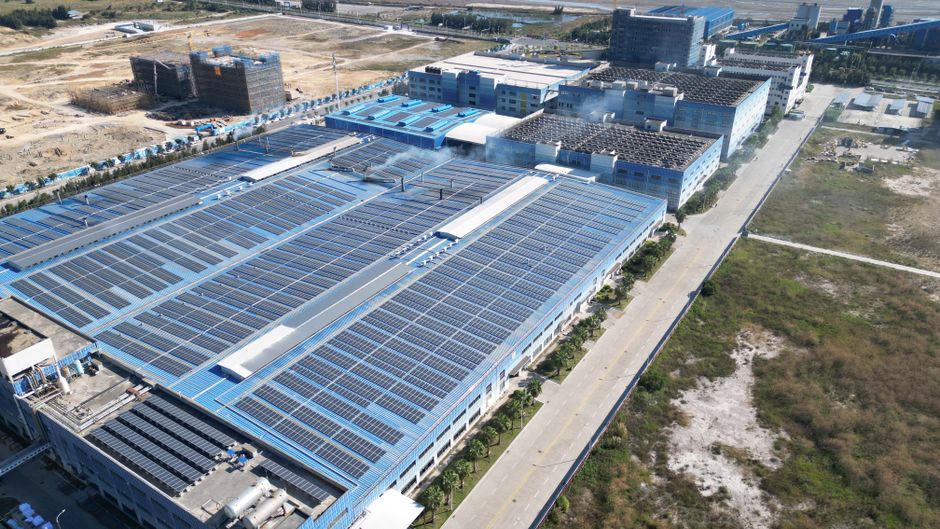
- China’s surplus of unused solar panels is a significant issue due to the world’s largest manufacturer facing idle factories and wasted resources.
- The global push for renewable energy and China’s crucial role in solar power production make the surplus particularly striking.
- China’s solar panel surplus is a result of overproduction, decreased domestic demand, and trade tensions.
- The consequences of the surplus include job losses and economic instability for many factories and workers.
- China’s ability to capitalize on its solar panel production is essential for meeting global climate goals.
China, the world’s largest manufacturer of solar panels, is facing a significant surplus of unused panels, with many factories sitting idle. This phenomenon is particularly striking given the global push for renewable energy and the crucial role that solar power is expected to play in reducing carbon emissions. The wasted resources and idle production capacity are not only a loss for China’s economy but also a missed opportunity for the world to transition to cleaner energy sources. As the world’s largest emitter of greenhouse gases, China’s ability to capitalize on its solar panel production is essential for meeting global climate goals.
The Solar Panel Glut: Causes and Consequences

The current surplus of solar panels in China is a result of a combination of factors, including overproduction, decreased domestic demand, and trade tensions. In recent years, China has invested heavily in its solar industry, leading to a rapid increase in production capacity. However, the domestic market has not been able to absorb this increased supply, leading to a significant glut of unused panels. Furthermore, trade tensions and tariffs imposed by other countries have reduced China’s export market, exacerbating the problem. The consequences of this surplus are far-reaching, with many factories forced to reduce production or shut down entirely, leading to job losses and economic instability.
Key Players and Developments

The Chinese government has been attempting to address the issue through various measures, including providing subsidies to solar panel manufacturers and promoting the use of solar energy in rural areas. However, these efforts have been hindered by the complexities of China’s energy market and the lack of a coordinated national policy. Meanwhile, international companies such as JinkoSolar and Trina Solar are looking to capitalize on China’s surplus by importing unused panels at discounted prices. As the situation continues to evolve, it is essential to monitor the actions of these key players and their impact on the global solar industry.
Analysis and Implications

The wasted solar panel surplus in China has significant implications for the global energy market and the environment. According to the International Energy Agency, solar power could become the largest source of electricity globally by 2050, but this will require a significant increase in production and deployment. China’s idle factories and unused panels are a major obstacle to achieving this goal. Furthermore, the economic and social implications of the surplus should not be underestimated, as the solar industry is a significant employer in China and a key driver of economic growth. As the world looks to transition to a low-carbon economy, the effective utilization of China’s solar panel production capacity is crucial.
Broader Consequences and Future Directions

The consequences of China’s solar panel surplus extend beyond the energy sector, with implications for the global economy and trade. As the world’s largest trading nation, China’s economic stability is closely tied to the health of its manufacturing sector, including the solar industry. Furthermore, the surplus has significant environmental implications, as the production of solar panels requires significant amounts of energy and resources. As the situation continues to evolve, it is essential to consider the broader consequences of the surplus and the potential future directions for China’s solar industry. This may involve the development of new technologies, the expansion of domestic demand, or the creation of new export markets.
Expert Perspectives
Experts in the field are divided on the best course of action to address China’s solar panel surplus. Some argue that the government should provide additional subsidies and support to the industry, while others believe that the market should be allowed to correct itself. According to industry analysts, the key to resolving the surplus lies in increasing domestic demand and promoting the use of solar energy in China’s rural areas. Others, such as environmental groups, argue that the surplus is an opportunity for China to transition to a more sustainable and renewable energy-based economy.
Looking ahead, it is clear that the situation with China’s solar panel surplus will continue to evolve in the coming months and years. As the global energy market continues to shift towards renewable energy sources, the effective utilization of China’s solar panel production capacity will be crucial. Key questions remain, such as how the Chinese government will address the surplus, what role international companies will play in the market, and how the situation will impact the global energy landscape. As the world continues to grapple with the challenges of climate change and energy security, the story of China’s solar panel surplus serves as a reminder of the complexities and opportunities inherent in the transition to a low-carbon economy.
Source: Financial Times