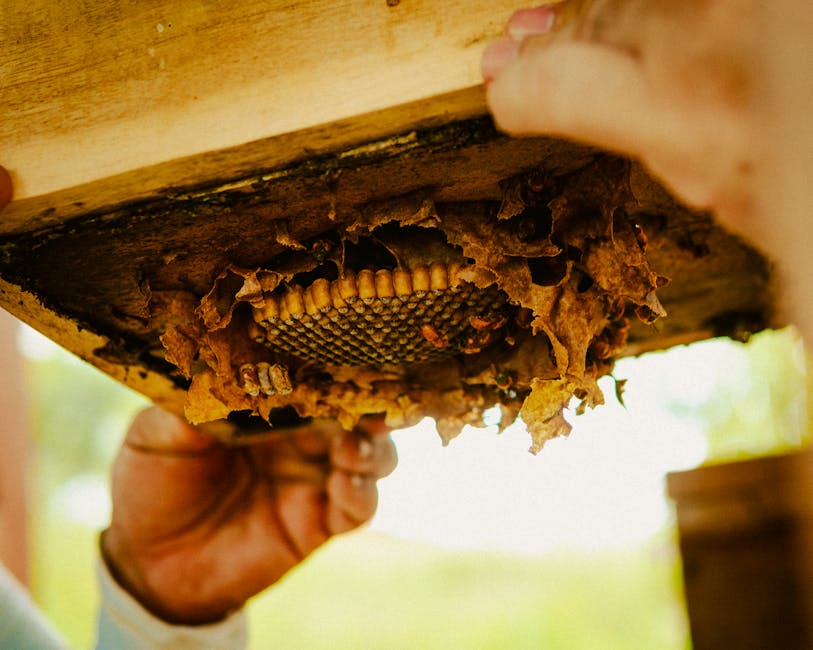
- Research highlights the importance of considering both genetic and environmental factors in animal development, using the queen bee as a case study.
- The queen bee’s wax home, or royal bedchamber, plays a crucial role in her development and fertility.
- Optimal temperatures and humidity levels in the royal bedchamber are linked to higher fertility rates in queen bees.
- The queen bee’s development is influenced by her environment, including the chemical composition of her wax home.
- The study of queen bee development has significant implications for our understanding of social insects and their behavior.
Research published in Nature has shed light on the factors that shape animal development, with a particular focus on the queen bee. The study reveals that the queen bee’s special wax home, also known as the royal bedchamber, plays a crucial role in her development. This finding highlights the importance of considering both genetic and environmental factors when understanding animal development. The queen bee’s wax home is a critical component of her environment, and its impact on her development has significant implications for our understanding of social insects.
The Science Behind Queen Bee Development

Studies have shown that the royal bedchamber provides the queen bee with a unique environment that influences her development. The wax home is constructed by worker bees and is designed to meet the specific needs of the queen. The temperature, humidity, and chemical composition of the royal bedchamber all contribute to the queen bee’s development, with research suggesting that these factors can affect her fertility, longevity, and behavior. For example, a study published in Nature found that queen bees raised in royal bedchambers with optimal temperatures and humidity levels had higher fertility rates than those raised in less optimal conditions.
Key Players in Queen Bee Development

The development of the queen bee is a complex process that involves the interaction of multiple factors, including genetics, environment, and social interactions. The worker bees that construct the royal bedchamber play a critical role in this process, as they are responsible for creating the environment that will shape the queen bee’s development. The queen bee herself also plays a key role, as her genetic makeup and behavior will influence how she interacts with her environment. Additionally, the colony as a whole is important, as the social structure and dynamics of the colony will impact the queen bee’s development and success.
Trade-Offs in Queen Bee Development

The development of the queen bee is a delicate balance of competing factors, with trade-offs between different components of her environment and genetics. For example, a royal bedchamber that is optimized for temperature and humidity may not be optimal for chemical composition, and vice versa. Similarly, the genetic makeup of the queen bee may influence how she responds to different environmental factors, with some genetic combinations being more or less sensitive to certain conditions. Understanding these trade-offs is critical for appreciating the complexity of queen bee development and the importance of considering multiple factors when studying this process.
Timing of Queen Bee Development

The development of the queen bee is a highly regulated process that is closely tied to the needs of the colony. The construction of the royal bedchamber and the development of the queen bee are both timed to coincide with the needs of the colony, with the queen bee emerging when the colony is ready for her to begin laying eggs. This timing is critical, as it ensures that the queen bee is able to fulfill her role in the colony and that the colony is able to thrive. Research has shown that disruptions to this timing, such as changes in temperature or humidity, can have significant impacts on the development and success of the queen bee.
Where We Go From Here
As our understanding of queen bee development continues to evolve, there are several potential scenarios for the next 6-12 months. One possibility is that further research will reveal additional factors that influence queen bee development, such as the role of microbiome in shaping the queen bee’s environment. Another possibility is that advances in technology will allow for more precise control over the conditions in the royal bedchamber, enabling researchers to better understand the complex interactions between genetics and environment. Finally, there is the potential for practical applications of this research, such as the development of new methods for beekeeping that take into account the importance of the royal bedchamber.
In conclusion, the development of the queen bee is a complex and highly regulated process that is influenced by a combination of genetic and environmental factors, including the royal bedchamber. As research continues to uncover the intricacies of this process, it is clear that the wax home of the queen bee plays a critical role in her development and success, and that understanding this role is essential for appreciating the biology and social structure of social insects.
Source: Nature