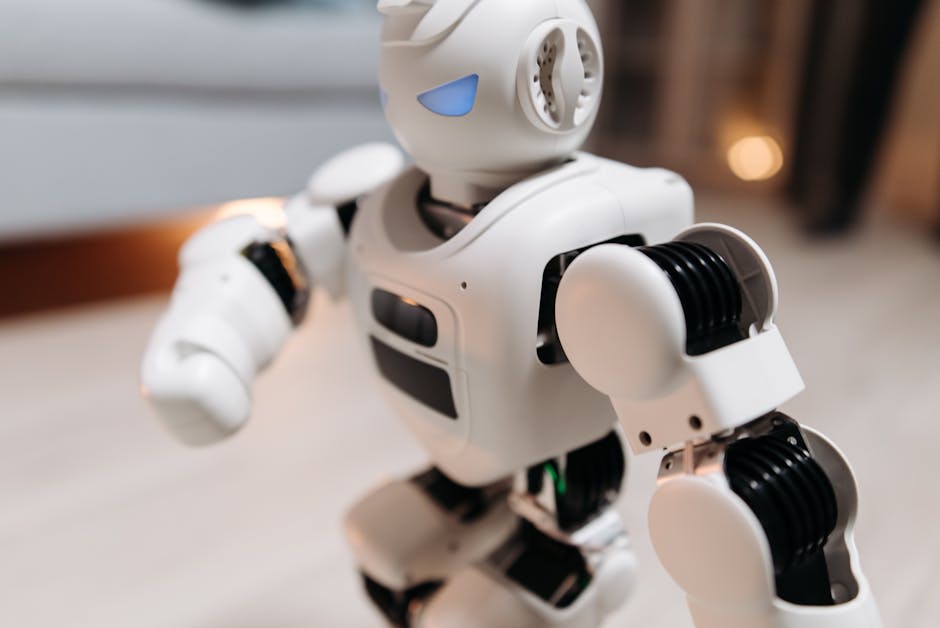
- Recent robot videos can distort public perceptions of robotic capabilities, leading to overestimation of their actual abilities.
- The field of robotics continues to advance, but it’s essential to understand the limitations of these machines and separate fact from fiction.
- Humanoid robots are not as capable as they seem in viral videos, and their limitations are often overlooked.
- The media plays a significant role in perpetuating misconceptions about humanoid robots through sensationalized headlines and videos.
- Understanding the potential risks and limitations of humanoid robots is crucial as they become more integrated into various environments.
Recent robot demonstrations have gone viral on the internet, showcasing impressive humanoid robots that can perform various tasks with ease. However, these demonstrations can distort public perceptions of robotic capabilities, leading to overestimation of their actual abilities. As the field of robotics continues to advance, it is essential to understand the limitations of these machines and separate fact from fiction. Boston Dynamics, a leading robotics company, has been at the forefront of developing humanoid robots, with their Atlas and Handle robots being prime examples.
The Rise of Humanoid Robots

The development of humanoid robots has been a long-standing goal in the field of robotics, with the aim of creating machines that can interact with and assist humans in various environments. While significant progress has been made, the capabilities of these robots are often exaggerated, leading to unrealistic expectations. The media plays a significant role in perpetuating this misconception, with sensationalized headlines and videos that showcase the robots’ abilities without providing context. As a result, the public is often left with an inflated sense of what these robots can actually do, and the potential risks and limitations are overlooked.
Key Demonstrations and Players

Several companies, including Boston Dynamics and Honda, have demonstrated their humanoid robots in recent years, with impressive results. For example, Boston Dynamics’ Atlas robot has been shown to perform tasks such as walking and running, while Honda’s ASIMO robot has demonstrated its ability to perform tasks that require precision and dexterity. However, these demonstrations are often carefully choreographed and do not reflect the robots’ actual capabilities in real-world scenarios. Furthermore, the development of these robots is not without challenges, with issues such as stability, balance, and power consumption being major concerns.
Analysis of Capabilities and Limitations

Despite the impressive demonstrations, humanoid robots still have significant limitations. For instance, they are often prone to falling and are not yet capable of navigating complex environments without assistance. Additionally, their ability to interact with humans is limited, and they are not yet able to understand and respond to subtle cues. According to Boston Dynamics, their robots are still in the development phase, and significant work is needed to overcome these limitations. Experts in the field, such as those at Wikipedia, agree that while humanoid robots have the potential to revolutionize various industries, their development is a long-term process that requires careful consideration of their capabilities and limitations.
Implications and Potential Risks

The overestimation of humanoid robots’ capabilities can have significant implications, particularly in industries such as healthcare and manufacturing, where these robots are being considered for deployment. If the public and investors have unrealistic expectations, it can lead to disappointment and a lack of investment in the field. Furthermore, the potential risks associated with these robots, such as accidents and job displacement, are often overlooked in the excitement surrounding their development. As such, it is essential to have a nuanced understanding of the capabilities and limitations of humanoid robots to ensure that their development and deployment are responsible and beneficial to society.
Expert Perspectives
Experts in the field of robotics have varying opinions on the development of humanoid robots. Some, such as Dr. Andrew Ng, co-founder of Coursera, believe that humanoid robots have the potential to revolutionize various industries, while others, such as Dr. Nick Bostrom, director of the Future of Humanity Institute, are more cautious, highlighting the potential risks and limitations. As the field continues to evolve, it is essential to consider these contrasting viewpoints to ensure that the development of humanoid robots is responsible and beneficial to society.
Looking forward, it is essential to separate fact from fiction when it comes to humanoid robots. As the public becomes increasingly aware of the limitations and potential risks associated with these machines, it is likely that expectations will become more realistic. However, this will require a concerted effort from researchers, developers, and the media to provide accurate and nuanced information about the capabilities and limitations of humanoid robots. One open question is how the development of humanoid robots will impact the job market, and whether these machines will augment or replace human workers. As the field continues to evolve, it is essential to consider these questions and ensure that the development of humanoid robots is responsible and beneficial to society.
Source: Ars Technica