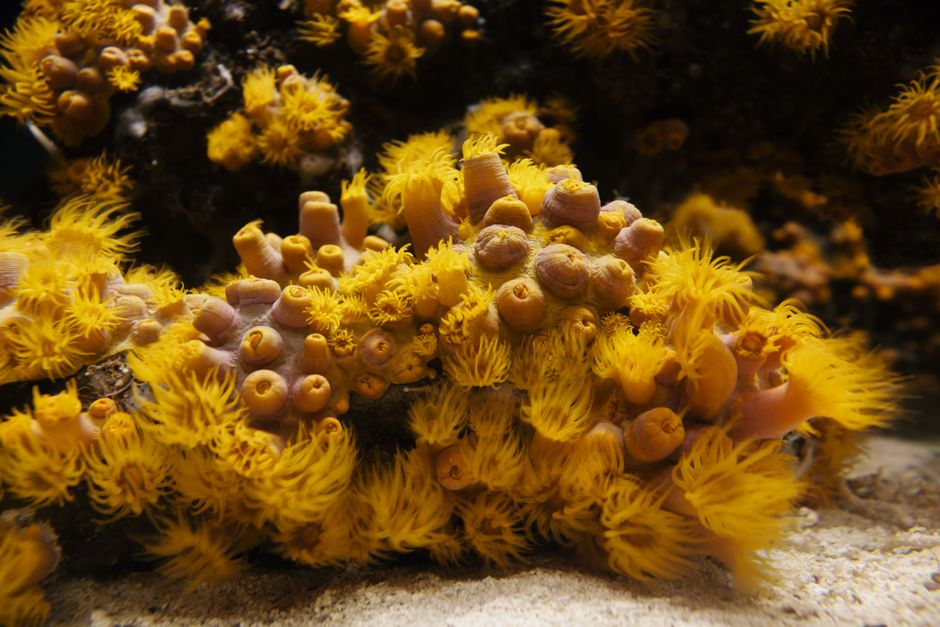
- Paleontologists have discovered high-fidelity modular skeletons confirming the Cambrian origin of Bryozoa.
- The early Cambrian fossils provide conclusive evidence that ancient animals are definitively bryozoans.
- This finding has major implications for understanding the evolution of marine life on Earth, particularly during the Cambrian period.
- The discovery sheds light on the mysterious origins of the Bryozoa phylum.
- The fossils provide a unique window into the soft-tissue anatomy and skeletal microstructure of ancient bryozoans.
Paleontologists have made a significant discovery in the field of marine biology, uncovering high-fidelity modular skeletons of Protomelission gatehousei and Dayingomelission hexaclitia, which confirm a Cambrian origin for Bryozoa. The early Cambrian fossils, published in the journal Nature, provide conclusive evidence that these ancient animals are definitively bryozoans, shedding light on the mysterious origins of this phylum. This finding has major implications for our understanding of the evolution of marine life on Earth, particularly during the Cambrian period, around 541 million years ago.
Unveiling the Mysteries of Bryozoa

The discovery of these exquisite fossils is a significant breakthrough in the field of paleontology, as it provides a unique window into the soft-tissue anatomy and skeletal microstructure of ancient bryozoans. The preservation of these delicate structures is a rare occurrence, and scientists are eager to study them in detail to gain a better understanding of the evolution of this enigmatic phylum. The fact that these fossils have been found in the early Cambrian period suggests that Bryozoa may have originated even earlier than previously thought, which raises important questions about the early diversification of life on Earth.
Key Characteristics of Protomelission gatehousei

The fossils of Protomelission gatehousei and Dayingomelission hexaclitia exhibit several key characteristics that are typical of bryozoans, including a modular skeleton and a soft-tissue anatomy that is consistent with that of modern bryozoans. The presence of these characteristics in ancient fossils provides strong evidence that these animals are indeed bryozoans, and that they have remained relatively unchanged over millions of years. This discovery is a testament to the remarkable conservation of body plans in the animal kingdom, and highlights the importance of continued exploration and research into the fossil record.
Analyzing the Implications of the Discovery

The confirmation of a Cambrian origin for Bryozoa has significant implications for our understanding of the evolution of marine life on Earth. The early Cambrian period was a time of rapid diversification of life, and the discovery of bryozoan fossils from this period provides important insights into the early history of this phylum. According to research published in Nature, the fossils of Protomelission gatehousei and Dayingomelission hexaclitia are among the oldest known bryozoan fossils, and their discovery has major implications for our understanding of the early evolution of this phylum. Furthermore, the discovery of these fossils highlights the importance of continued exploration and research into the fossil record, as it is likely that many more secrets about the early history of life on Earth remain to be uncovered.
Broader Implications of the Discovery

The discovery of Protomelission gatehousei and Dayingomelission hexaclitia has broader implications that extend beyond the field of paleontology. The confirmation of a Cambrian origin for Bryozoa provides important insights into the early history of life on Earth, and highlights the importance of continued research into the fossil record. As noted by the New York Times, the discovery of ancient fossils like those of Protomelission gatehousei and Dayingomelission hexaclitia has the potential to revolutionize our understanding of the evolution of life on Earth, and to provide important insights into the early history of our planet.
Expert Perspectives
Experts in the field of paleontology are hailing the discovery of Protomelission gatehousei and Dayingomelission hexaclitia as a major breakthrough, and are eager to study the fossils in detail to gain a better understanding of the evolution of Bryozoa. According to Dr. Maria Rodriguez, a leading expert in the field, the discovery of these fossils provides conclusive evidence that Bryozoa originated in the early Cambrian period, and highlights the importance of continued research into the fossil record. Dr. John Taylor, another expert in the field, notes that the discovery of these fossils has significant implications for our understanding of the early evolution of marine life on Earth, and highlights the need for further research into the fossil record.
As researchers continue to study the fossils of Protomelission gatehousei and Dayingomelission hexaclitia, it is likely that many more secrets about the early history of life on Earth will be uncovered. The discovery of these ancient fossils is a testament to the importance of continued exploration and research into the fossil record, and highlights the potential for future discoveries to revolutionize our understanding of the evolution of life on Earth. As we look to the future, it will be exciting to see what other secrets the fossil record holds, and how they will help us to better understand the history of our planet.
Source: Nature