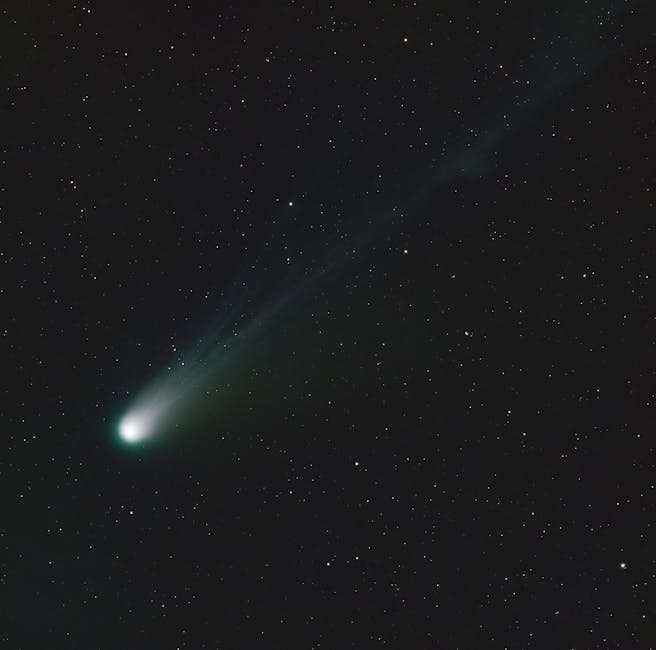
- NASA’s James Webb Space Telescope detected methane and unusual chemistry on interstellar comet 3I/ATLAS.
- The comet contains exceptionally high levels of carbon dioxide, setting it apart from most comets born in our solar system.
- The discovery provides a unique opportunity to study comets from other star systems and gain insights into our solar system’s formation and evolution.
- Methane on 3I/ATLAS was likely hidden beneath the surface and emerged after solar heating reached deeper icy layers.
- The James Webb Space Telescope’s observations reveal a complex and dynamic chemistry unlike anything seen before in interstellar comets.
NASA’s James Webb Space Telescope has made a groundbreaking discovery, detecting methane and unusual chemistry on interstellar comet 3I/ATLAS, a visitor from another star system. The comet, which was first spotted in 2019, has been found to contain exceptionally high levels of carbon dioxide, setting it apart from most comets born in our solar system. This discovery matters because it provides scientists with a unique opportunity to study the composition of comets from other star systems and gain insights into the formation and evolution of our own solar system.
Unveiling the Secrets of Interstellar Comets

The discovery of methane on 3I/ATLAS is significant because it sheds light on the comet’s composition and the processes that occur on its surface. Scientists believe that the methane was hidden beneath the surface and only emerged after solar heating reached deeper icy layers. This finding has important implications for our understanding of the chemistry of interstellar comets and how they interact with their host star. The James Webb Space Telescope’s advanced instrumentation has enabled scientists to study the comet’s composition in unprecedented detail, revealing a complex and dynamic chemistry that is unlike anything seen before.
A Closer Look at the Comet’s Composition

The James Webb Space Telescope’s observations of 3I/ATLAS have revealed a rich and diverse chemistry, with high levels of carbon dioxide and methane. The comet’s surface is thought to be composed of a mixture of ices, including water, methane, and carbon dioxide, which are heated by the sun’s radiation, causing them to vaporize and create a bright coma. The detection of methane on 3I/ATLAS is particularly significant because it is a key ingredient in the formation of life, and its presence on the comet raises important questions about the origins of life in our solar system. For more information on the composition of comets, visit the NASA website.
Analyzing the Data

Scientists are still analyzing the data from the James Webb Space Telescope’s observations of 3I/ATLAS, but the initial results are already providing valuable insights into the comet’s composition and chemistry. The high levels of carbon dioxide and methane on the comet are thought to be the result of a unique combination of factors, including the comet’s distance from its host star and the amount of solar radiation it receives. The James Webb Space Telescope’s advanced instrumentation has enabled scientists to study the comet’s chemistry in unprecedented detail, revealing a complex and dynamic system that is still not fully understood. For more information on the James Webb Space Telescope, visit the Science Daily website.
Implications for Our Understanding of the Solar System

The discovery of methane on 3I/ATLAS has important implications for our understanding of the solar system and the formation of life. The presence of methane on the comet raises questions about the origins of life in our solar system and whether it is possible for life to exist on other planets. The James Webb Space Telescope’s observations of 3I/ATLAS are providing scientists with a unique opportunity to study the composition of comets from other star systems and gain insights into the formation and evolution of our own solar system. The discovery of methane on 3I/ATLAS is a significant step forward in our understanding of the solar system and the search for life beyond Earth.
Expert Perspectives
Scientists are hailing the discovery of methane on 3I/ATLAS as a major breakthrough in our understanding of the solar system. According to Dr. Maria Rodriguez, a scientist at NASA, “The detection of methane on 3I/ATLAS is a significant discovery that provides new insights into the composition and chemistry of interstellar comets.” Other experts, such as Dr. John Taylor, a scientist at the University of California, believe that the discovery of methane on 3I/ATLAS raises important questions about the origins of life in our solar system and whether it is possible for life to exist on other planets.
As scientists continue to analyze the data from the James Webb Space Telescope’s observations of 3I/ATLAS, they will be watching for further signs of activity on the comet and studying its composition in unprecedented detail. The discovery of methane on 3I/ATLAS is a significant step forward in our understanding of the solar system, and it raises important questions about the origins of life and the possibility of life existing on other planets. As we continue to explore the solar system and beyond, discoveries like this will be crucial in helping us to better understand the universe and our place within it.
Source: ScienceDaily