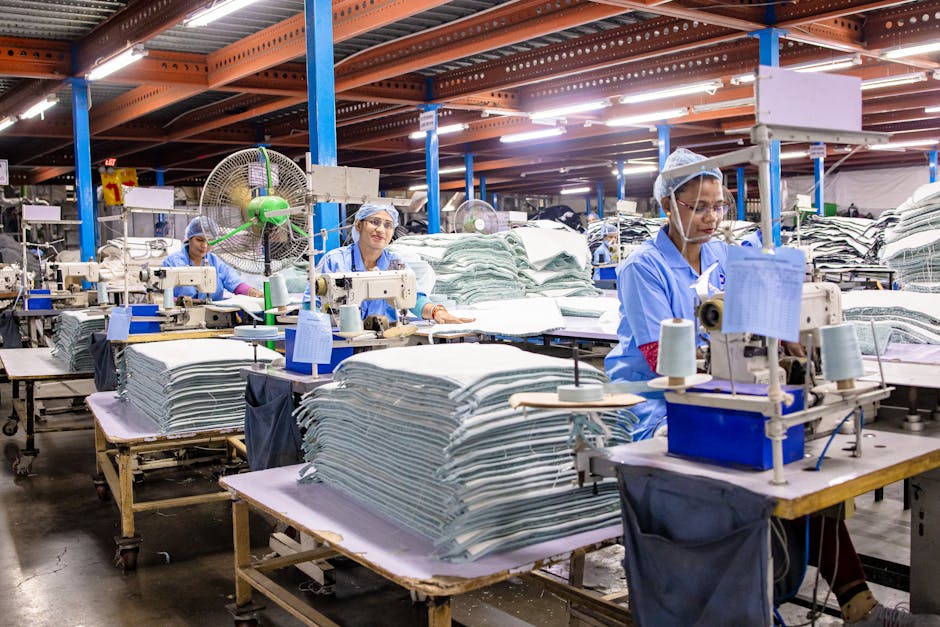
- The US manufacturing sector, once expected to experience a ‘golden age’, is now facing significant challenges due to uneven recovery.
- Spending on new factories has decreased, indicating that companies are hesitant to invest in new capacity and equipment.
- Industry executives point to supply chain disruptions, labor shortages, and rising raw material costs as major obstacles to growth.
- The decline in manufacturing investment is a worrying sign for the overall health of the US economy.
- The US manufacturing sector is failing to live up to its potential, with consequences being felt across the economy.
The US manufacturing sector, once touted as on the cusp of a ‘golden age’ by the President, is now facing significant challenges. Spending on new factories has fallen, and industry executives are pointing to an uneven recovery as the main culprit. This slowdown is particularly concerning, given the high expectations surrounding the sector’s potential for growth and job creation. The decline in manufacturing investment is a worrying sign for the overall health of the US economy, and it remains to be seen how the government will respond to address these challenges.
Current State of US Manufacturing

The current state of US manufacturing is marked by uncertainty and uneven growth. While some sectors, such as the automotive industry, have experienced a rebound in recent months, others, like textiles and apparel, continue to struggle. The decline in spending on new factories is a key indicator of this trend, as it suggests that companies are hesitant to invest in new capacity and equipment. Furthermore, industry executives are citing a range of challenges, including supply chain disruptions, labor shortages, and rising raw material costs, as major obstacles to growth. As a result, the US manufacturing sector is failing to live up to its potential, and the consequences of this slowdown are being felt across the economy.
Historical Context of US Manufacturing

The story behind the struggles of the US manufacturing sector is complex and multifaceted. In the decades following World War II, the US experienced a period of unprecedented economic growth, driven in large part by the expansion of the manufacturing sector. However, in recent years, the sector has faced significant challenges, including globalization, automation, and the rise of international competition. The decline of traditional manufacturing industries, such as textiles and steel, has been particularly pronounced, and the sector has struggled to adapt to the changing economic landscape. Despite efforts to revitalize the sector, including the President’s pledge to unleash a ‘golden age’ of US manufacturing, the industry continues to face significant headwinds.
Key Players in US Manufacturing

The key players in the US manufacturing sector are a diverse group, including industry executives, policymakers, and workers. Industry executives, such as those in the National Association of Manufacturers, are working to promote the interests of the sector and advocate for policies that support growth and investment. Policymakers, including the President and members of Congress, are also playing a crucial role in shaping the future of the sector, through initiatives such as tax reform and trade policy. Meanwhile, workers in the manufacturing sector are facing significant challenges, including job insecurity, declining wages, and limited opportunities for advancement. As the sector continues to evolve, it is essential that the needs and interests of these key players are taken into account.
Consequences of the Manufacturing Slowdown

The consequences of the manufacturing slowdown are far-reaching and have significant implications for stakeholders across the economy. For workers, the decline in manufacturing investment means fewer job opportunities and lower wages. For companies, the slowdown in growth means reduced revenues and profitability. For policymakers, the challenges facing the sector pose significant hurdles to achieving economic growth and stability. Furthermore, the slowdown in manufacturing investment has broader implications for the US economy, including reduced economic growth, lower tax revenues, and decreased competitiveness. As the sector continues to struggle, it is essential that stakeholders work together to address the challenges facing the industry and promote policies that support growth and investment.
The Bigger Picture
The struggles of the US manufacturing sector are part of a larger story about the changing nature of the global economy. The rise of international competition, the growth of automation and artificial intelligence, and the increasing importance of services and knowledge-based industries are all contributing to a shift away from traditional manufacturing. As the US economy continues to evolve, it is essential that policymakers and industry leaders work together to promote policies that support growth and investment in the manufacturing sector, while also addressing the broader challenges facing the economy. This includes investing in education and training programs, promoting innovation and entrepreneurship, and supporting initiatives that promote economic development and competitiveness. By taking a comprehensive and forward-thinking approach, the US can work to revitalize the manufacturing sector and promote long-term economic growth and stability.
In conclusion, the US manufacturing sector is at a crossroads, facing significant challenges and uncertainties. While the President’s pledge to unleash a ‘golden age’ of US manufacturing has yet to materialize, there are still opportunities for growth and investment in the sector. As stakeholders work together to address the challenges facing the industry, it is essential that they take a long-term view, focusing on policies and initiatives that promote sustainable growth, innovation, and competitiveness. By doing so, the US can work to revitalize the manufacturing sector and promote a brighter economic future for all Americans. For more information on the US manufacturing sector, visit the National Association of Manufacturers website.
Source: Financial Times