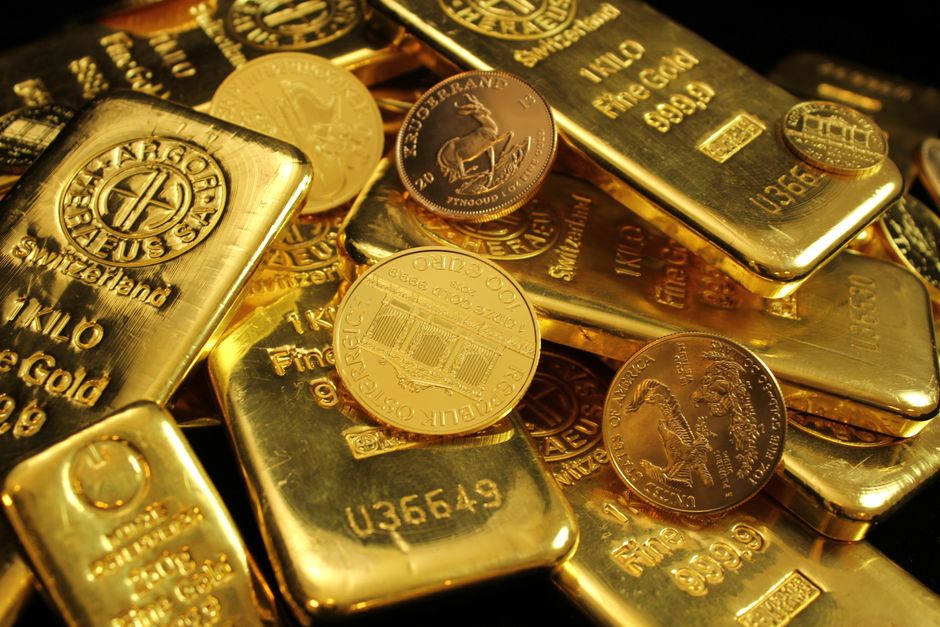
- Gold has surpassed US bonds as the world’s top reserve asset, driven by central banks seeking to diversify and mitigate risks.
- The shift towards gold is a response to economic uncertainty and the potential for inflation, accelerated by the COVID-19 pandemic.
- Central banks like China and Russia have actively accumulated gold to reduce their reliance on US bonds and bolster their foreign exchange reserves.
- The use of gold as a reserve asset is not new, but rather a return to a historical norm that existed before the establishment of the US dollar.
- This development marks a significant shift in the global economic landscape, with gold becoming an increasingly attractive option for central banks.
The European Central Bank has announced that gold has overtaken U.S. bonds as the world’s top reserve asset, marking a significant shift in the global economic landscape. This development is particularly noteworthy given the current economic climate, with central banks seeking to diversify their reserves and mitigate potential risks. As a result, gold has become an increasingly attractive option for central banks looking to stabilize their economies.
Current State of Reserve Assets

The ECB’s announcement comes as no surprise, given the recent trends in reserve asset management. Central banks have been increasingly turning to gold as a safe-haven asset, driven by concerns over economic uncertainty and the potential for inflation. The COVID-19 pandemic has further accelerated this trend, with many central banks seeking to bolster their reserves and reduce their reliance on U.S. bonds. As a result, gold reserves have surged in recent years, with many countries, including China and Russia, actively accumulating gold to diversify their foreign exchange reserves.
Historical Context of Reserve Assets

The shift towards gold as a reserve asset is not a new phenomenon, but rather a reversion to a historical norm. Prior to the establishment of the U.S. dollar as a global reserve currency, gold played a central role in international trade and finance. The Bretton Woods system, established in the aftermath of World War II, pegged the value of the U.S. dollar to gold, further solidifying gold’s position as a reserve asset. However, the collapse of the Bretton Woods system in the 1970s led to a shift towards U.S. bonds as the primary reserve asset, a trend that has only recently begun to reverse.
Key Players in the Reserve Asset Market

The ECB’s announcement has significant implications for key players in the reserve asset market, including central banks, investors, and governments. Central banks, in particular, will need to reassess their reserve management strategies in light of this shift, potentially leading to increased demand for gold and other safe-haven assets. Investors, meanwhile, will need to consider the potential impact of this trend on the value of U.S. bonds and other reserve assets. Governments, too, will need to adapt to this new reality, potentially leading to changes in monetary policy and international trade agreements.
Consequences of the Shift to Gold

The consequences of this shift are far-reaching, with potential implications for the global economy, international trade, and monetary policy. As central banks continue to accumulate gold, the demand for U.S. bonds may decrease, potentially leading to higher borrowing costs for the U.S. government. This, in turn, could have significant implications for the global economy, potentially leading to increased economic uncertainty and volatility. Furthermore, the shift towards gold may also lead to changes in international trade agreements, potentially resulting in a more multipolar global economy.
The Bigger Picture
The shift towards gold as a reserve asset reflects a broader trend towards diversification and risk management in international finance. As the global economy becomes increasingly complex and interconnected, central banks and investors are seeking to mitigate potential risks and stabilize their economies. The rise of gold as a reserve asset is a key component of this trend, reflecting a growing recognition of the need for safe-haven assets in times of economic uncertainty. As the global economy continues to evolve, it is likely that this trend will continue, with significant implications for international finance and trade.
In conclusion, the ECB’s announcement marks a significant turning point in the global economy, reflecting a shift towards gold as a reserve asset and a more diversified international financial system. As central banks and investors continue to navigate this new landscape, it is essential to consider the potential implications of this trend, both for the global economy and for individual investors. With the rise of gold as a reserve asset, it is likely that the global economy will become increasingly complex and interconnected, requiring a nuanced understanding of the trends and forces driving this shift.
Source: Reddit