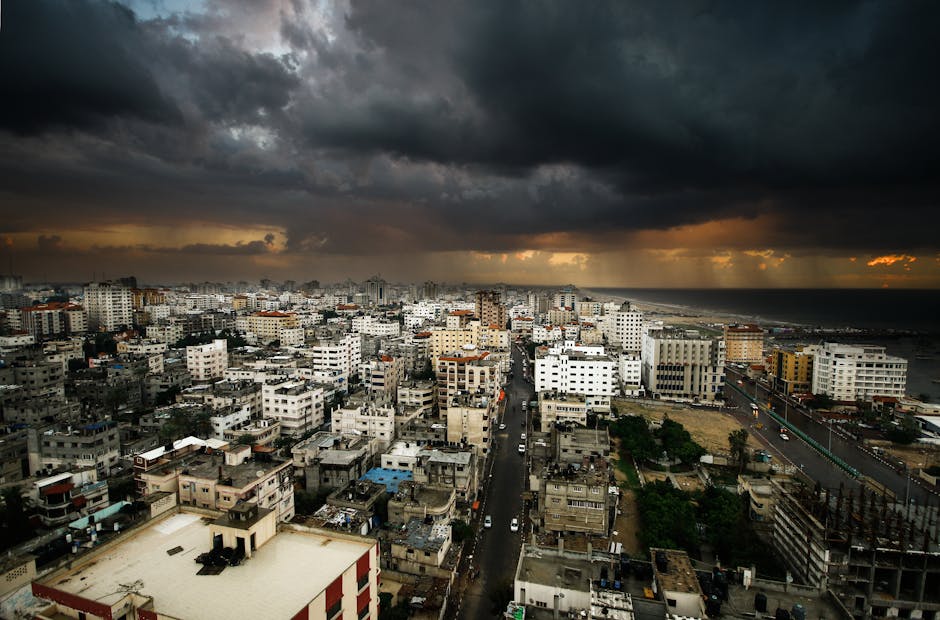
- Israel’s seizure of 70% of Gaza and increased violence against Palestinians has significantly escalated regional tensions.
- The actions are widely viewed as a serious threat to the US-backed peace process, jeopardizing potential negotiations.
- A surge in Palestinian casualties, injuries, and displacement underscores the dire humanitarian situation in Gaza.
- International condemnation of Israel’s actions is growing, with calls for halting settlement expansion and renewed dialogue.
- Despite international pressure, Israel maintains its actions are necessary for security, hindering progress towards peace.
The Israeli government’s decision to seize 70 percent of the Gaza Strip and the recent surge in violence against Palestinians have raised concerns that the US-backed peace process is in serious danger. The escalating tensions have resulted in a significant increase in Palestinian casualties, with many more injured or displaced. As the situation continues to deteriorate, it remains to be seen whether the peace process can be salvaged or if the region is headed for further conflict.
Current State of Affairs

The current situation in Gaza is marked by heightened tensions and violence, with Israel’s actions being seen as a major obstacle to peace. The seizure of land and the construction of settlements have long been contentious issues, and the latest developments have only served to exacerbate the problem. The international community has condemned Israel’s actions, with many calling for a halt to the settlement expansion and a return to negotiations. Despite this, Israel remains adamant that its actions are necessary for security reasons, leaving the peace process in a state of limbo.
Historical Context

The Israeli-Palestinian conflict has a long and complex history, with both sides having experienced periods of violence and relative calm. The Oslo Accords of 1993 were seen as a major breakthrough, but the subsequent years have been marked by repeated failures to reach a lasting agreement. The US has long been involved in the peace process, with various administrations attempting to broker a deal. However, the current situation is particularly challenging, with Israel’s right-wing government showing little willingness to compromise and the Palestinians becoming increasingly frustrated with the lack of progress.
Key Players and Motivations

The key players in the conflict are Israel’s Prime Minister, Benjamin Netanyahu, and the Palestinian Authority’s President, Mahmoud Abbas. Netanyahu’s government has been criticized for its hardline stance on the peace process, with many seeing his actions as driven by a desire to appease his right-wing supporters. Abbas, on the other hand, is under pressure from his own people to deliver a deal that meets their aspirations for statehood and self-determination. The US, particularly the Biden administration, is also a crucial player, with its support for the peace process being seen as essential to any potential agreement.
Consequences and Implications

The consequences of the current situation are far-reaching and potentially disastrous. A failure to reach a peace agreement could lead to further violence and instability, not just in Gaza but across the region. The humanitarian situation is already dire, with many Palestinians struggling to access basic necessities like food, water, and healthcare. The international community has a responsibility to act, and the US, in particular, must use its influence to bring the parties back to the negotiating table and encourage a return to meaningful dialogue.
The Bigger Picture
The situation in Gaza is not just a local issue but has broader regional and global implications. The conflict has the potential to destabilize the entire Middle East, with many countries having a vested interest in the outcome. The US, as a key player in the region, must be aware of the potential consequences of its actions and work to find a solution that meets the needs of all parties. As The New York Times has reported, the situation in Gaza is a complex one, requiring a nuanced and multi-faceted approach.
In conclusion, the US-backed Gaza peace process is indeed in serious danger, and it remains to be seen whether it can be salvaged. The international community must come together to encourage a return to negotiations and find a solution that meets the needs of all parties. As the situation continues to unfold, it is essential to stay informed and up-to-date on the latest developments, following reputable sources such as BBC News and Al Jazeera for the latest news and analysis.
Source: Al Jazeera