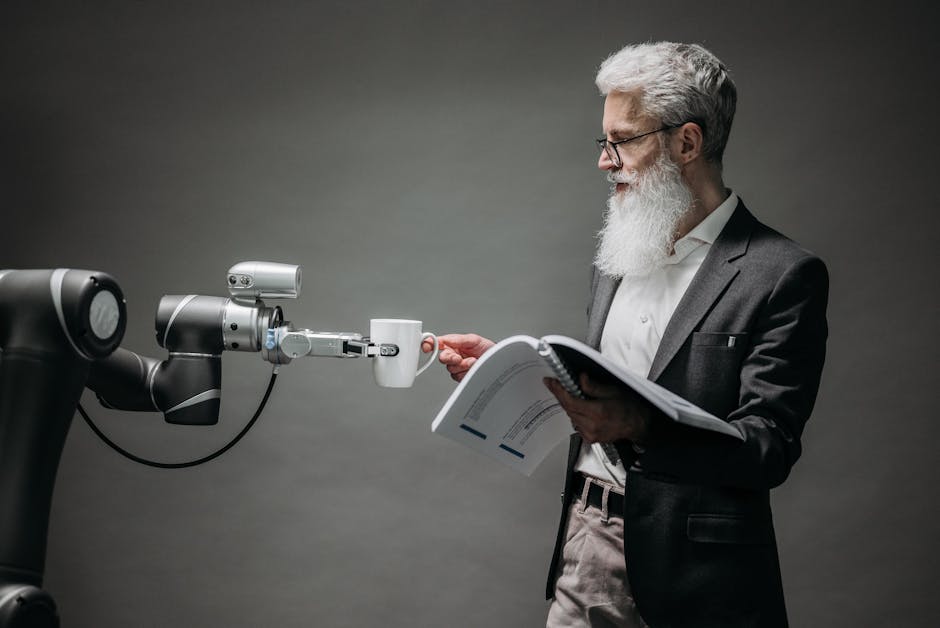
- AI adoption is surging, but COOs are facing new challenges in implementing and managing these technologies.
- 80% of COOs have adopted AI, but 60% report that it has increased their workload, not replaced it.
- AI is changing the nature of jobs, requiring COOs to adapt to new operational complexities.
- Companies adopting AI have seen increased productivity, but also rising operational costs.
- COOs are struggling with data quality issues and lack of skilled personnel in AI implementation.
Chief Operating Officers (COOs) at top companies like Nike and Sysco thought that adopting Artificial Intelligence (AI) would streamline their operations and make their jobs easier. However, they are now realizing that AI is actually making their roles more complex. As AI transforms business operations, COOs are facing new challenges in implementing and managing these technologies, which is why it matters now. The shift towards automation is happening rapidly, and understanding its impact on COOs is crucial for the future of business operations.
The Evidence: AI Adoption and Its Challenges

According to a recent survey, 80% of COOs have adopted AI in some form, but 60% of them report that it has increased their workload. The data suggests that AI is not replacing human workers but rather changing the nature of their jobs. For instance, a study by Reuters found that companies that have adopted AI have seen a significant increase in productivity, but also a rise in operational costs. Furthermore, a report by The New York Times highlights the challenges COOs face in implementing AI, including data quality issues and lack of skilled personnel.
The Players: COOs and Their Roles

COOs are responsible for overseeing the day-to-day operations of a company, and their role is critical in implementing AI technologies. However, they are not the only players in this scenario. CEOs, CTOs, and other executives also have a stake in AI adoption and its impact on business operations. Recently, companies like Box have appointed AI-specific roles, such as Chief AI Officers, to oversee the development and implementation of AI strategies. This shift highlights the growing importance of AI in business operations and the need for specialized expertise.
The Trade-Offs: Costs, Benefits, and Risks

The adoption of AI has both benefits and drawbacks. On the one hand, AI can increase efficiency, reduce costs, and improve decision-making. On the other hand, it also poses significant risks, such as job displacement, data breaches, and operational disruptions. COOs must carefully weigh these trade-offs and develop strategies to mitigate the risks while maximizing the benefits. For example, investing in employee retraining programs can help address the issue of job displacement, while implementing robust cybersecurity measures can reduce the risk of data breaches.
Timing: Why Now and What Changed

The rapid advancement of AI technologies has made them more accessible and affordable for companies, leading to a surge in adoption. Additionally, the COVID-19 pandemic has accelerated the need for digital transformation, making AI a key component of business operations. As a result, COOs are under pressure to implement AI solutions quickly, which can lead to challenges in managing the transition and ensuring that the technology is aligned with business goals. The current economic climate, with its emphasis on efficiency and cost-cutting, has also created a sense of urgency around AI adoption.
Where We Go From Here
Over the next 6-12 months, three scenarios are possible: COOs will either successfully navigate the challenges of AI adoption, struggle to keep up with the pace of change, or find new opportunities for growth and innovation. As AI continues to evolve, COOs must be prepared to adapt and develop new strategies for managing the technology and its impact on business operations. This may involve investing in new skills and training, developing more agile operational models, and fostering a culture of innovation and experimentation.
Bottom line — the automation illusion has led COOs to underestimate the complexity of AI adoption, but by understanding the challenges and trade-offs, they can unlock the full potential of this technology and drive business success in a rapidly changing world.
Source: Fortune