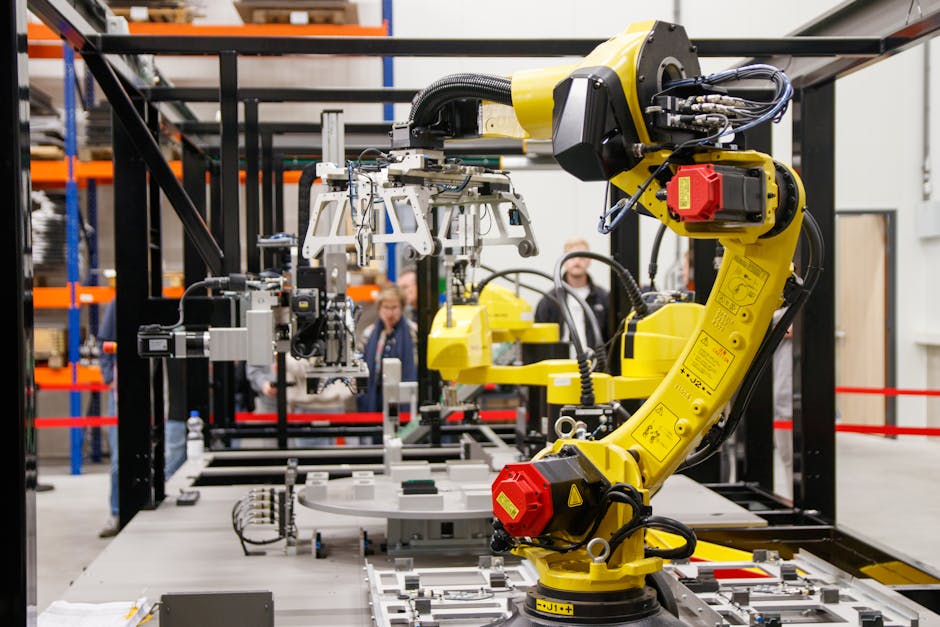
- Schneider Electric uses AI to augment worker productivity, enhancing efficiency without sacrificing jobs.
- The company invests heavily in AI-powered tools and training programs for its employees.
- AI has led to significant improvements in productivity, automating some tasks and enhancing others with AI-driven insights.
- Schneider Electric prioritizes the augmentation of human capabilities over AI replacement, prioritizing job satisfaction.
- The company’s approach to AI adoption has made its manufacturing process more efficient and effective.
Schneider Electric, a French multinational company, has taken a unique approach to artificial intelligence adoption, using AI to augment worker productivity rather than replace them. By leveraging AI in manufacturing, the company aims to enhance efficiency and output without sacrificing jobs. This approach has significant implications for the future of work and the role of AI in the economy.
Current State of AI Adoption

The integration of AI in Schneider Electric’s manufacturing process has been underway for several years, with the company investing heavily in AI-powered tools and training programs for its employees. As a result, workers have seen significant improvements in productivity, with some tasks being automated and others being enhanced through AI-driven insights. The company’s commitment to using AI as a tool to support workers, rather than replace them, has led to increased job satisfaction and a more efficient manufacturing process.
Historical Context of AI in Manufacturing

The use of AI in manufacturing is not a new phenomenon, with companies having experimented with automation and machine learning for decades. However, the recent advancements in AI technology have made it more accessible and affordable for companies to adopt. Schneider Electric’s approach to AI adoption is distinct in that it prioritizes the augmentation of human capabilities, rather than the replacement of workers. This approach is rooted in the company’s historical commitment to innovation and employee development, with a focus on creating a work environment that is conducive to growth and productivity.
Key Players and Motivations

The decision to adopt AI in a way that supports workers was driven by Schneider Electric’s leadership, who recognized the potential of AI to enhance productivity and efficiency. The company’s CEO, Jean-Pascal Tricoire, has been a vocal advocate for the responsible adoption of AI, emphasizing the need for companies to prioritize the well-being of their employees and the communities they serve. This approach has been influenced by the company’s values and mission, which prioritize innovation, sustainability, and social responsibility.
Consequences of AI Adoption

The consequences of Schneider Electric’s approach to AI adoption are multifaceted, with significant implications for the company’s employees, customers, and the broader economy. By prioritizing the augmentation of human capabilities, the company has been able to create a more efficient and productive manufacturing process, while also contributing to the development of a more skilled and adaptable workforce. This approach has also helped to mitigate the risks associated with AI adoption, such as job displacement and increased income inequality.
The Bigger Picture
The story of Schneider Electric’s AI adoption has significant implications for the future of work and the role of AI in the economy. As companies continue to navigate the challenges and opportunities presented by AI, they must consider the potential consequences of their actions on their employees, customers, and the broader community. The responsible adoption of AI requires a nuanced understanding of the technology’s potential and limitations, as well as a commitment to prioritizing human well-being and social responsibility.
As the world continues to grapple with the challenges and opportunities presented by AI, the story of Schneider Electric serves as a powerful reminder of the importance of prioritizing human well-being and social responsibility. By adopting AI in a way that supports workers, rather than replacing them, companies can create a more efficient and productive manufacturing process, while also contributing to the development of a more skilled and adaptable workforce. The future of work will be shaped by the choices we make today, and it is up to companies and policymakers to ensure that the benefits of AI are shared by all.
Source: The New York Times