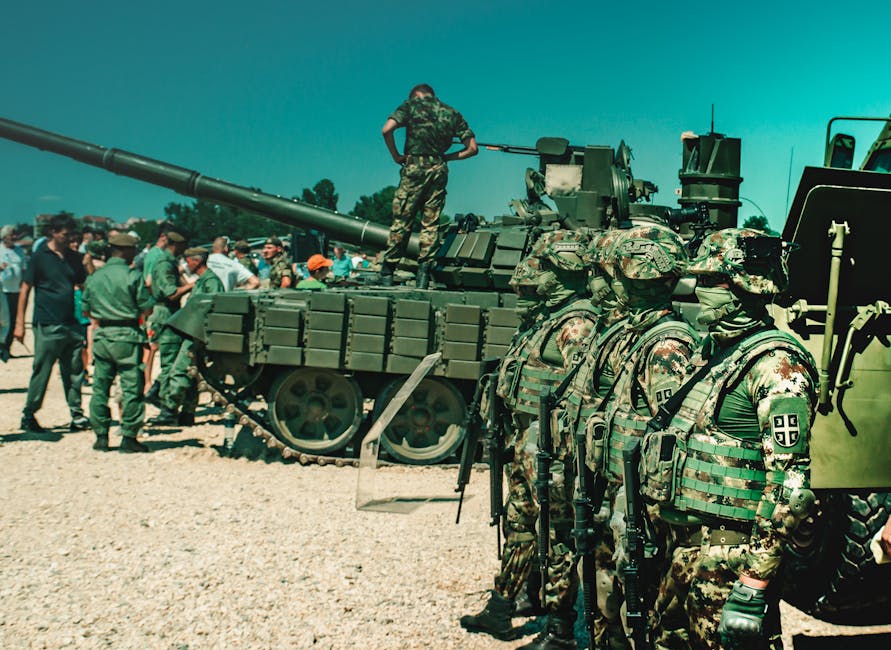
- Lebanon’s disarmament efforts failed due to the Iran war, allowing Hezbollah’s influence to persist.
- Hezbollah’s arsenal remains a potent threat to regional stability and Lebanon’s sovereignty.
- The conflict in Iran has provided Hezbollah with a pretext to maintain its military capabilities.
- Hezbollah’s resistance movement has become more entrenched in its position, making disarmament nearly impossible.
- The failure to disarm Hezbollah heightens the risk of regional conflict and further instability in Lebanon.
Lebanon’s government, long striving to dismantle the powerful militia group Hezbollah, faced a significant setback as the Iran war began, derailing promising disarmament efforts. The initiative, which had shown signs of progress in recent months, aimed to reduce the militia’s influence and bring stability to a region already fraught with tension. The failure to disarm Hezbollah not only weakens Lebanon’s sovereignty but also heightens the risk of regional conflict, as the group’s extensive arsenal remains a potent threat.
Current Situation: Disarmament Efforts Stalled

Before the Iran war, Lebanon’s government, led by Prime Minister Najib Mikati, had initiated a series of negotiations with Hezbollah. These talks were part of a broader strategy to integrate the militia into the national security framework and reduce its autonomy. The government’s approach included offering amnesty to certain Hezbollah members in exchange for the surrender of weapons. However, the outbreak of war in Iran has shifted Hezbollah’s focus, and the group has become more entrenched in its position, making the disarmament process nearly impossible. The conflict in Iran has provided Hezbollah with a pretext to maintain its military capabilities, arguing that they are necessary for the defense of Lebanon and the broader region.
Historical Context: The Rise of Hezbollah

Hezbollah, founded in 1982 during the Israeli invasion of Lebanon, has evolved from a resistance movement into a powerful political and military entity. Initially supported by Iran and Syria, the group gained significant traction in Lebanon’s Shia community through its social services and resistance against Israeli occupation. Over the years, Hezbollah’s influence has grown, and it has become a key player in Lebanese politics, often holding a veto power over major decisions. The militia’s vast arsenal, including advanced rockets and missiles, has been a source of concern for the Lebanese government and international observers, who see it as a threat to national and regional stability.
Key Players: Government and Militia

The primary actors in this disarmament saga are the Lebanese government and Hezbollah. Prime Minister Mikati, known for his pragmatic approach, has been at the forefront of the government’s efforts. His administration has sought to balance the need for national security with the political realities of a country where Hezbollah wields considerable power. On the other side, Hezbollah’s leadership, particularly Secretary-General Hassan Nasrallah, has consistently emphasized the group’s role as a protector of Lebanon’s sovereignty. Nasrallah’s rhetoric has been bolstered by the Iran war, which he uses to justify the retention of Hezbollah’s military might. The United States and other Western nations have also played a role, providing both diplomatic support and pressure on Lebanon to disarm the militia.
Consequences: Increased Regional Instability

The failure to disarm Hezbollah has significant implications for Lebanon and the broader Middle East. The militia’s continued possession of weapons exacerbates the country’s internal divisions and undermines the authority of the Lebanese state. Moreover, Hezbollah’s military capabilities pose a threat to neighboring countries, particularly Israel, which has a long history of conflict with the group. The instability in Lebanon could spill over into the region, further complicating the already tense situation. For the Lebanese people, the disarmament failure means a prolonged state of insecurity and the continued potential for violence, which hampers economic development and social progress.
The Bigger Picture
Lebanon’s struggle to disarm Hezbollah is symptomatic of the broader challenges facing the Middle East. The region is marked by complex geopolitical dynamics, where external powers often exacerbate internal conflicts. Hezbollah’s role as both a political party and a militia reflects the blurred lines between state and non-state actors, a phenomenon that complicates efforts to achieve lasting peace and stability. The outbreak of war in Iran has only added to these challenges, as it has shifted the regional balance of power and intensified the competition for influence among key players.
As the Iran war continues, the Lebanese government will need to reassess its strategy. The international community, particularly the United States and European Union, may need to play a more active role in mediating the disarmament process. However, the success of any future efforts will depend on addressing the underlying issues that have allowed Hezbollah to maintain its power, including economic instability and the perceived threat from Israel and other regional actors.
Source: The New York Times