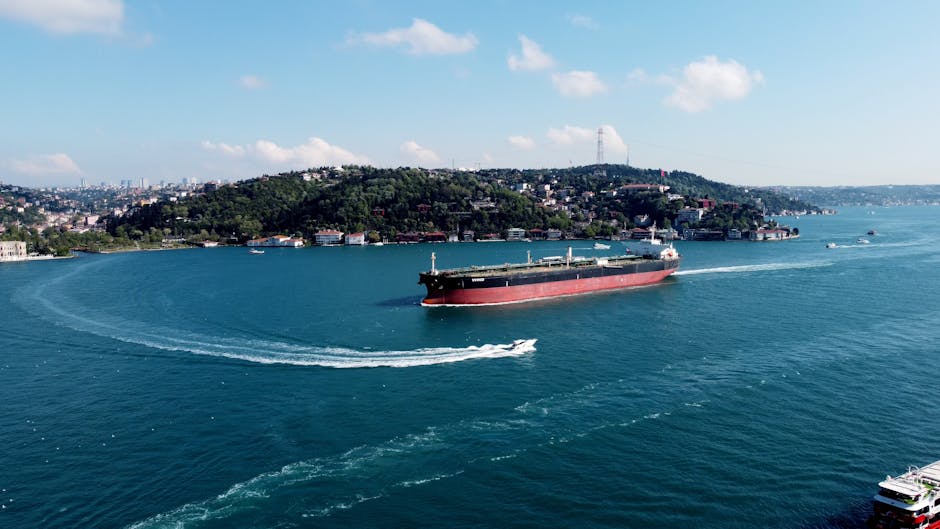
- The Strait of Hormuz, a critical waterway for global oil trade, may reopen with conditions, sparking concerns about regional stability.
- The strait’s closure would significantly impact global energy markets and the economy, with 20% of the world’s oil passing through it.
- Conditional access to the strait may involve restrictions on vessels or cargo, leading to increased costs and delays for shipping companies.
- The situation has already caused volatility in oil prices, reflecting the uncertainty and unpredictability in the region.
- The Strait of Hormuz crisis is part of a broader geopolitical tension in the region, involving Iran and the United States.
The Iranian government has announced that the Strait of Hormuz, a critical waterway for global oil trade, may reopen, but with certain conditions. This development comes after weeks of heightened tensions in the region, sparking concerns about the free flow of oil and the potential for further escalation. The strait’s reopening, although a positive step, may not be enough to restore global confidence in the region’s stability, as the conditions attached to its reopening may create uncertainty and unpredictability for international trade.
Current State of the Strait

The Strait of Hormuz, which connects the Persian Gulf to the Gulf of Oman, is a vital shipping lane, with approximately 20% of the world’s oil passing through it. The strait’s closure, even if temporary, has significant implications for global energy markets and the economy. The conditional access announced by Iran may involve restrictions on certain types of vessels or cargo, which could lead to increased costs and delays for shipping companies. As the situation continues to unfold, global markets are closely watching the developments, with oil prices already reflecting the uncertainty and volatility in the region.
Historical Context of the Crisis

The Strait of Hormuz crisis is not an isolated incident, but rather a symptom of a broader geopolitical tensions in the region. The conflict between Iran and the United States, as well as other regional players, has been escalating over the past year, with both sides engaging in a war of words and provocative actions. The strait’s closure is a reminder of the region’s complex history, with the waterway having been a focal point of tensions between Iran and the West for decades. Understanding the historical context of the crisis is essential to grasping the complexities of the current situation and the challenges that lie ahead.
Key Players and Motivations

The Iranian government, led by President Ebrahim Raisi, is a key player in the crisis, with its motivations centered around protecting the country’s sovereignty and interests. The United States, under the leadership of President Joe Biden, is also a major player, with its goals focused on maintaining regional stability and ensuring the free flow of oil. Other regional actors, such as Saudi Arabia and the United Arab Emirates, are also closely watching the developments, with their own interests and motivations at play. As the situation continues to evolve, the actions and decisions of these key players will be crucial in determining the outcome of the crisis.
Consequences of Conditional Access

The conditional access to the Strait of Hormuz may have significant consequences for global trade and the economy. Shipping companies may need to reroute their vessels, incurring additional costs and delays, while oil prices may remain volatile, affecting energy markets and the broader economy. The uncertainty and unpredictability created by the conditional access may also have a negative impact on investor confidence, potentially leading to a decline in investment in the region. As the world becomes increasingly interconnected, the implications of the Strait of Hormuz crisis extend far beyond the region, highlighting the need for a coordinated and diplomatic response to the crisis.
The Bigger Picture
The Strait of Hormuz crisis is a reminder of the complexities and challenges of the modern world, where global trade and economic stability are increasingly dependent on geopolitical developments. The crisis highlights the need for effective diplomacy and cooperation among nations to address common challenges and ensure the free flow of goods and services. As the world navigates this complex and interconnected landscape, the Strait of Hormuz crisis serves as a wake-up call for the importance of international cooperation and the need for a more stable and predictable global order.
As the situation in the Strait of Hormuz continues to unfold, it is essential to closely monitor the developments and to consider the potential implications for global trade and stability. The conditional access to the strait may be a temporary solution, but it is unlikely to fully restore global confidence in the region’s stability. The road ahead will require careful navigation and diplomacy, with all parties working together to address the underlying issues and to ensure a more stable and predictable future for the region and the world. For more information on the crisis, visit Al Jazeera’s coverage of the Strait of Hormuz crisis or Reuters’ world news section.
Source: Al Jazeera