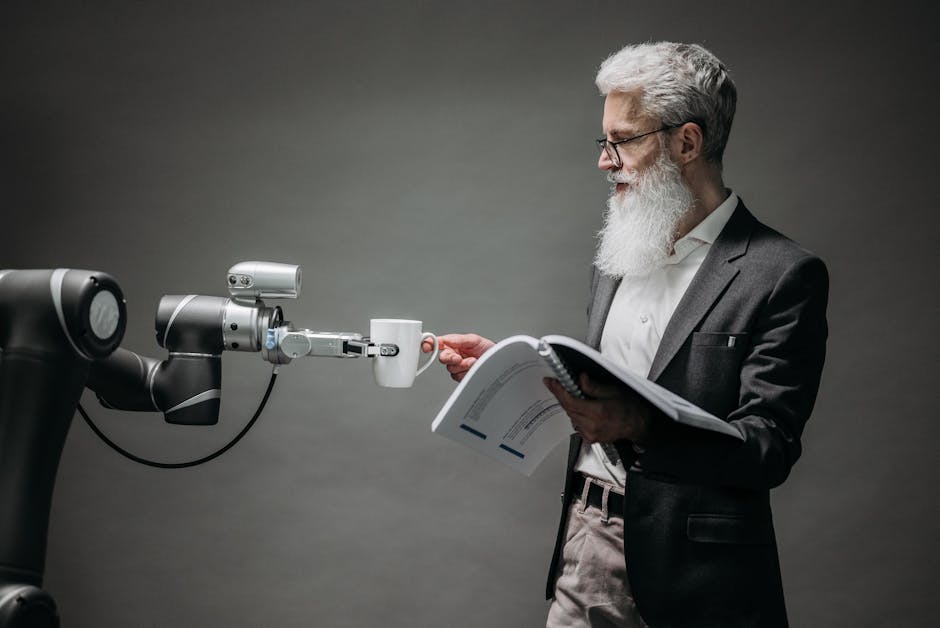
- A global survey found that 43% of CEOs plan to reduce junior roles over the next year or two, a significant increase from 17% last year.
- The adoption of artificial intelligence is automating tasks typically performed by junior staff, leaving many young professionals at risk of displacement.
- CEOs are increasingly turning to AI to improve productivity and efficiency, but the benefits are not being evenly distributed.
- Junior roles are being disproportionately affected by AI adoption, with tasks such as data entry and customer service being automated.
- There is a growing preference for hiring more experienced workers who can work alongside AI systems.
A recent global survey of CEOs by Oliver Wyman found that the share of executives planning to reduce junior roles over the next year or two has doubled from 17% last year to 43%. This shift in hiring trends is largely driven by the increasing adoption of artificial intelligence, which is automating tasks typically performed by junior staff. As a result, young professionals are facing an uncertain future, with many at risk of being displaced by machines.
The Current State of AI Adoption

The survey reveals that CEOs are increasingly turning to AI to improve productivity and efficiency. However, the benefits of AI are not being evenly distributed, with junior roles being disproportionately affected. The automation of tasks such as data entry, bookkeeping, and customer service is leaving many young workers without a clear career path. Meanwhile, those shifting hiring toward mid-level positions jumped from 10% to 30%, indicating a preference for more experienced workers who can work alongside AI systems.
A Brief History of AI Development

The development of AI has been rapid in recent years, with significant advances in machine learning and natural language processing. The technology has improved to the point where it can now perform many tasks that were previously the exclusive domain of humans. However, the impact of AI on the job market has been a topic of debate, with some arguing that it will create new opportunities for workers, while others claim that it will lead to widespread unemployment. The Oliver Wyman survey suggests that the latter may be the case, at least for young professionals.
The Key Players in the AI Job Market

CEOs and other business leaders are playing a crucial role in shaping the future of work in the age of AI. Their decisions about which roles to automate and which to retain will have a significant impact on the job market. However, the motivations behind these decisions are not always clear. While some CEOs may be driven by a desire to improve efficiency and reduce costs, others may be more concerned with the potential risks and challenges associated with AI adoption. As the job market continues to evolve, it will be important to monitor the actions of these key players and their impact on young workers.
The Consequences of AI-Driven Job Displacement

The consequences of AI-driven job displacement will be far-reaching and could have significant social and economic implications. Young workers who are displaced by machines may struggle to find new employment, particularly if they lack the skills and training needed to work alongside AI systems. This could lead to increased inequality and social unrest, as well as a loss of talent and potential. Furthermore, the shift towards older workers could also have negative consequences, such as a lack of fresh perspectives and ideas, which are essential for driving innovation and growth.
The Bigger Picture
The impact of AI on the job market is just one part of a larger story about the changing nature of work in the 21st century. As machines become increasingly capable of performing tasks that were previously the exclusive domain of humans, there will be a need for workers to develop new skills and adapt to new roles. This will require significant investment in education and training, as well as a fundamental shift in the way that businesses approach the workforce. The Oliver Wyman survey highlights the need for CEOs and other business leaders to think carefully about the implications of AI adoption and to develop strategies that minimize the risks and maximize the benefits.
In conclusion, the shift towards AI-driven automation is having a profound impact on the job market, particularly for young professionals. As machines become increasingly capable of performing tasks that were previously the exclusive domain of humans, there will be a need for workers to develop new skills and adapt to new roles. The future of work in the age of AI will be shaped by the decisions of CEOs and other business leaders, who must balance the need for efficiency and productivity with the need to protect the rights and interests of workers. As the job market continues to evolve, it will be essential to monitor the impact of AI and to develop strategies that ensure that the benefits of technological progress are shared by all.
Source: Reddit