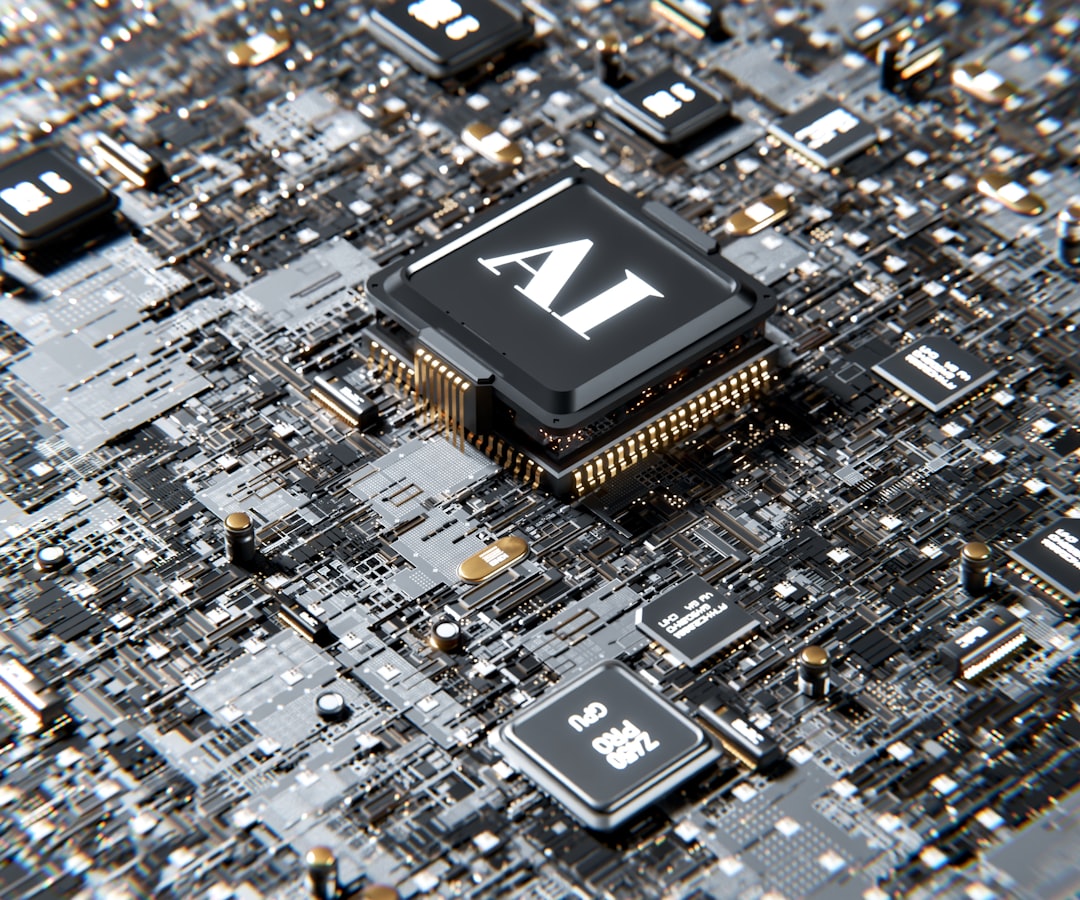
- SK Hynix and Micron Technology have joined the $1 trillion market capitalization club, driven by demand for high-bandwidth memory chips.
- The rise of generative AI and data-hungry large language models has increased the need for faster, more efficient memory solutions.
- Memory manufacturers are reaping the rewards once dominated by processor designers like Nvidia in the semiconductor industry.
- High-bandwidth memory technology, particularly HBM3 and HBM3E variants, is crucial for AI accelerators to process massive datasets at speeds.
- The AI memory gold rush is transforming the semiconductor industry, with memory chips now central to the AI revolution.
South Korea’s SK Hynix and U.S.-based Micron Technology have officially joined the $1 trillion market capitalization club, propelled by surging global demand for high-bandwidth memory (HBM) chips essential to artificial intelligence systems. This milestone, reached in early 2024, marks a pivotal shift in the semiconductor industry, where memory manufacturers are now reaping the rewards once dominated by processor designers like Nvidia. The rise of generative AI and data-hungry large language models has dramatically increased the need for faster, more efficient memory solutions, directly benefiting firms at the forefront of HBM production. As AI infrastructure spending continues to climb, the valuation surge underscores how critical memory technology has become to the future of computing and cloud services worldwide.
The AI Memory Gold Rush

The semiconductor industry is undergoing a structural transformation, with memory chips—long considered commoditized and cyclical—now central to the AI revolution. High-bandwidth memory, particularly HBM3 and HBM3E variants, enables AI accelerators to process massive datasets at unprecedented speeds by stacking DRAM layers vertically and connecting them through through-silicon vias. This architecture drastically reduces latency and boosts throughput, making it indispensable for training models like GPT-4 and other deep learning systems. As cloud providers and AI startups race to deploy more powerful hardware, SK Hynix and Micron have emerged as critical suppliers alongside Samsung. According to TrendForce, HBM demand is expected to grow over 80% annually through 2026, far outpacing traditional DRAM markets. This shift has turned memory makers into strategic enablers of AI, altering investor perceptions and justifying premium valuations once reserved for software and processor firms.
From Cyclical Players to Strategic Pillars

Historically, memory chipmakers faced volatile markets, with prices swinging based on supply-demand imbalances and limited pricing power. But the AI boom has fundamentally altered this dynamic. SK Hynix, now the world’s largest HBM supplier, has secured major contracts with Nvidia and other AI chip designers, positioning itself as a linchpin in the AI supply chain. The company began mass production of HBM3E chips in late 2023 and is expanding its Yeoju fab complex in South Korea to meet demand. Meanwhile, Micron, after overcoming earlier delays, has ramped up HBM production at its Singapore facility and is shipping samples to key partners. Both companies are investing heavily in R&D and manufacturing capacity, with Micron pledging $10 billion in AI-focused memory development through 2030. These moves signal a shift from commodity competition to technological differentiation, where IP, yield rates, and packaging expertise determine market leadership.
Market Shifts and Competitive Landscape

The ascent of SK Hynix and Micron reflects broader changes in the semiconductor ecosystem. Nvidia’s dominance in AI GPUs has created a halo effect for its memory partners, who benefit from close integration and co-design efforts. In contrast, Samsung, once the market leader in memory, has lagged in HBM adoption due to technical setbacks, allowing SK Hynix to capture over 50% of the HBM market in 2023, according to TrendForce. This has significant geopolitical implications: South Korea and the U.S. are strengthening tech alliances to counter China’s ambitions in advanced semiconductors. The U.S. CHIPS Act includes incentives for Micron to expand domestic production, while South Korea has designated HBM as a national strategic technology. Meanwhile, China’s memory makers, including CXMT and JHICC, remain years behind in HBM development, constrained by export controls and limited access to advanced equipment.
Implications Across Industries

The rise of AI memory leaders has ripple effects across technology, finance, and national security. Cloud providers like Microsoft Azure, Amazon Web Services, and Google Cloud depend on HBM-equipped systems to deliver competitive AI services, making supply chain stability crucial. Any disruption in HBM output could delay AI deployments and increase costs. Investors are also recalibrating risk models, recognizing that memory firms are no longer pure-play cyclicals but integral to long-term AI infrastructure. For consumers, this shift means faster AI tools in applications ranging from healthcare diagnostics to autonomous driving. However, concentration in HBM production raises concerns about monopoly power and supply fragility, especially given the complex, capital-intensive nature of advanced packaging and testing facilities.
Expert Perspectives
Analysts are divided on whether the current valuations are sustainable. Some, like Stacy Rasgon of Bernstein Research, argue that the structural shift toward AI justifies premium multiples, noting that HBM could represent 20% of Micron’s revenue by 2026. Others caution that memory remains a capital-intensive business with long payback periods. “These companies are riding a once-in-a-decade wave,” said one semiconductor strategist at BBC News, “but they must innovate continuously to avoid becoming victims of the next downturn.” The debate hinges on whether HBM demand will remain robust beyond the current AI hype cycle.
Looking ahead, investors and policymakers should monitor yield improvements, new entrants, and geopolitical developments. SK Hynix plans volume production of HBM4 by 2025, while Micron aims to achieve 12-layer stacking capability. Meanwhile, U.S.-South Korea collaboration on supply chain resilience may deepen. The key question is whether memory innovation can keep pace with AI’s exponential demands—or if bottlenecks will emerge, slowing the next wave of technological advancement.
Source: BBC