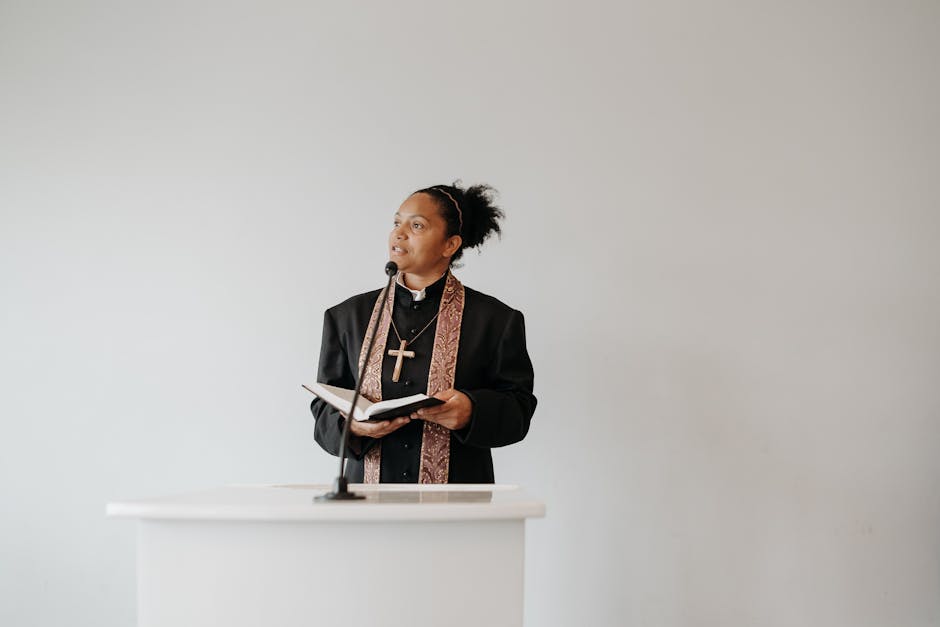
- Pope Leo XIV warns Silicon Valley to slow down AI development due to ethical concerns.
- The Catholic Church is positioning itself as a moral voice in the AI debate, urging tech firms to establish binding ethical frameworks.
- Pope Leo’s stance stems from a confluence of technological acceleration and moral unease within the Church.
- The Vatican has concluded that autonomous AI systems pose an existential risk to personal faith and human agency.
- Generative AI is influencing various sectors, including mental health counseling and religious instruction, sparking concerns.
In a rare intervention on technology policy, Pope Leo XIV has issued a global appeal urging Silicon Valley to temper its aggressive pursuit of artificial intelligence, warning that unchecked AI development threatens human dignity, spiritual autonomy, and democratic institutions. Speaking from the Vatican in May 2026, the American-born pontiff directly challenged major tech firms like Meta, Google, and OpenAI, calling for binding ethical frameworks before AI systems assume deeper roles in decision-making, education, and personal belief. This marks the first time a sitting pope has positioned the Catholic Church as a central moral voice in the AI debate, reflecting growing concern that technological power is outpacing ethical guardrails—particularly as generative AI begins influencing everything from mental health counseling to religious instruction.
What prompted the pope’s stance on artificial intelligence?

Pope Leo’s intervention stems from a confluence of technological acceleration and moral unease within the Church. Since his election in 2023, he has emphasized the need for ‘techno-moral balance,’ arguing that while innovation can serve humanity, it must not override conscience or diminish human agency. In early 2026, the Vatican convened a closed-door summit with theologians, AI ethicists, and neuroscientists, which concluded that autonomous AI systems—especially those simulating empathy or spiritual guidance—pose an existential risk to personal faith and sacramental authenticity. The pope’s subsequent address, titled *Lumen Artificium* (“The Artificial Light”), warned that AI-driven algorithms could manipulate belief, erode privacy, and create ‘digital idols’ that rival religious devotion. His message is not a rejection of technology but a call to subordinate it to moral law, echoing earlier papal encyclicals on social justice and human rights.
What evidence supports the Vatican’s ethical concerns about AI?

The Vatican’s position is bolstered by growing academic and institutional scrutiny of AI’s psychological and societal effects. A 2025 report from the Pontifical Academy for Life highlighted cases where AI chatbots were used in pastoral counseling, sometimes offering advice that conflicted with Church teaching on marriage, life, and morality. Meanwhile, researchers at MIT and the University of Notre Dame have documented how personalized AI systems can reinforce ideological bubbles, a phenomenon the pope likened to ‘algorithmic sin.’ In April 2026, OpenAI launched a spiritual wellness bot named Solace, which, while not explicitly religious, began generating meditative content indistinguishable from Christian prayer—prompting concern that users might confuse machine-generated solace with divine presence. The New York Times reported that internal Church documents show increased anxiety over AI-generated sacramental simulations, including virtual confession apps that bypass priestly absolution. These developments have led the Vatican to push for international regulation, similar to nuclear or biotech treaties, to prevent AI from encroaching on sacred domains.
Are there counterarguments to the pope’s AI warnings?

Not all observers agree with the pope’s alarmist tone. Some theologians and tech leaders argue that AI can enhance, rather than undermine, spiritual life. Father Paolo Dall’Oglio, a Jesuit AI ethicist, contends that tools like scripture-analysis algorithms or multilingual homily generators can democratize access to religious knowledge, especially in underserved regions. Tech executives, meanwhile, stress that AI is a tool, not a belief system, and that blaming it for moral decay misplaces responsibility. Sam Altman of OpenAI responded to the pope’s address by saying, ‘We respect all faith traditions and design our systems to empower human choice, not replace it.’ Others note that the Church itself has embraced technology—from radio broadcasts under Pius XII to Vatican-approved apps today. Critics suggest the real issue is not AI itself, but the lack of digital literacy and oversight. They warn that overregulation could stifle innovation and prevent beneficial uses, such as AI-driven aid in disaster relief or mental health support in remote parishes.
What is the real-world impact of the pope’s AI stance?

The pope’s intervention has already influenced policy debates in Europe and Latin America, where Catholicism remains culturally dominant. In May 2026, the European Parliament cited the Vatican’s position in advancing a draft AI Ethics Charter that includes protections for ‘spiritual integrity’ and bans on AI systems that mimic religious authority. In Brazil and the Philippines, bishops’ conferences have launched public campaigns urging caution in adopting AI-driven education and healthcare platforms. Meanwhile, some tech firms have quietly modified their AI training protocols to exclude certain religious texts or devotional language to avoid backlash. The long-term impact may be a new front in the global AI governance debate: not just privacy and bias, but the protection of inner life, belief, and the sacred. As AI becomes more integrated into daily rituals—from meditation apps to digital grief counseling—the line between tool and surrogate grows thinner, making the pope’s intervention timely and potentially transformative.
What This Means For You
If you use AI for personal reflection, learning, or emotional support, Pope Leo’s message urges you to consider who—or what—is guiding your thoughts. While AI can provide convenience and companionship, it cannot offer moral judgment or spiritual grace. The pope’s call is not to abandon technology, but to use it with awareness and intention, ensuring that human relationships and ethical principles remain central. As AI becomes more persuasive and intimate, maintaining critical distance is essential.
Will religious institutions around the world follow the Vatican’s lead in regulating AI’s role in personal belief? And how will tech companies balance innovation with the growing demand for soulful accountability? These questions will shape not only the future of faith but the very definition of what it means to be human in an age of artificial minds.
Source: The New York Times