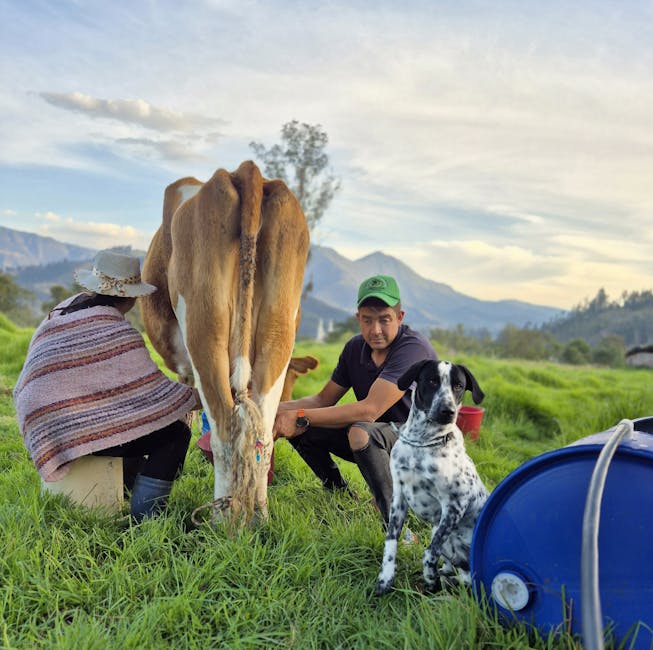
- UK milk prices have dropped 15% below the cost of production, putting hundreds of family farms at risk of closure.
- Farmers are receiving an average of 35p per liter, while production costs remain at 40-42p, creating an unsustainable deficit.
- The crisis signals a structural failure in the dairy economy that could reshape Britain’s agricultural landscape if left unaddressed.
- Dairy farmers are struggling to cover feed, labor, veterinary care, and transportation expenses due to insufficient milk prices.
- Industry experts predict a wave of farm sales and consolidation if milk prices do not rebound soon.
UK milk prices have fallen below the cost of production, placing hundreds of family-run dairy farms at immediate risk of closure, according to industry leaders. As of early 2024, farmers are receiving an average of 35 pence per liter of milk, while production costs remain at 40–42 pence—creating an unsustainable deficit. This economic imbalance, driven by supermarket pricing pressures and weak milk procurement policies, threatens not only rural livelihoods but also the long-term resilience of the UK’s domestic food supply. With many farmers operating at a loss for months, the crisis signals a structural failure in the dairy economy that could reshape Britain’s agricultural landscape if left unaddressed.
Dairy Farmers Face Mounting Financial Pressure

Dairy producers across England, Wales, and Scotland report that current milk prices are insufficient to cover feed, labor, veterinary care, and transportation expenses. According to the National Farmers’ Union (NFU), nearly 60% of dairy farms are now selling milk below cost, a threshold known as the ‘milk price crisis point.’ Some cooperatives have seen payments drop as low as 32 pence per liter, while inflation has driven feed and energy costs up by nearly 20% over the past 18 months. Farmers describe a growing sense of desperation, with many relying on savings, off-farm income, or government subsidies just to stay afloat. Without a swift reversal, industry experts predict a wave of farm sales and consolidations that could reduce the number of independent dairies by up to 25% over the next three years.
Roots of the Milk Price Crisis

The current crisis stems from a decade of imbalanced power in the UK dairy supply chain. Since the deregulation of milk pricing in the early 2000s and the abolition of EU milk quotas in 2015, large supermarkets have gained disproportionate leverage over procurement. Retailers, competing on low prices, have consistently pressured processors to cut costs—costs that are ultimately passed down to farmers. Meanwhile, the UK’s fragmented dairy farming sector—composed largely of small, family-owned operations—has struggled to negotiate collectively. Repeated industry warnings, including a 2019 parliamentary inquiry and a 2022 BBC investigation, highlighted this vulnerability, but reforms have stalled. The result is a system where farmers bear the brunt of market volatility while receiving minimal share of consumer spending.
The Farmers on the Front Lines

Dairy farming families, many of whom have worked the same land for generations, are at the heart of this struggle. Farmers like Sarah and Tom Ellis, who run a 120-cow dairy in Cumbria, say they’ve reduced staff, cut personal expenses, and delayed equipment upgrades just to continue operations. ‘We’re not asking for wealth—just to cover our costs and keep our farm going for our kids,’ Sarah Ellis said in a recent interview. These farmers are motivated not just by economics but by deep ties to their land and communities. Yet, as losses mount, even the most resilient are reconsidering. Some are switching to organic production or agritourism, while others are selling to larger agribusinesses or converting land for housing or renewable energy—decisions that erode the UK’s rural farming identity.
Wider Consequences for Food Security and Communities

The collapse of family dairy farms would have profound ripple effects. Rural economies depend on dairy for jobs, from farmhands to local suppliers and hauliers. A significant reduction in small dairies could also compromise the UK’s food security, increasing reliance on imported milk and dairy products—much of which may not meet British animal welfare or environmental standards. Supermarkets, though focused on short-term savings, may face backlash if reduced competition leads to higher prices or lower quality. Furthermore, the loss of grazing management could negatively impact landscape conservation, as dairy pastures support biodiversity and carbon sequestration. The stakes extend beyond economics into environmental stewardship and national self-reliance.
The Bigger Picture
This crisis reflects a broader global challenge: how to sustain small-scale agriculture in industrialized food systems. Countries like France and New Zealand have implemented milk pricing floors and farmer cooperatives with greater success, offering models the UK could adapt. The current situation underscores the need for supply chain transparency, fairer pricing mechanisms, and stronger legal protections for primary producers. As climate pressures and consumer demand for ethical sourcing grow, the UK has an opportunity to rebuild its dairy sector around fairness and sustainability—not just efficiency.
What comes next may hinge on political will. The NFU and advocacy groups are calling for a statutory Fairness in Dairy Supply Chain Act to regulate minimum milk prices and prevent retailer exploitation. With public support for local food systems on the rise, policymakers face mounting pressure to act. Whether the UK chooses to protect its family farms—or allows another wave of agricultural consolidation—will shape the future of its countryside, food culture, and economic equity for decades.
Source: BBC