- Montana Knife Company was founded by Josh Smith, a former power line technician, who transformed a childhood passion into a $50 million company.
- The company scaled from a backyard workshop to a nationally recognized manufacturer of precision-crafted, American-made knives in just five years.
- No outside investors were involved in the company’s growth, with annual revenue reaching $50 million by 2025.
- Montana Knife Company emphasizes authenticity, durability, and local production, defying conventional startup logic in the era of global supply chains.
- The company’s commitment to U.S.-sourced materials and in-house heat treatment has contributed to its success and reputation.
Josh Smith, a 39-year-old former power line technician from Bozeman, Montana, transformed a childhood passion into a $50 million company after quitting his job during the pandemic. In 2020, he formally relaunched Montana Knife Company—a name he had registered two decades earlier at age 19—and scaled the business from a backyard workshop into a nationally recognized manufacturer of precision-crafted, American-made knives. With no outside investors and a team of fewer than 75 employees, the company reached $50 million in annual revenue by 2025, a rare feat for a domestically produced goods startup. The story matters not only as a personal triumph but as a signal of renewed consumer demand for authenticity, durability, and local production in an era of global supply chains and mass retail.
From Backyard Forge to National Brand

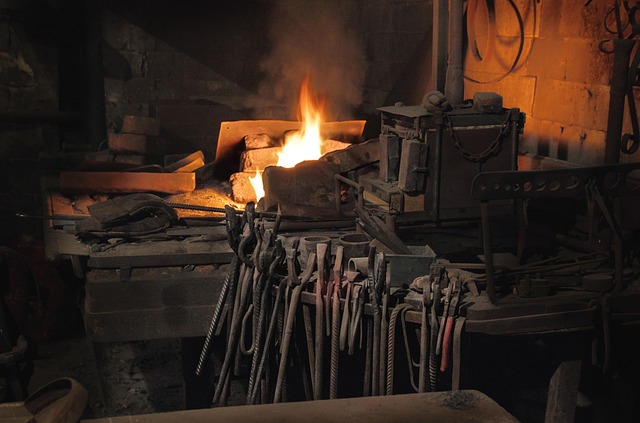
Montana Knife Company’s rise has defied conventional startup logic. Operating out of a 3,200-square-foot facility adjacent to Smith’s home, the company began with just three employees and a small batch of hand-forged hunting knives. Within two years, demand surged as outdoor enthusiasts, tradespeople, and military veterans embraced the brand’s emphasis on rugged quality and American sourcing. By 2023, the company had opened a second production site in Missoula and partnered with regional steel suppliers to ensure traceability and sustainability. Each knife is made from U.S.-sourced 440C stainless steel, heat-treated in-house, and hand-sharpened, with prices ranging from $145 to $420. The company’s direct-to-consumer e-commerce model, combined with strategic retail partnerships, has driven rapid growth—98% of sales are fulfilled within 48 hours, a testament to lean domestic manufacturing. According to internal data, 62% of customers cite “supporting American jobs” as a key reason for purchase, underscoring a shift in consumer values.
The Long Road to the American Dream

Smith’s journey began not in boardrooms but on Montana’s rugged terrain. As a teenager, he apprenticed with a local blacksmith, learning metallurgy and blade geometry while balancing high school and part-time work. He registered Montana Knife Company in 2001 but shelved the dream to support his family, spending the next 20 years as a lineman for NorthWestern Energy—a dangerous and physically taxing job that often required 12-hour shifts atop utility poles. Throughout, he continued forging knives on weekends and holidays, refining his techniques and building a small online following. The pandemic became a turning point: furloughed during a regional outage freeze, Smith reevaluated his future. “I realized I was maintaining power lines for other people’s homes while my own dream was unplugged,” he later said in an interview with Reuters. In May 2020, he formally resigned and reinvested his $42,000 retirement payout into tooling and materials.
The Man Behind the Blade

Josh Smith’s identity is inseparable from his product. A self-described “working-class idealist,” he positions Montana Knife Company as a rebuke to disposable consumer culture. His leadership style emphasizes craftsmanship over automation—only 30% of production is machine-assisted, with most finishing work done by hand. Smith personally approves every design and hosts monthly town halls with employees, many of whom are former tradespeople or veterans. “We’re not just making knives; we’re proving that skilled labor still has value,” he told The Guardian in 2025. That ethos resonates with customers, particularly in rural and blue-collar communities where trust in big brands has eroded. Smith’s authenticity—evident in unscripted YouTube videos showing knife tests in extreme conditions—has become a cornerstone of the brand’s marketing, bypassing traditional advertising in favor of organic reach.
Impacts on Workers, Consumers, and Industry

The success of Montana Knife Company has tangible ripple effects. The company pays starting wages of $28 per hour—nearly triple Montana’s minimum wage—along with full health benefits and profit-sharing. Its growth has spurred local suppliers, including a reopened steel annealing plant in Great Falls. More broadly, it contributes to a quiet resurgence in U.S. manufacturing: according to the National Association of Manufacturers, small domestic producers grew by 17% between 2021 and 2025, many citing Montana Knife as an inspiration. However, challenges remain. Scaling without compromising quality is a constant tension, and global competition from lower-cost producers in Asia persists. Still, Smith’s model demonstrates that high-margin, values-driven manufacturing can thrive without venture capital or offshore labor.
The Bigger Picture
Smith’s story reflects a deeper economic shift—the revaluation of craftsmanship in an age of automation and uncertainty. As inflation, supply chain disruptions, and distrust in corporate ethics grow, consumers increasingly favor transparency and durability. Montana Knife Company is part of a broader movement of “slow manufacturing,” where small firms prioritize quality, ethics, and community impact over rapid scaling. This trend is not limited to knives; similar models are emerging in apparel, tools, and furniture. The real significance lies in the redefinition of the American Dream—not as stock options or tech exits, but as ownership, skill, and tangible contribution.
What comes next may define the next chapter of domestic industry. Smith plans to launch an apprenticeship program in 2026, aiming to train 100 new metalworkers over five years. Other entrepreneurs are watching closely. If more workers follow Smith’s path—from trades to ownership—the future of American manufacturing may not be in megafactories, but in backyards, garages, and small towns where dreams are forged by hand.
Source: Fortune