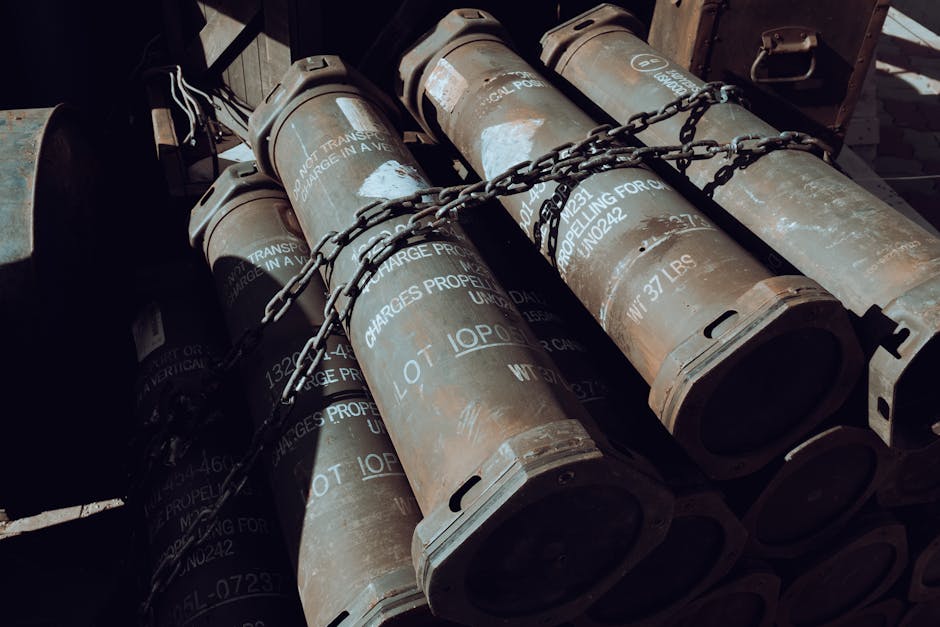
Czech Prime Minister Petr Fiala’s 2023 initiative to deliver 1.5 million artillery shells to Ukraine has lost critical support, with approximately half of the original donor countries withdrawing, according to the Kyiv Independent. The effort, launched at a NATO summit to address Ukraine’s chronic ammunition shortages, aimed to pool European defense production and procurement. However, as of mid-2024, logistical hurdles, budget constraints, and sluggish domestic arms manufacturing have undermined participation. The pullback threatens Kyiv’s ability to sustain counteroffensives amid ongoing Russian assaults, underscoring growing strain on Western military aid coordination. This development signals a potential turning point in Europe’s unified support for Ukraine’s war effort.
Strain on European Defense Supply Chains

The Czech ammunition initiative emerged from a broader realization: Ukraine consumes artillery shells at a rate far exceeding Western production. In the war’s early phases, monthly usage reached 60,000–70,000 rounds—five times the pre-war annual output of the entire European Union. The initiative sought to bridge this gap by coordinating procurement, financing, and industrial scaling across allied nations. Yet many participants, including several Central and Eastern European states, now face political and economic pressures. Defense budgets are stretched thin, and domestic militaries require rearmament after years of underinvestment. As a result, governments are prioritizing national readiness over foreign aid. The withdrawal of these nations reveals a structural weakness in Europe’s defense industrial base and its long-term capacity to support protracted conflicts abroad.
Key Participants and Rollback

The original coalition included over 20 countries, led by the Czech Republic and supported by the European Commission and NATO. Notable contributors initially pledged financial aid, production capacity, or direct transfers of stockpiled ammunition. France, Germany, and Canada were among the early backers, while smaller nations like Lithuania and Latvia committed modest but symbolically important shares. However, recent reports indicate that nations such as Hungary, Slovakia, and Bulgaria have scaled back or fully withdrawn pledges. Hungary, long skeptical of prolonged aid, cited budget concerns. Others, like Slovakia under its newly elected government, have shifted foreign policy stances. The European Commission confirmed that only about 500,000 shells have been secured so far—less than a third of the 1.5 million target. Production delays at major manufacturers, including Rheinmetall and Nexter, have further slowed deliveries.
Industrial and Political Bottlenecks

Several interlinked factors explain the initiative’s faltering progress. First, Europe’s defense industry remains fragmented, with limited cross-border coordination in production. Second, dual-use facilities that produce both civilian and military goods face regulatory delays and workforce shortages. Third, governments underestimated the political cost of diverting arms meant for national stockpiles. Analysts at the Reuters Institute note that while EU production of 155mm shells doubled in 2023, it still falls short of wartime demand. Moreover, inflation and energy costs have driven up manufacturing expenses, making large-scale contracts harder to justify domestically. The lack of a centralized EU arms procurement agency—unlike the U.S. Defense Department—hampers efficiency. Without binding commitments, participation remains voluntary and vulnerable to political shifts.
Implications for Ukraine’s Defense Strategy

Ukraine’s military operations are increasingly constrained by ammunition scarcity, particularly in the Donbas, where Russian forces maintain a numerical advantage in artillery. The shortfall in the Czech initiative exacerbates an already dire situation. Ukrainian commanders have reported having to ration fire, limiting responses to enemy attacks. This not only weakens battlefield effectiveness but risks ceding tactical ground. The slowdown in Western deliveries may also influence Kyiv’s diplomatic posture, pushing Ukraine to seek alternative suppliers or accelerate domestic production. Furthermore, the donor fatigue signaled by the Czech pullback could embolden Russia, which continues to weaponize delays in Western aid. Long-term, the episode raises questions about the sustainability of ad hoc military coalitions without institutional backing.
Expert Perspectives
Security analysts are divided on the long-term significance. Some, like Dr. Sofia Kolmogorova at the European Council on Foreign Relations, argue the retreat reflects realistic recalibration: “Countries are recognizing limits and focusing on achievable goals.” Others, including NATO veterans, warn of dangerous complacency. As BBC News reported, retired General Mark Cartwright stated, “Every shell gap is a life lost on the front.” The debate centers on whether Europe can transition from emergency aid to a durable defense posture. While some experts advocate for a permanent EU defense production directive, others stress the need for stronger transatlantic burden-sharing to prevent future shortfalls.
Looking ahead, the success of remaining donor efforts will depend on industrial scalability and political will. The European Commission plans to launch a new joint procurement framework in late 2024, aiming to lock in multi-year contracts. Ukraine’s ability to maintain defensive momentum may hinge on these mechanisms. Observers should monitor defense output data from key EU manufacturers and upcoming NATO defense spending benchmarks. The Czech initiative’s partial collapse serves as a cautionary tale: solidarity is not self-sustaining without institutional infrastructure and public support.
Source: Kyivindependent