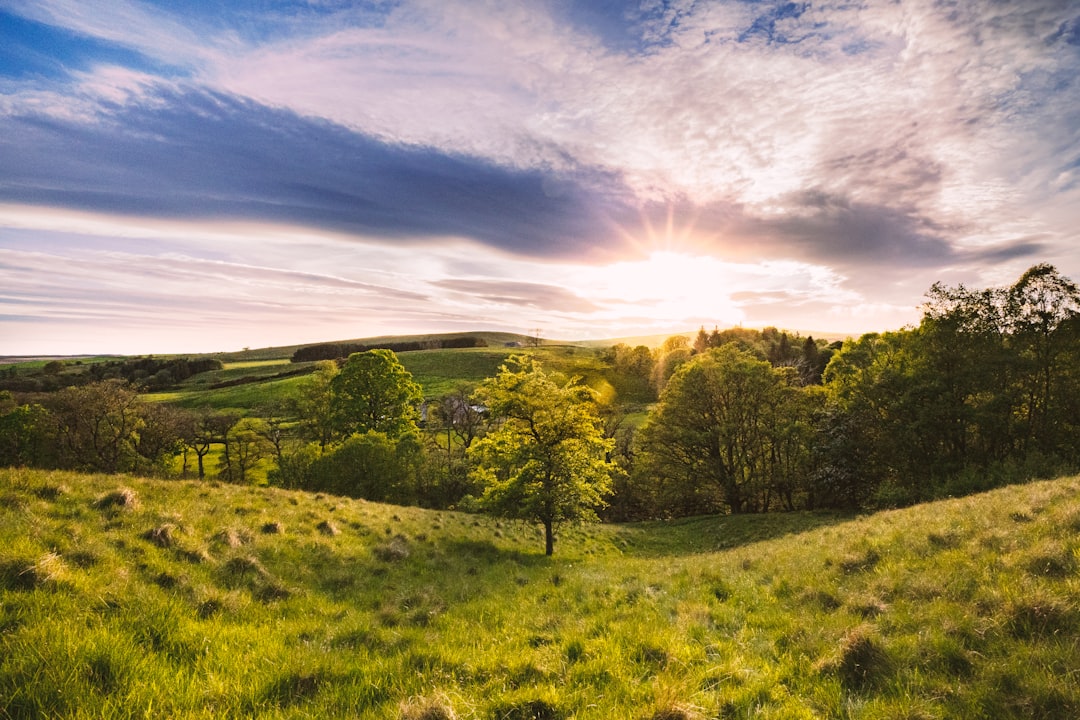
- Rare calaminarian grasslands have formed in Northumberland’s River Allen valley due to 1,000 years of lead mining.
- These toxic meadows are home to unique plants like mountain pansies and alpine pennycress, adapted to heavy-metal-contaminated soils.
- The survival of these meadows is threatened by ecological succession and shifting conservation priorities, not pollution.
- Fewer than 50 calaminarian grassland sites remain in the UK, prompting questions about preservation and conservation.
- These human-made ecosystems could redefine how we understand natural heritage in the Anthropocene era.
In Northumberland’s River Allen valley, a legacy of 1,000 years of lead mining has unexpectedly given rise to a rare ecological phenomenon: calaminarian grassland, where heavy-metal-contaminated soils support specialist plants like mountain pansies and alpine pennycress. These toxic meadows, once dismissed as wastelands, are now recognized as globally rare habitats shaped by centuries of industrial activity. Their survival is under threat not from pollution, but from ecological succession and shifting conservation priorities. With fewer than 50 sites remaining in the UK, scientists and conservationists face a pressing question—should these human-made ecosystems be preserved as unique biological archives, or allowed to revert to woodland? The answer could reshape how we define natural heritage in the Anthropocene.
The Toxic Meadows of Northumberland

Scattered across a patch of spoil heaps no larger than a football pitch, the mountain pansies (Viola lutea) and alpine pennycress (Noccaea caerulescens) form fragile islands of life in an otherwise barren landscape. These plants are metallophytes—species uniquely adapted to thrive in soils rich in zinc, lead, and cadmium, metals that would poison most vegetation. The term “calaminarian” comes from the historic name for zinc ore, calamine, and refers to grasslands that emerge on mine tailings where centuries of extraction have altered soil chemistry beyond recognition. In Northumberland, these conditions have created a niche so extreme that only a handful of species can compete, effectively shielding the metallophytes from more aggressive plants. Yet, even here, the balance is delicate: invasive grasses and shrubs are beginning to encroach as mining activity ceased generations ago, allowing natural succession to take hold.
How Centuries of Mining Created an Accidental Habitat

The roots of this phenomenon trace back to the 12th century, when lead mining began in earnest across northern England under monastic enterprise and later expanded during the Industrial Revolution. By the 1800s, Northumberland was a major supplier of lead for roofing, piping, and ammunition. The extraction process left behind vast piles of crushed rock—spoil heaps—rich in metal residues. For decades, these areas were considered ecological dead zones. It wasn’t until the 20th century that botanists began noticing the unusual flora taking hold. Scientists now understand that repeated exposure to heavy metals acted as a powerful evolutionary filter, selecting for individuals with genetic mutations allowing metal hyperaccumulation or exclusion. Over generations, these adaptations became fixed in isolated populations. Calaminarian grasslands are thus not natural in the traditional sense, but what ecologists call “anthropogenic habitats”—ecosystems born of human disruption. Their rarity stems not just from contamination, but from the precise combination of geology, climate, and abandonment that allows them to persist.
The Scientists and Conservationists Shaping Their Fate

Today, researchers from institutions like the University of Sheffield and conservation groups such as Natural England are studying these sites to understand plant adaptation and inform preservation strategies. For some, like botanist Dr. Emily Thirlaway, these meadows represent irreplaceable genetic libraries—”living laboratories” where evolution can be observed in real time. Others caution that protecting pollution-created habitats risks normalizing environmental degradation. The debate plays out in policy, too: while calaminarian grasslands are listed under the UK Biodiversity Action Plan, they lack statutory protection. Volunteer stewards manually clear encroaching vegetation, but funding is inconsistent. Decisions about their future hinge on whether society values ecosystems for their origins or their outcomes—especially when those outcomes include species found nowhere else.
Consequences for Conservation and Climate Resilience

The fate of calaminarian grasslands has implications far beyond Northumberland. As climate change accelerates habitat loss, such anthropogenic ecosystems challenge traditional conservation models that prioritize “pristine” nature. These metal-tolerant plants may also hold biotechnological promise: hyperaccumulators like alpine pennycress are being studied for phytoremediation—the use of plants to clean contaminated soils. If calaminarian sites vanish, so too may the genetic traits needed for future environmental cleanup. Conversely, active management to preserve them requires ongoing intervention, raising questions about resource allocation in an era of biodiversity crisis. For land managers, the dilemma is practical: should limited funds go toward restoring historic landscapes or maintaining these accidental, yet ecologically unique, habitats?
The Bigger Picture
Calaminarian grasslands force a reevaluation of what we consider valuable in nature. They exemplify how human activity, even destructive industry, can inadvertently create niches for life. As the planet enters an age defined by human influence—the Anthropocene—such habitats may become increasingly common. Protecting them doesn’t excuse pollution, but acknowledges that ecological value can emerge from disturbance. These meadows are not just remnants of industrial history; they are active participants in the evolving story of adaptation.
What comes next will depend on shifting conservation ethics and scientific advocacy. If recognized as critical reservoirs of genetic diversity, calaminarian grasslands could become protected testaments to resilience. Without intervention, they may vanish within decades, reclaimed by woodland and forgotten—silent casualties not of pollution, but of neglect.
Source: The Guardian