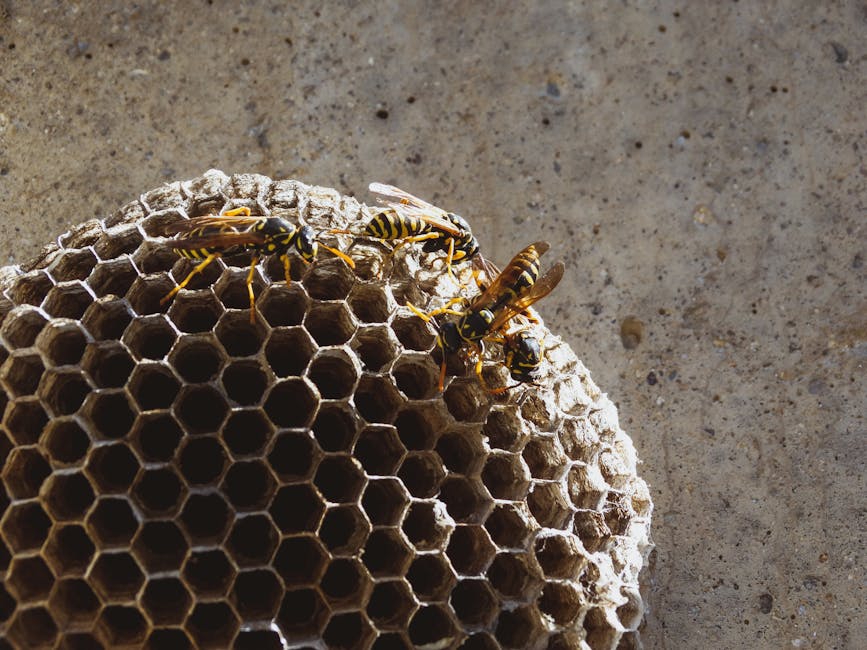
- Queenless wasp colonies experience chaos due to the sudden absence of the queen’s pheromones, which regulate the behavior of worker wasps.
- Female wasps compete for dominance, engaging in fierce battles, and the colony’s social hierarchy breaks down.
- The chaos leads to a significant decrease in the colony’s productivity and cohesion, making it vulnerable to external threats.
- Hidden helpers, often older and more experienced wasps, quietly take on critical roles to maintain the colony’s basic functions.
- These hidden helpers focus on gathering food, caring for the young, and maintaining the colony’s infrastructure.
What happens when a queen wasp suddenly disappears, leaving her colony without a leader? Researchers have found that the colony doesn’t calmly choose a successor — instead, it erupts into chaos. The queen’s disappearance triggers a frenzy of aggression among female wasps, who immediately begin battling for power, shattering the colony’s social order. However, amidst the chaos, some wasps quietly become the colony’s unsung heroes, stepping up to gather food and care for the young, ensuring the society doesn’t collapse.
How Do Queenless Wasp Colonies Descend into Chaos?

The sudden loss of a queen wasp triggers a dramatic shift in the colony’s dynamics. Without the queen’s pheromones, which normally regulate the behavior of worker wasps, the colony’s social hierarchy breaks down. Female wasps, which were previously focused on tasks such as foraging and caring for young, begin to compete for dominance, engaging in fierce battles for power. This chaos can lead to a significant decrease in the colony’s overall productivity and cohesion, making it vulnerable to external threats.
What Evidence Supports the Existence of Hidden Helpers?

Researchers have observed that while some female wasps are fighting for the throne, others are quietly taking on critical roles to maintain the colony’s basic functions. These hidden helpers, often older and more experienced wasps, focus on gathering food, caring for the young, and maintaining the colony’s infrastructure. According to a study published on Science Daily, this phenomenon is crucial to the colony’s survival, as it allows the wasps to adapt to the loss of their queen and eventually recover. The existence of these hidden helpers is supported by data on the colony’s productivity and social structure, which shows that despite the initial chaos, the colony is able to maintain a level of stability and functionality.
Are There Alternative Perspectives on Queenless Wasp Colonies?

Some researchers argue that the chaos that ensues after a queen’s disappearance may not be entirely negative. For example, the competition for dominance among female wasps can lead to the emergence of new leaders, potentially bringing fresh genetic material and new perspectives to the colony. Additionally, the breakdown of the social hierarchy can allow for the redistribution of resources and tasks, potentially leading to a more equitable and efficient colony. However, others counter that this chaos can be detrimental to the colony’s long-term survival, as it can lead to a decline in the colony’s overall health and productivity.
What Are the Real-World Implications of Queenless Wasp Colonies?

The discovery of hidden helpers in queenless wasp colonies has significant implications for our understanding of social insect behavior and colony resilience. For example, it highlights the importance of redundancy and adaptability in social systems, where individual members can take on new roles to maintain the colony’s basic functions. This phenomenon can also inform strategies for managing and conserving insect populations, particularly in the context of colony collapse and environmental stress. Furthermore, the study of queenless wasp colonies can provide insights into the evolution of social behavior and the development of complex societies.
What This Means For You
The story of queenless wasp colonies and their hidden helpers offers a fascinating glimpse into the complex social dynamics of insects. As we continue to face challenges related to environmental sustainability and conservation, understanding the resilience and adaptability of social insect colonies can provide valuable lessons for managing and conserving ecosystems. By recognizing the importance of individual contributions to the collective well-being of a colony, we can better appreciate the intricate social structures that underlie many natural systems.
As researchers continue to explore the intricacies of queenless wasp colonies, we are left to wonder: what other secrets lie hidden in the social structures of insects, and how can we apply these insights to address the complex challenges facing our planet? The study of social insects like wasps can provide a unique window into the evolution of cooperation and the development of complex societies, offering a rich area of inquiry for scientists and enthusiasts alike.
Source: ScienceDaily