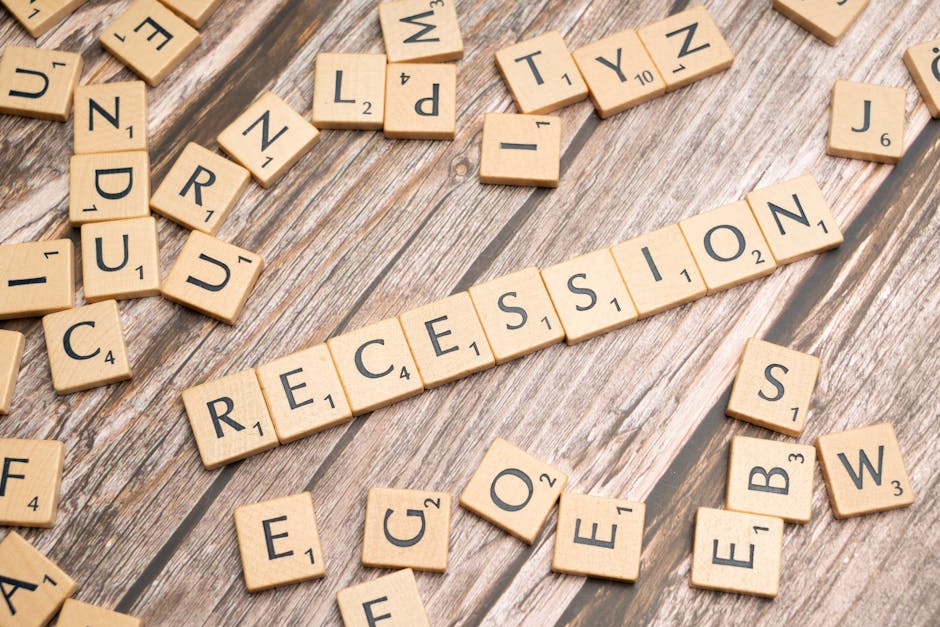
- Despite consecutive quarters of GDP growth, Americans report the economy is failing due to stagnant wages and high housing costs.
- The “permacession” phenomenon reflects a sustained sense of economic hardship, differing from a traditional recession in its focus on perception.
- Official indicators show economic expansion, but many Americans face a cost-of-living crisis, making recovery feel elusive.
- The permacession is rooted in real financial pressures, not a misreading of data, as Americans face decades of uneven gains and rising essential costs.
- Persistent economic pessimism could reshape consumer behavior, voting patterns, and policy priorities in 2025 and beyond.
Despite consecutive quarters of GDP growth and historically low unemployment, a majority of Americans continue to report that the economy is in recession—a phenomenon now termed the \”permacession.\” This shift from the earlier \”vibecession\” reflects not a misreading of data, but a lived reality of stagnant wages, high housing costs, and eroding purchasing power. What changed is not the economy’s technical health, but the public’s enduring belief that it no longer works for them. This matters now because persistent economic pessimism could reshape consumer behavior, voting patterns, and policy priorities in 2025 and beyond.
\n\n
What is the \”permacession\” and how does it differ from a real recession?

\n
The term \”permacession\”—a blend of \”permanent\” and \”recession\”—describes a sustained sense of economic hardship among American households, even as official indicators show expansion. Unlike a true recession, defined by two consecutive quarters of negative GDP growth, the permacession is rooted in perception shaped by real financial pressures. While the U.S. economy grew at a 2.5% annual rate in Q1 2025 and unemployment remains below 4%, many Americans face a cost-of-living crisis that makes recovery feel elusive. The Atlantic columnist Annie Lowrey, in a May 2025 article analyzing this shift, notes that \”people aren’t wrong for feeling poor—they’re responding to decades of uneven gains and rising essentials costs.\” This sentiment marks a departure from the \”vibecession\” of 2022–2023, when negative mood diverged sharply from fundamentals; now, the mood reflects structural economic flaws that data often overlooks.
\n\n
What data supports the idea of a \”permacession\”?

\n
A growing body of evidence shows that economic stress is widespread despite macroeconomic stability. According to Gallup’s May 2025 economic confidence survey, 78% of Americans believe the economy is \”not so good\” or \”poor,\” the highest level of dissatisfaction in a non-recession year since 1990. Meanwhile, the University of Michigan’s Consumer Sentiment Index has remained below 65 for 14 consecutive months—levels typically seen during downturns. Real disposable income growth has slowed to 1.2% year-over-year, while housing costs have surged by 32% since 2020, far outpacing wage gains. A Reuters analysis from April 2025 found that rent consumes over 50% of income for nearly 20 million renter households. These factors combine to create a sense of permanent strain—particularly for middle- and lower-income families—validating the permacession narrative not as irrational fear, but as a rational response to long-term imbalance.
\n\n
Are there skeptics who challenge the permacession concept?

\n
Some economists caution against conflating sentiment with economic reality, arguing that the permacession risks overstating hardship. Harvard economist Jason Furman has noted that while inflation and housing costs are real concerns, \”the U.S. economy is creating jobs, wages are rising, and poverty rates remain near historic lows.\” He and others point to the 2024 Census data showing a decline in the Supplemental Poverty Measure to 11.5%, down from 12.8% in 2022. Additionally, stock market gains and rising home equity have boosted household wealth, particularly for older Americans. Critics also warn that labeling a growing economy a \”permacession\” could discourage investment, dampen spending, and distort policy—potentially leading to overcorrection by the Federal Reserve. Yet even skeptics acknowledge that the disconnect between data and perception reveals a deeper failure: the economy may be expanding, but too many people are not feeling it, suggesting a crisis of distribution rather than output.
\n\n
What are the real-world consequences of the permacession mindset?

\n
The permacession is already shaping behavior and policy. Consumers are pulling back on discretionary spending, with retail sales growth flatlining in early 2025 despite wage gains. This caution is especially pronounced among younger adults: 62% of millennials and Gen Z respondents in a Pew Research study said they \”do not believe they will ever achieve financial stability.\” Politically, economic dissatisfaction is fueling support for populist measures, including wealth taxes and housing construction mandates. Cities like Austin and Seattle have passed aggressive rent-control expansions in 2025, while Congress debates a federal housing affordability bill. Meanwhile, companies report difficulty retaining workers not just due to pay, but due to employees’ sense of financial exhaustion. The permacession, therefore, isn’t just a mood—it’s a force reshaping markets, governance, and daily life across the country.
\n\n
What This Means For You
\n
If you’re feeling financially stretched despite a strong job market, you’re not alone—and your experience is part of a larger national trend. The permacession reflects a structural mismatch between economic growth and personal well-being, driven by housing, healthcare, and education costs that outpace income. While the economy isn’t shrinking, its benefits are not broadly shared. This means individual financial strategies should account for long-term cost pressures, not just short-term inflation. Policymakers may eventually respond with structural reforms, but until then, the burden falls on households to navigate a system that feels rigged.
\n\n
Why do economic indicators continue to diverge so sharply from public experience, and what would it take for Americans to genuinely feel prosperity again? As the 2026 midterm elections approach, this question may define the next phase of U.S. economic policy.
Source: Reddit