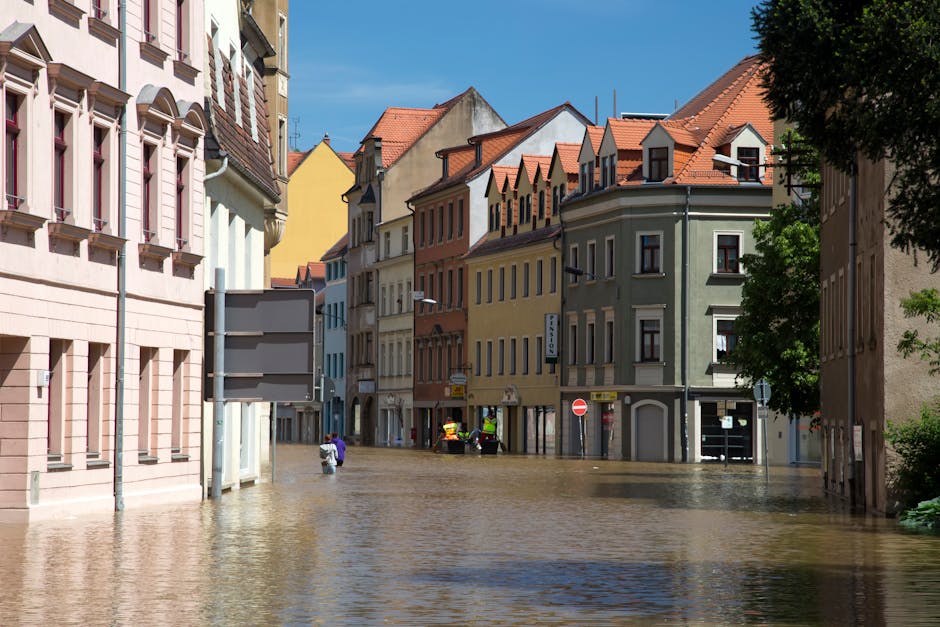
- Waymo has suspended self-driving car operations in 5 US cities due to flooding risks, citing an ‘abundance of caution’.
- Autonomous vehicles struggle with interpreting hazardous weather conditions, a persistent limitation in AI navigation systems.
- Flooded roads pose a complex problem for self-driving cars, obscuring lane markings and creating false reflections.
- The suspension marks a significant setback for Waymo’s public deployment strategy and raises concerns over AI vehicle readiness.
- Weather-related challenges remain a critical vulnerability in autonomous vehicles, despite years of testing and investment.
Waymo has temporarily suspended its autonomous taxi operations in five U.S. cities—Phoenix, San Francisco, Los Angeles, Austin, and Seattle—after multiple incidents in which its robotaxis drove into flooded roadways during heavy rains. The pause, announced by a company spokesperson as an “abundance of caution,” marks a significant setback for the company’s public deployment strategy and underscores persistent limitations in how self-driving systems interpret hazardous weather conditions. The incidents occurred over the past two weeks, primarily during localized downpours that overwhelmed drainage systems. While no injuries were reported, the events have reignited scrutiny over the readiness of AI-driven vehicles to handle unpredictable real-world scenarios, particularly as companies race to scale commercial operations without human safety drivers.
Autonomous Vehicles Meet Real-World Weather

The temporary suspension comes at a pivotal moment for the autonomous vehicle industry, as companies like Waymo, Cruise, and Aurora vie to prove that self-driving cars can operate safely and reliably in diverse urban environments. Despite years of testing and billions in investment, weather-related challenges remain a critical vulnerability in AI navigation systems. Flooded roads, in particular, pose a complex problem: water can obscure lane markings, create false reflections, and mask road depth, making it difficult for sensors like LiDAR and cameras to accurately perceive the environment. Waymo’s vehicles, which rely heavily on pre-mapped environments and real-time sensor fusion, appear to have misjudged water-covered streets as passable routes. This gap in perception highlights a broader industry challenge: while autonomous systems excel in controlled, predictable conditions, edge cases involving extreme weather continue to expose critical flaws in decision-making algorithms.
Incidents Trigger Safety Pause

The decision to halt operations followed at least four documented cases in which Waymo vehicles attempted to navigate through flooded intersections or submerged streets. In one instance in Austin, Texas, a Waymo One vehicle drove into a rain-swamped underpass, stalling in over a foot of standing water. In San Francisco, another vehicle slowed but did not stop before entering a flooded section of road, requiring remote assistance to disengage and reroute. According to internal logs reviewed by safety analysts, the vehicles’ perception systems classified the water as a reflective surface rather than an impassable hazard. Waymo confirmed that it expanded the pause beyond the initial test cities after identifying similar risk patterns in its operational data. The company emphasized that no passengers were injured and that all vehicles were recovered without damage, but the incidents prompted immediate corrective action, including software updates and revised operational guidelines for adverse weather.
Technical Limits of AI Navigation

Experts in autonomous systems point to fundamental limitations in how current AI models interpret environmental context. While Waymo’s vehicles use high-definition maps and sensor arrays to detect obstacles, they often lack the intuitive judgment humans use to assess risk—such as recognizing that a submerged road may hide drop-offs or strong currents. According to the BBC, the incidents revealed that the AI struggled to differentiate between shallow puddles and deeper flooding, particularly when water covered familiar landmarks. Dr. Raj Rajkumar, a robotics professor at Carnegie Mellon University, noted that “autonomous vehicles are still largely trained on dry, clear-day data, which creates blind spots when conditions deviate.” This data bias is a known issue across the industry: most training datasets underrepresent extreme weather, leading to overconfidence in marginal conditions. Waymo is now retraining its models using synthetic flood scenarios and expanding real-world rainy-day testing to improve detection thresholds.
Regulatory and Public Trust Implications

The pause affects Waymo’s commercial robotaxi services, which had been expanding rapidly in key markets with minimal human oversight. Regulators in California and Arizona have expressed concern, with the California Public Utilities Commission requesting a detailed incident report. Public trust, already fragile after previous high-profile failures in the autonomous sector, could suffer further setbacks. Riders in affected cities reported mixed reactions—some praised Waymo for acting swiftly, while others questioned the readiness of fully driverless fleets. The incident also raises liability questions: if an autonomous vehicle makes a hazardous decision due to sensor misinterpretation, who is responsible—the operator, the software developer, or the city for inadequate drainage? As more cities allow driverless trials, the need for standardized safety protocols during adverse weather becomes increasingly urgent.
Expert Perspectives
Industry analysts are divided on the long-term impact of the pause. Some, like MIT’s Dr. Bryan Reimer, view it as a necessary course correction: “Pausing operations shows responsibility and a commitment to safety over speed.” Others warn it could delay broader adoption. “Consumers expect perfection from robots, but humans make mistakes too,” said Kelley Blue Book analyst Rebecca Lindland. Still, most agree that transparency is key—Waymo must clearly communicate how it’s addressing the flaws to regain confidence. Meanwhile, competitors are watching closely: any misstep in the AV space could trigger stricter regulations that affect the entire sector.
Looking ahead, Waymo plans to resume operations only after implementing updated flood-detection software and completing additional safety validation. The company is also collaborating with municipal authorities to integrate real-time weather and flood data into its navigation systems. As climate change increases the frequency of extreme weather events, the ability of autonomous vehicles to adapt will become a defining benchmark for the industry. The next phase of testing will likely focus on resilience under diverse environmental stressors, not just urban complexity. For now, the pause serves as a reminder that even the most advanced AI systems must learn to navigate nature’s unpredictability.
Source: BBC