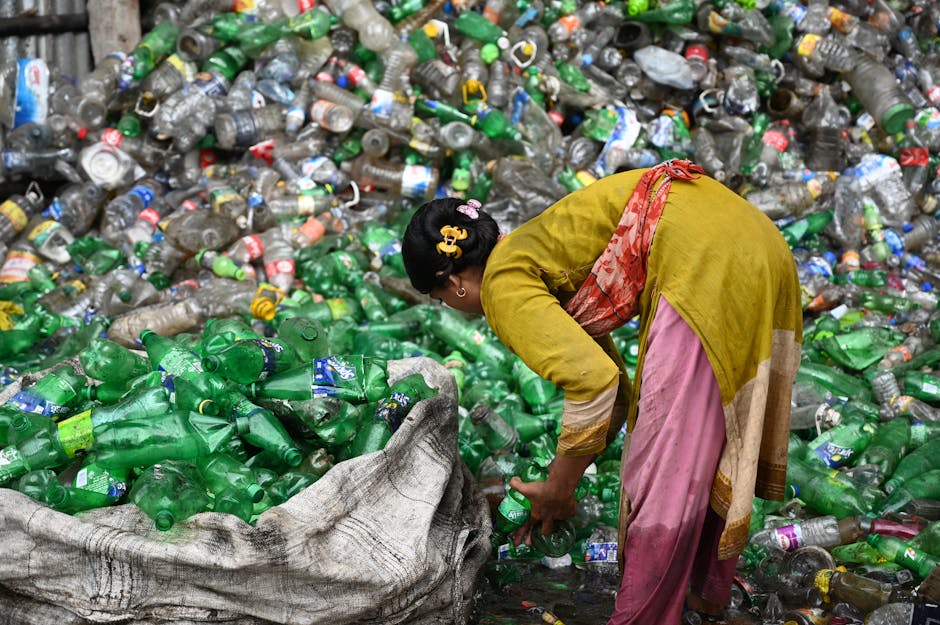
Researchers at the University of Edinburgh have developed a novel chemical process that transforms widely used plastics—such as polyethylene and polypropylene—into new materials by replacing oxygen atoms with sulfur, resulting in substances that degrade more rapidly and possess distinct physical properties. The reaction, which takes less than 10 minutes at mild temperatures, offers a scalable alternative to conventional mechanical recycling, which is often inefficient and limited by contamination. This breakthrough, published in a recent study, could reshape how society manages plastic waste, turning persistent pollutants into valuable, biodegradable resources and addressing one of the most urgent environmental challenges of the 21st century.
Why This Matters Now

Plastic pollution has reached crisis levels, with over 400 million tons of plastic produced globally each year—nearly all derived from fossil fuels and designed to last for decades. Traditional recycling recovers only about 9% of plastic waste, while the rest ends up in landfills, incinerators, or the natural environment, where it can persist for centuries. The urgency to find viable alternatives has intensified as microplastics infiltrate food chains, water supplies, and even human tissues. The Edinburgh team’s sulfur-based upcycling method arrives at a pivotal moment, when regulatory pressures, public awareness, and scientific innovation are converging on circular economy solutions. Unlike energy-intensive pyrolysis or chemical breakdown methods, this new approach is fast, low-cost, and operates under ambient conditions, making it a potentially transformative tool in the global fight against plastic waste.
The Chemistry Behind the Transformation

The breakthrough centers on a process known as inverse vulcanization, a technique previously used to create polymers from sulfur and organic compounds. In this case, the researchers applied it in reverse: instead of building new materials from sulfur, they introduced sulfur into existing plastic waste. By heating common plastics like polyethylene with elemental sulfur and a catalyst, they were able to replace oxygen-containing functional groups in the polymer chains with sulfur atoms, fundamentally altering the material’s structure. This chemical swap transforms inert, non-polar plastics into polar, sulfur-rich polymers with new properties—such as increased density, altered thermal behavior, and, crucially, enhanced susceptibility to environmental degradation. The process works on mixed, unsorted plastic waste, including colored and contaminated samples, which are typically unrecyclable through conventional means.
Scientific and Environmental Implications

This upcycling method represents a shift from waste management to resource creation. The resulting sulfur-modified plastics break down more readily under natural conditions, reducing long-term environmental persistence. Moreover, the new materials exhibit properties that could be useful in applications such as heavy metal capture, water purification, or even infrared optics—areas where sulfur-rich polymers already show promise. According to the study, the reaction achieves high conversion rates in under 10 minutes at temperatures below 150°C, making it energy-efficient compared to most chemical recycling techniques. While the process is still in the laboratory phase, its simplicity and use of abundant materials—particularly sulfur, a byproduct of petroleum refining—suggest strong potential for industrial scaling. However, researchers caution that full lifecycle assessments are needed to evaluate toxicity, degradation byproducts, and long-term ecological impacts before deployment.
Who Stands to Benefit?

The implications extend across industries and ecosystems. Municipal waste processors could adopt this technology to handle mixed plastic streams that currently go to landfill. Chemical manufacturers might integrate sulfur upcycling into circular supply chains, turning waste into feedstock for new products. Environmental agencies and policymakers may view this as a model for incentivizing chemical innovation in waste reduction. Developing nations, often burdened by plastic imports and inadequate recycling infrastructure, could benefit from decentralized, low-tech versions of the process. However, success depends on regulatory support, investment in pilot plants, and integration with existing waste collection systems. The technology does not eliminate the need for plastic reduction at the source, but it offers a powerful complement to reuse and reduction strategies.
Expert Perspectives
While many scientists applaud the innovation, some urge caution. Dr. Jane Thornbeck of Imperial College London, not involved in the study, noted that “transforming waste plastics into functional materials is a major advance,” but emphasized the need for real-world testing. Others point out that scaling chemical processes often reveals hidden costs and logistical hurdles. Meanwhile, environmental chemists at the University of California have called for parallel research into the ecotoxicology of sulfur-modified polymers, especially their breakdown products in marine environments.
Looking ahead, the Edinburgh team is working with industry partners to pilot the technology at larger scales. Key questions remain: Can the process handle the complex additives in commercial plastics? Will the new materials find viable markets? And how will regulatory frameworks adapt to novel, upcycled polymers? As the world grapples with overflowing landfills and oceanic garbage patches, this sulfur-based method offers not just a chemical solution, but a reimagining of plastic itself—from pollutant to resource.
Source: Ed