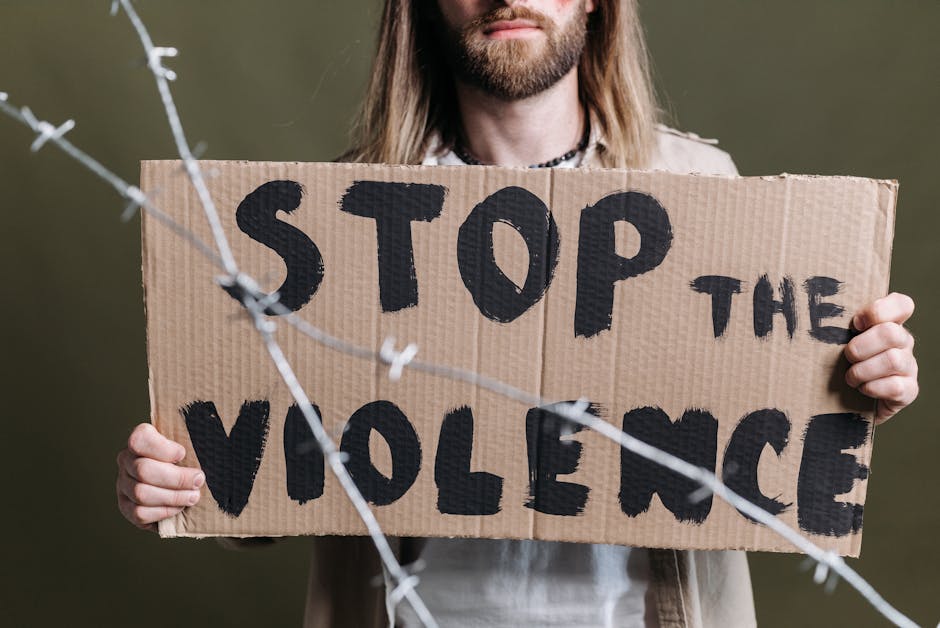
- Violent ethnic clashes in Manipur, India have killed over 200 people and displaced tens of thousands since 2023.
- Barbed wire divides villages, armed security forces patrol checkpoints, and communities live in fear due to ongoing instability.
- Government pledges to restore order and initiate reconciliation have failed to bring peace to the region.
- Tribal land rights, political representation, and ethnic tensions remain unaddressed in Manipur, exacerbating the crisis.
- The ongoing conflict risks turning into a protracted humanitarian crisis in one of India’s most diverse and isolated regions.
Three years after violent ethnic clashes tore through India’s northeastern state of Manipur, the region remains deeply fractured, with barbed wire dividing villages, armed security forces at checkpoints, and communities living in fear. The conflict, which erupted in May 2023 between the predominantly Hindu Meitei and the largely Christian Kuki-Zo tribes, has left over 200 dead, displaced tens of thousands, and reduced entire neighborhoods to rubble. Despite government pledges to restore order and initiate reconciliation, peace remains elusive. The ongoing instability underscores a broader failure to address tribal land rights, political representation, and ethnic tensions in one of India’s most diverse and isolated regions — a failure that risks turning localized unrest into a protracted humanitarian crisis.
Current State of Conflict and Control

Today, Manipur resembles a conflict zone more than a functioning Indian state. Journalists, including those from The New York Times, have faced significant obstacles entering affected areas due to military restrictions and roadblocks. Entire villages in the Churachandpur and Imphal Valley districts remain abandoned or under de facto control of armed militias. The state government has imposed repeated internet shutdowns, citing security concerns, which rights groups argue only deepen misinformation and hinder humanitarian aid. While official figures claim normalcy is returning, ground reports tell a different story: curfews are still enforced, schools remain closed in conflict zones, and intercommunity movement is severely restricted. Even basic services like healthcare and food distribution are fragmented along ethnic lines, with separate camps and supply chains for Meitei and Kuki populations.
Roots of the 2023 Ethnic Uprising

The 2023 violence did not erupt in isolation. Tensions between the Meitei, who dominate the Imphal Valley, and the Kuki-Zo, who inhabit the surrounding hills, have simmered for decades over land, identity, and political power. The immediate trigger was a court-ordered move to grant Scheduled Tribe (ST) status to the Meitei community, which the Kuki feared would erode their land rights and political autonomy under India’s affirmative action framework. Protests began in April 2023 but spiraled into arson, mass killings, and forced displacements by May. Entire villages were torched, and revenge attacks became routine. The central government deployed thousands of paramilitary troops, but their presence has done little to rebuild trust. Critics argue that delayed intervention and partisan policing exacerbated the crisis. Historical grievances — including the 19th-century annexation of Kuki territories and unequal development policies — continue to fuel resentment.
Key Players in the Standoff

The conflict is shaped by a complex web of local leaders, armed groups, and national politics. On the Meitei side, groups like the Meitei Leepun and Apunba Lup have emerged as vocal advocates for ST status and cultural preservation, sometimes resorting to vigilante violence. Kuki leaders, including church elders and tribal councils, accuse the state government of favoring the Meitei majority and enabling land encroachment. Meanwhile, armed Kuki outfits such as the Kuki National Army (KNA) have intensified guerrilla operations, leading to counterinsurgency drills by Indian security forces. The role of India’s central government, led by Prime Minister Narendra Modi’s BJP, has been contentious. While publicly calling for peace, the administration has been criticized for downplaying the crisis and resisting high-level mediation. The absence of a neutral third-party dialogue mechanism has left communities to fend for themselves, deepening the cycle of retaliation.
Human and Political Consequences

The human cost of Manipur’s crisis is staggering. Over 60,000 people remain displaced, many living in overcrowded relief camps with poor sanitation and limited access to medical care. Mental health professionals report widespread trauma, especially among children who witnessed killings or lost family members. Economically, the state has been crippled — tourism has collapsed, agricultural supply chains are broken, and federal investment has stalled. Politically, the unrest has exposed the fragility of India’s federal model in ethnically diverse regions. The failure to implement the 2018 peace accord between the Kuki and central government, coupled with delayed justice for victims, has eroded faith in institutions. International bodies like the United Nations have expressed concern, but India has rebuffed external involvement, insisting the matter is an internal affair.
The Bigger Picture
Manipur’s crisis reflects a broader pattern in India’s northeastern frontier, where ethnic diversity collides with centralized governance and historical marginalization. Similar conflicts have flared in Nagaland, Mizoram, and Assam, often rooted in identity, land, and autonomy. What makes Manipur different is the intensity of communal polarization and the state’s symbolic importance as a cultural crossroads between South and Southeast Asia. The unresolved conflict also poses a strategic risk, as porous borders with Myanmar allow weapons and insurgents to move freely. With democratic backsliding on the rise and minority rights under strain nationwide, Manipur has become a litmus test for India’s commitment to pluralism and federalism.
Looking ahead, sustainable peace in Manipur will require more than military control. It demands inclusive dialogue, legal clarity on tribal status and land rights, and investment in intercommunity reconciliation. Civil society groups are pushing for truth and reconciliation commissions, but progress remains slow. Without political will from both state and federal leaders, the cycle of violence may continue — not as a sudden eruption, but as a grinding, normalized state of division where barbed wire becomes a permanent feature of everyday life.
Source: The New York Times