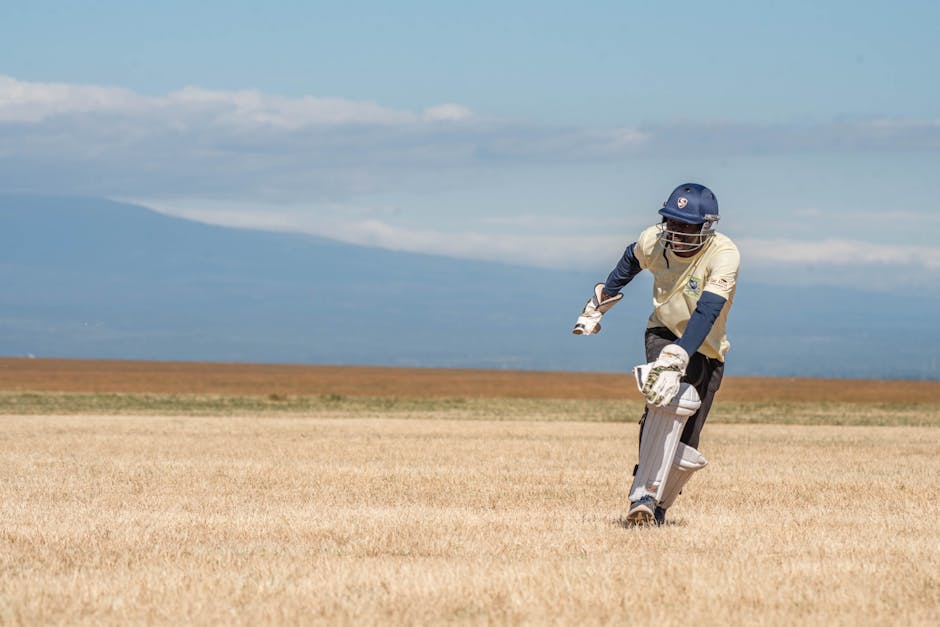
- Afghan women’s cricket team, Afghan Women XI, is fighting for international recognition from the International Cricket Council (ICC).
- The team, led by Benafsha Hashimi, consists of former national team members and youth prospects who escaped the Taliban’s return to Afghanistan.
- The ICC currently recognizes only the men’s team, while the Afghan Women XI demands to be acknowledged as the legitimate representatives of Afghan women’s cricket.
- The team’s campaign gained momentum after FIFA recognized the exiled Afghan women’s football team, setting a precedent for the ICC.
- The Afghan Women XI’s fight for recognition is not just about cricket, but also about preserving national identity and athletic legitimacy in the face of political upheaval.
Benafsha Hashimi, a former contracted player with the Afghanistan Cricket Board, is leading a growing movement to have the exiled Afghan women’s cricket team recognized by the International Cricket Council (ICC), following a precedent set by FIFA’s recognition of Afghanistan’s exiled women’s football team. After fleeing the Taliban regime in 2021 at just 18 years old, Hashimi resettled in Australia, where she and fellow refugee athletes formed the Afghan Women XI. They played their first official match in Melbourne in 2025, symbolizing both resilience and defiance. Their campaign matters now as global sports bodies face mounting pressure to extend the same recognition to cricket players that FIFA granted to Afghan women footballers, ensuring that talent and national identity aren’t erased by political upheaval.
The Fight for International Recognition

The Afghan Women XI, composed of former national team members and youth prospects who escaped Afghanistan after the Taliban’s return, are demanding that the ICC acknowledge them as the legitimate representatives of Afghan women’s cricket. Currently, the ICC recognizes only the men’s team under the Afghanistan Cricket Board, which operates under de facto Taliban control and excludes women entirely. Hashimi and her teammates argue that their status as refugees does not diminish their national identity or athletic legitimacy. Their cause gained momentum in 2025 when FIFA officially recognized the exiled Afghanistan women’s football team, setting a powerful precedent for other sports. The cricket players see this as a blueprint, urging the ICC to act decisively and uphold its stated commitment to gender equity and inclusion in sport.
How We Got Here: The Collapse of Women’s Cricket in Afghanistan

Women’s cricket in Afghanistan was in its infancy but showed promise before August 2021, when the Taliban regained control of the country. The Afghanistan Cricket Board had begun developing a women’s national team, offering contracts and training programs, primarily in Kabul. Benafsha Hashimi was among the first cohort of players to receive formal contracts. However, the Taliban’s return led to the immediate dissolution of all women’s sports programs, with female athletes facing threats, harassment, and forced withdrawal from public life. Since then, the regime has banned women from participating in most sports, citing extremist interpretations of Islamic law. Many athletes, including Hashimi, were evacuated through international humanitarian efforts, resettling in countries like Australia, the UK, and Canada. In exile, they have worked to preserve their identities as athletes, forming teams and advocating for continued representation on the global stage.
The Players Shaping a Movement

Benafsha Hashimi has emerged as the face of the campaign, combining her role as a player with tireless advocacy. Her journey from Kabul to Melbourne mirrors that of dozens of her teammates, many of whom are now scattered across the globe. Despite the trauma of displacement, they remain united by a shared mission: to ensure that Afghan women are not erased from international cricket. Hashimi has spoken at UN forums and engaged with global human rights organizations, framing their struggle as one of dignity and visibility. Her leadership is bolstered by support from former coaches and international allies in the cricket community, including players from Australia and England who have publicly endorsed their cause. Their collective voice amplifies a simple demand: that sporting bodies treat exiled athletes not as defectors, but as custodians of national heritage.
Consequences for Athletes and the ICC

Without ICC recognition, the Afghan Women XI remain ineligible for official tournaments, funding, and development programs. This exclusion not only undermines their careers but also sends a message that political repression can effectively eliminate women’s participation in sport. For the ICC, which has committed to advancing women’s cricket globally, the failure to act risks undermining its credibility. Recognizing the exiled team would affirm that sporting bodies can uphold human rights principles even in the face of geopolitical complexity. It would also provide a lifeline to athletes whose lives and careers were upended by forces beyond their control. Conversely, inaction could set a dangerous precedent, emboldening authoritarian regimes to suppress women’s sports with impunity.
The Bigger Picture
This struggle reflects a broader crisis for women’s rights under Taliban rule and the international community’s responsibility to respond. Sports are not just games—they are arenas of identity, resistance, and visibility. When FIFA recognized the exiled Afghan women’s football team, it affirmed that athletic representation can transcend borders and regimes. The ICC now has a similar opportunity to make a moral and institutional stand. As global sports governance evolves, the treatment of displaced athletes will become an increasingly important measure of integrity. The case of the Afghan Women XI is not just about cricket; it’s about whether the world will allow oppression to silence half the population.
What comes next depends on the ICC’s willingness to act. With growing support from human rights groups, international athletes, and refugee organizations, the pressure is mounting. The Afghan Women XI plan to continue touring and competing in friendly matches while lobbying for formal recognition. Their story is far from over—it is, in fact, entering a pivotal chapter. As long as they can play, they will demand to be seen.
Source: The Guardian