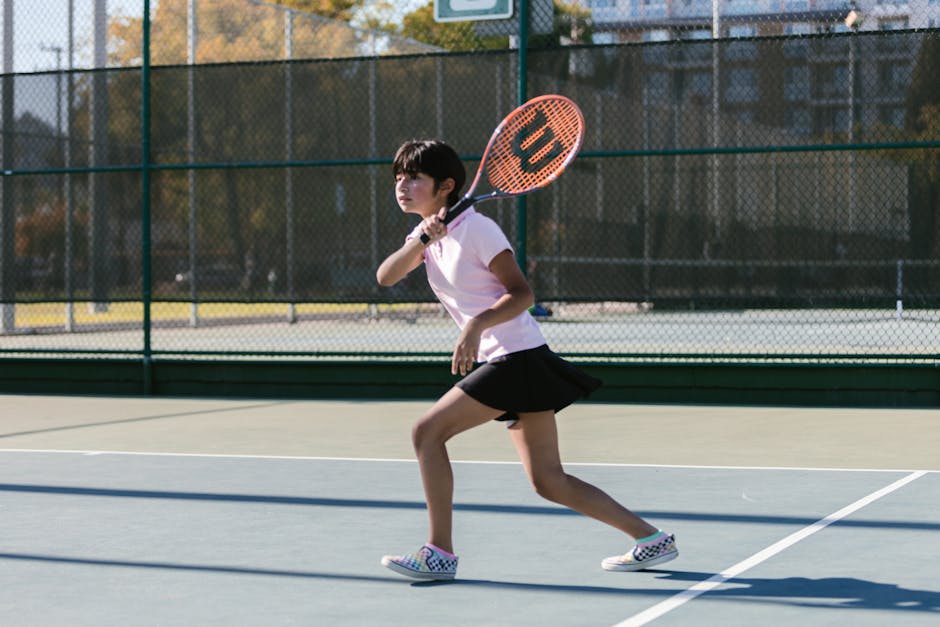
On a blistering third day at Roland Garros, 17-year-old Ivorian wildcard Adrien Kouame stunned tennis fans by taking a first-set tiebreak against 2014 US Open champion Marin Cilic, marking one of the most unexpected performances of the 2026 French Open. Played under sweltering 38°C (100°F) conditions that tested player endurance, Kouame’s fearless baseline play and composure under pressure signaled a generational shift in men’s tennis. His performance not only electrified Court 9 but also reignited global conversation about the rise of African talent in a traditionally Eurocentric sport. With no ATP ranking and only two ITF titles to his name, Kouame’s run matters because it challenges long-standing geographic imbalances in tennis development and suggests that the next wave of stars may emerge from unexpected corners of the world.
Kouame Holds Firm in Historic Tiebreak

Adrien Kouame, ranked outside the top 800 in the world, held his nerve to win a dramatic first-set tiebreak 7-6(5) against the 12th-seeded Cilic, a former top-3 player and Grand Slam champion. Battling dehydration and cramps in the relentless Parisian heat, Kouame saved three set points with bold backhand winners and precise net approaches—uncommon tactics for a teenager at his level. Though Cilic eventually rallied to win the match 6-7(5), 6-3, 6-4, 6-2, the damage was done: Kouame had announced himself on the Grand Slam stage. The crowd at Court 9, initially sparse, swelled as word spread, culminating in a standing ovation after the final point. Tournament officials noted that on-court temperatures reached 55°C (131°F), prompting medical staff to monitor players closely for heat exhaustion—an issue previously raised concerns about athlete safety.
The Rise of a Tennis Prodigy From Abidjan

Kouame’s emergence is the result of a decade-long development pipeline that few saw coming. Born in Abidjan, Ivory Coast, he began playing on cracked public courts with borrowed rackets before catching the eye of a French tennis diplomat stationed in West Africa. At 13, he was fast-tracked into the FFT’s (Fédération Française de Tennis) international youth program, training part-time in Paris while maintaining residency in Abidjan. Unlike many junior phenoms who relocate permanently to European or American academies, Kouame split his time between cultures, a hybrid model now being studied by development coaches. His game blends the relentless fitness of African athletes with the tactical nuance of French clay-court tradition. While past African players like South Africa’s Kevin Anderson reached elite levels, no male player from sub-Saharan Africa has ever broken into the ATP top 50—making Kouame’s performance a potential watershed moment for the continent’s tennis ambitions.
The People Behind the Phenomenon

Kouame’s journey has been shaped by a quiet but determined support network. His mother, a schoolteacher, sold her car to fund his first international trip to a junior tournament in Tunisia. His coach, former Tunisian Davis Cup player Samir Benali, has worked with him since age 10, emphasizing mental resilience over technical perfection. “We don’t have the money for 20 coaches and physios,” Benali said in a recent interview. “So we train smarter, not harder.” Meanwhile, FFT officials, eager to diversify French tennis beyond its traditional bases, have quietly increased funding for outreach programs in former French colonies. Kouame is not technically a French citizen, but his participation under the Ivorian flag with French logistical support reflects a new model of transnational athlete development—one that could redefine how talent is scouted and nurtured in the 21st century.
Consequences for the Tennis World Order

Kouame’s performance, though ending in a loss, has immediate ripple effects. The International Tennis Federation (ITF) is expected to fast-track funding for new training centers in West Africa, with pilot programs slated for Abidjan and Dakar. Sponsors, too, are taking notice: Nike confirmed it has entered preliminary talks with Kouame’s team. More broadly, his success challenges the geographic concentration of tennis talent, potentially pressuring Grand Slam tournaments to expand qualifying wildcards to underrepresented regions. For current top players, the message is clear: the depth of competition is increasing beyond traditional powerhouses. As climate change forces more tournaments to grapple with extreme heat, Kouame’s ability to perform under such conditions may also influence future training regimens, particularly for younger athletes from equatorial regions.
The Bigger Picture
Adrien Kouame’s stand at Roland Garros is more than a feel-good story—it’s a sign of sport’s evolving global equity. While tennis has long been criticized for its elitism and lack of diversity, moments like this suggest systemic change is possible. As emerging economies invest in grassroots sports and global federations rethink talent pipelines, the 2026 French Open may be remembered not for the champions crowned, but for the teenager who nearly beat one. The sport’s future may not come from Monte Carlo or Miami, but from a cracked court in Abidjan under a relentless sun.
What comes next could define a generation. Kouame is expected to receive wildcards into several ATP Challenger events in Europe this summer, and his performance has already drawn interest from top-tier academies. Whether he breaks into the top 100 remains to be seen, but his impact is already undeniable. With the 2028 Olympics in Los Angeles approaching, and discussions underway about including more African-hosted ATP events, Kouame’s moment at Roland Garros may be the spark that reshapes the map of world tennis.
Source: The Guardian