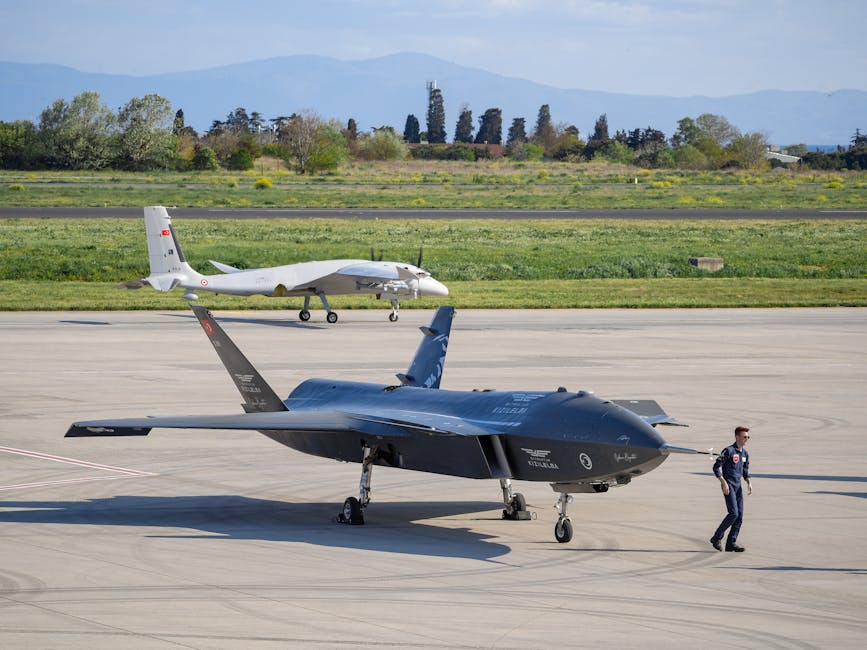
- Hezbollah has launched the largest drone attack in its history against northern Israel, deploying over 20 UAVs.
- The drone campaign tested Israeli air defenses and showcased Hezbollah’s sophisticated tactical capabilities.
- The attack demonstrates that non-state actors now possess drone arsenals comparable to regional militaries.
- Israeli air defenses, including Iron Dome and Patriot batteries, intercepted most of the UAVs.
- The conflict along the Israel-Lebanon border has escalated significantly following the Gaza war.
Hezbollah has launched the largest drone attack in its history against northern Israel, deploying more than 20 unmanned aerial vehicles (UAVs) in a coordinated assault on military and civilian infrastructure. The incident, confirmed by the Israel Defense Forces (IDF) on June 22, 2024, marks a significant escalation in the ongoing conflict along the Israel-Lebanon border. Unlike previous rocket and missile barrages, this operation showcased a sophisticated, multi-pronged drone campaign that tested Israeli air defenses and signaled a shift in Hezbollah’s tactical capabilities. The attack matters because it demonstrates that non-state actors now possess drone arsenals comparable to those of regional militaries, raising the risk of miscalculation and broader conflict amid rising tensions following the Gaza war.
Unprecedented Scale of the Drone Offensive

According to IDF Spokesperson Rear Admiral Daniel Hagari, Hezbollah launched over 20 drones in a single wave from southern Lebanon, targeting IDF bases, radar installations, and civilian areas in northern Israel including Kiryat Shmona and the Galilee region. Some drones carried explosives, while others appeared designed for reconnaissance or electronic warfare. Israeli air defenses, including Iron Dome and Patriot batteries, intercepted most of the UAVs, but several penetrated deeper than expected, prompting widespread air raid alerts. The scale of the operation dwarfs previous Hezbollah drone efforts, such as the 2006 use of Iranian-made Ababil drones or the 2023 sporadic incursions. This time, the drones flew at varying altitudes and speeds, suggesting coordinated planning and advanced command-and-control systems. Analysts at the Institute for the Study of War note that the attack is the largest known drone operation by a non-state group against a state military, underscoring a transformation in asymmetric warfare capabilities across the Middle East. The use of commercial and modified military-grade drones indicates Hezbollah’s growing access to Iranian technology and expertise.
Key Players: Hezbollah, Iran, and Israel’s Security Apparatus

Hezbollah, the Iran-backed Shiite militant group based in Lebanon, has long served as a strategic proxy for Tehran in its regional rivalry with Israel and the United States. The group’s military wing, commanded by Secretary-General Naim Qassem after the 2024 death of Hassan Nasrallah, has spent over a decade building a drone program with direct support from Iran’s Islamic Revolutionary Guard Corps (IRGC). Iranian engineers are believed to have assisted in assembling and modifying drones like the Saegheh and Mohajer series, which resemble captured U.S. models. Israel, for its part, has repeatedly targeted drone production sites in Lebanon and Syria, most recently in airstrikes on Damascus in May 2024. Despite these efforts, Hezbollah’s persistence suggests a resilient supply chain and deep integration with Iranian military networks. The IDF’s Northern Command, led by Major General Ori Gordin, now faces a new challenge: defending against saturation drone attacks that could overwhelm existing interception systems designed primarily for rockets and missiles.
Strategic Trade-Offs: Deterrence, Escalation, and Defense Costs

While drone warfare offers Hezbollah a low-cost, high-impact method of striking Israel without triggering full-scale war, it also carries significant risks. The use of drones allows for precision targeting and reduced collateral damage compared to rockets, potentially limiting international condemnation. However, the success of such attacks incentivizes further investment in UAV technology, prompting Israel to respond with increasingly aggressive preemptive strikes. This cycle threatens to destabilize the fragile equilibrium on the northern border, where over 100,000 Israelis remain displaced since October 2023. Moreover, defending against swarms of small, low-flying drones is exponentially more expensive than launching them—each Iron Dome interceptor costs tens of thousands of dollars, while commercial drones can be modified for under $1,000. As Reuters has reported, Israeli defense officials are now fast-tracking new electronic warfare and AI-driven detection systems to counter the threat. Yet, no system is foolproof, and even a single successful drone attack on a major city could force a disproportionate response.
Why Now? Regional Tensions and Post-Gaza Calculations

The timing of the drone offensive reflects a broader shift in regional dynamics following the Gaza conflict. With Hamas severely degraded and international pressure mounting on Israel to de-escalate, Hezbollah may be seeking to reassert its relevance as a resistance force and prevent Tehran from being sidelined in the post-war order. Additionally, the group likely calculates that Israel, already stretched militarily and politically, may hesitate to open a second front in Lebanon. However, this assumption carries danger: Israel has consistently treated any major attack from the north as a red line. The June 22 drone strike may have been intended as a show of force rather than an act of war, but it crossed a threshold in terms of scale and sophistication. As BBC News analysis suggests, the post-Gaza period is not a return to stability but a recalibration of deterrence, where non-state actors test new limits under the shadow of great power competition.
Where We Go From Here
In the next six to twelve months, three scenarios are possible. First, a controlled escalation: Israel responds with targeted airstrikes on Hezbollah drone units, leading to a cycle of attacks and counterattacks without full war. Second, a diplomatic de-escalation, possibly brokered by France or the United Nations, resulting in a renewed focus on implementing UN Resolution 1701 and deploying enhanced peacekeeping forces along the Blue Line. Third, a worst-case breakout: a successful Hezbollah drone or missile attack on a major Israeli city triggers a large-scale Israeli ground invasion of southern Lebanon, potentially displacing hundreds of thousands and drawing in Iranian forces indirectly. Each scenario hinges on whether deterrence can be restored through strength, dialogue, or both. What’s clear is that the age of rocket-dominated border warfare is ending—and the drone era has arrived with disruptive force.
Bottom line — the unprecedented drone attack by Hezbollah marks a turning point in Middle East conflict dynamics, demonstrating that non-state actors now wield advanced aerial capabilities that challenge state militaries and increase the risk of unintended escalation.
Source: Jpost