- Figure AI completed an 8-day, 24/7 autonomous package-sorting operation with its humanoid robot, marking a breakthrough in practical robotics.
- The robot operated consistently for 192 hours without human intervention, moving beyond staged demonstrations.
- The test signals that AI-driven robots may transition from lab curiosities to reliable workforce contributors in labor-intensive sectors.
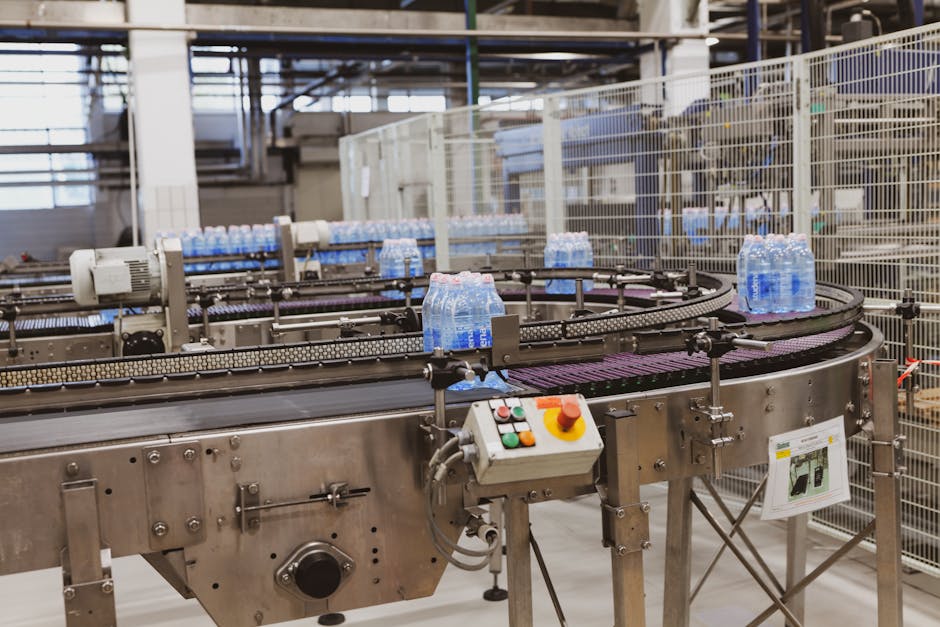
- The robot sorted incoming packages on a live conveyor system, identifying items, determining destinations, and placing them on outbound lines.
- The test highlighted the robot’s ability to adapt to varying package types and operate with minimal downtime.
Figure AI has demonstrated a breakthrough in practical robotics by completing an 8-day, 24/7 autonomous package-sorting operation with its humanoid robot—an unprecedented 192-hour run without human intervention. Conducted in a live industrial environment, this continuous performance moves far beyond the typical staged demonstrations that have long defined the robotics field. For the first time, a humanoid system has proven it can maintain operational consistency over days, handling real logistics tasks with minimal downtime. This milestone matters because it signals that AI-driven robots may soon transition from lab curiosities to reliable workforce contributors, particularly in labor-intensive sectors like warehousing and distribution where consistency and endurance are critical.
What Changed in Figure AI’s 8-Day Robot Test?

Until now, most public demonstrations of humanoid robots have been carefully choreographed, often featuring pre-programmed movements or reset cycles between tasks. Figure AI’s recent livestreamed experiment breaks from that pattern by showcasing sustained, autonomous operation in a real-world setting. Over eight days, the robot sorted incoming packages on a live conveyor system, identifying items, determining destinations, and placing them on outbound lines—all without manual resets or scripted sequences. The robot reportedly operated for 23.5 hours per day on average, with brief pauses for battery swaps, and adapted to varying package sizes and weights using real-time computer vision and AI decision-making. This shift from episodic performance to continuous operation marks a fundamental change in how humanoid robots are being evaluated—not by how well they perform one task, but by how long they can keep working.
What Evidence Supports This Leap in Robotic Autonomy?

The evidence comes from a widely circulated livestream on Reddit’s r/OpenAI, where users observed the robot functioning in real time across multiple days (via Reddit thread). Unlike edited highlight reels, the unedited stream showed the robot making corrections, recovering from misaligned grabs, and continuing after minor jams—behaviors indicative of robust AI feedback loops. While Figure AI has not yet released technical documentation, the consistency of the performance suggests advances in both hardware durability and AI resilience. Industry experts point to improvements in sensor fusion, reinforcement learning, and edge computing as likely enablers. As MIT Robotics Lab researcher Dr. Elena Torres noted in a recent Reuters report on autonomous systems, “The real test isn’t if a robot can pick up a box once—it’s if it can do it 10,000 times without failing.” Figure’s 8-day run appears to meet that benchmark.
Are There Skeptics About the Robot’s Real-World Readiness?

Despite the apparent success, some robotics engineers urge caution in interpreting the test as full commercial readiness. Critics argue that sorting packages in a controlled warehouse environment—while impressive—is still a narrow task compared to the unpredictable challenges of broader human workspaces. Dr. Marcus Chen, a roboticist at UC Berkeley, told The Guardian that “long-duration operation is a milestone, but scalability and cost-effectiveness remain unresolved” (The Guardian, Apr 2024). Others note that battery life and maintenance cycles were likely optimized for the test and may not reflect real-world fleet operations. Additionally, the absence of published failure rates, error logs, or independent verification means some experts remain cautious about claims of full autonomy. There’s also concern that public enthusiasm could outpace technical maturity, leading to premature deployment in jobs where reliability is non-negotiable.
What Are the Real-World Implications of Sustained Robotic Labor?

For industries like e-commerce, logistics, and third-party fulfillment, the implications are profound. Amazon and FedEx, for example, face persistent labor shortages and high turnover in sorting facilities—problems that durable, round-the-clock robots could help solve. If Figure AI’s technology scales, companies could reduce reliance on human night shifts, cut injury rates, and increase throughput during peak seasons. Early adopters may begin pilot integrations within 12 to 18 months, particularly in facilities where tasks are repetitive and environments are semi-structured. However, the rise of autonomous labor also raises socioeconomic questions, including job displacement and the need for workforce retraining. Union leaders and labor economists warn that without policy safeguards, widespread automation could deepen inequality in blue-collar sectors.
What This Means For You
If you work in or rely on logistics, manufacturing, or supply chain operations, this advancement suggests that humanoid robots may soon become a routine part of the workplace. For consumers, it could mean faster, more reliable delivery times as fulfillment centers operate with greater efficiency. But it also underscores the urgency of preparing for an AI-augmented economy—whether through skill development, policy advocacy, or organizational planning. The era of robots that merely perform stunts is ending; the era of robots that work is beginning.
Now that sustained autonomy has been demonstrated, the next critical question is: Can Figure AI and others replicate this performance across multiple robots, diverse environments, and more complex tasks—while keeping costs low enough for mass adoption? The answer will determine whether this 8-day run was a one-off triumph or the start of a new industrial chapter.
Source: V