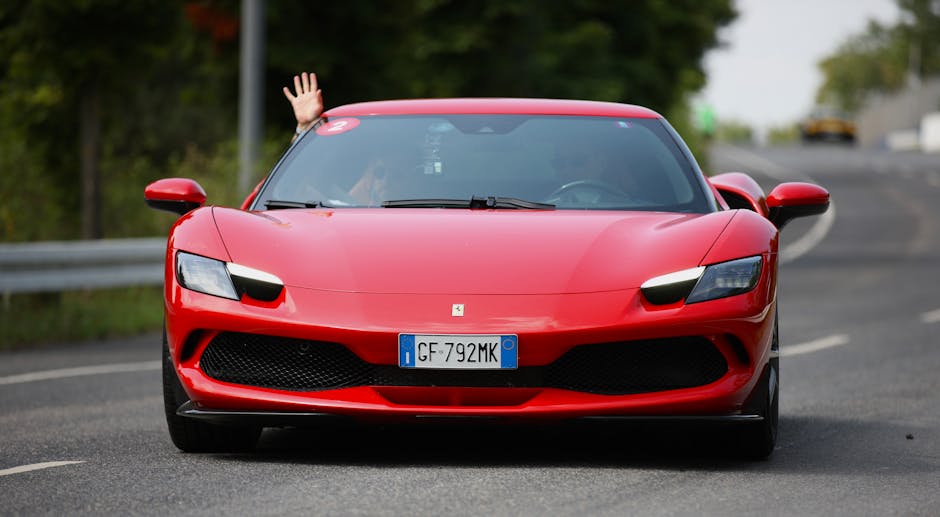
- Ferrari has officially entered the electric vehicle market with its first fully electric car, the Luce, after 76 years of producing combustion engines.
- The Luce features an 800-volt battery architecture enabling a 300-mile range and 15-minute fast charging.
- The move is a response to tightening EU emissions regulations and investor pressure to modernize the brand.
- The Luce signals that even traditional luxury automakers must adapt to electrification to avoid obsolescence.
- The Ferrari Luce is a dual-motor all-wheel-drive system delivering over 1,000 horsepower and a 0-60 mph time under 2.5 seconds.
Ferrari has unveiled its first fully electric vehicle, the Luce, marking a historic shift for the 76-year-old Italian automaker known for its roaring V12 engines. The 800-volt battery architecture enables a 300-mile range and 15-minute fast charging, positioning Ferrari within the high-performance EV segment dominated by Tesla, Porsche, and emerging Chinese brands like NIO and BYD. This move responds to tightening EU emissions regulations and investor pressure to modernize, but it also risks alienating purists who associate the brand with internal combustion. The Luce matters now because it signals that even the most traditional luxury automakers must adapt or face obsolescence in a rapidly electrifying global market.
What Does the Ferrari Luce Reveal About the Brand’s Electric Future?

The Luce, meaning “light” in Italian, represents Ferrari’s official entry into the battery-powered era after years of hesitation. Unlike earlier hybrid models such as the SF90 Stradale, the Luce features no combustion engine, relying solely on a dual-motor all-wheel-drive system delivering over 1,000 horsepower and a 0–60 mph time under 2.5 seconds. Designed at Ferrari’s Maranello headquarters, the car retains the brand’s signature low-slung silhouette and aggressive aerodynamics while integrating new acoustic engineering to simulate engine-like feedback—a nod to emotional driving experiences. CEO Benedetto Vigna stated that the Luce is not just an EV but a “new benchmark in performance electrification,” aligning the brand with long-term EU climate goals while preserving its elite status. This signals that Ferrari aims to lead rather than follow in the luxury EV space, differentiating through performance and brand prestige rather than mass-market appeal.
How Is the Market Responding to Ferrari’s Electric Pivot?

Initial reactions have been sharply divided. Enthusiasts on platforms like Reddit and X (formerly Twitter) have criticized the Luce as a betrayal of Ferrari’s heritage, with some calling it “soulless” and “a silent supercar.” Others, particularly younger consumers and sustainability advocates, have welcomed the move, noting that even symbolically powerful brands must evolve. Financial analysts at Bernstein suggest that while early adoption may be limited, the Luce strengthens Ferrari’s long-term valuation by future-proofing its product line. Notably, Chinese EV makers such as NIO and XPeng have already captured significant share in Europe’s premium electric segment, leveraging advanced battery tech and lower price points. According to BBC News, EU regulations requiring all new cars to emit zero CO2 by 2035 are accelerating such transitions across legacy automakers. Ferrari’s late but high-stakes entry underscores a broader industry shift where even niche performance brands can no longer delay electrification.
What Are the Counterarguments to Ferrari’s EV Strategy?

Despite the momentum, skepticism remains about whether a silent, electric Ferrari can deliver the visceral experience fans expect. Automotive historian and Drive magazine contributor Tom Rubython argues that “the sound, the vibration, the mechanical feedback—these are core to the Ferrari mystique,” warning that over-reliance on synthetic audio cues may feel inauthentic. Others question the practicality of a $500,000+ EV with limited charging infrastructure in key markets like Italy and parts of Eastern Europe. Some investors worry that Ferrari is entering the EV race too late, missing the first-mover advantage enjoyed by Tesla and Porsche’s Taycan. Additionally, while the Luce avoids direct competition with mass-market EVs, its exclusivity may limit scalability. Critics also highlight that Ferrari’s overall production remains small—around 13,000 vehicles annually—raising doubts about whether electrification will materially impact global emissions, even symbolically.
What Real-World Impact Could the Luce Have on the Auto Industry?

The Luce’s greatest impact may be symbolic: if Ferrari, a bastion of analog performance, embraces full electrification, it legitimizes the technology across even the most conservative luxury segments. This could accelerate adoption among high-net-worth consumers who value both status and sustainability. Other heritage brands like Lamborghini and Aston Martin are already following similar paths, with Lamborghini planning its first EV by 2025. Moreover, Ferrari’s investment in 800-volt architecture and thermal battery management could influence future high-performance EV standards. In financial terms, the Luce may boost Ferrari’s stock by appealing to ESG-focused investors while opening new revenue streams through software-driven features and over-the-air updates. However, success will depend on execution—delivering not just power, but the emotional resonance that defines the brand.
What This Means For You
If you’re a consumer or investor, the Luce signals that the luxury automotive world is undergoing irreversible change. Traditional markers of performance are being redefined by torque, software, and sustainability, not just engine size. For enthusiasts, this may mean adjusting expectations about what a supercar should feel and sound like. For investors, Ferrari’s pivot reflects a broader trend: even iconic brands must innovate to survive regulatory and market pressures. The Luce isn’t just a car—it’s a statement about the future of mobility.
Now, the key question is whether Ferrari can preserve its emotional appeal in a silent, electric age. Can synthetic soundscapes and instant torque replace the roar of a V12? And as Chinese EV makers continue to innovate at lower price points, will Ferrari’s exclusivity remain a strong enough differentiator in a crowded, tech-driven market? The answer may shape the next century of automotive design.
Source: BBC