- Assemblymember Zohran Mamdani proposes a ‘moral budget’ with no cuts to housing, transit, or education to address NYC’s $7.4 billion deficit.
- The budget targets 12,000 of the city’s highest earners with a 4.5% surcharge on personal income exceeding $2 million annually.
- The proposal aims to generate $5.1 billion in new revenue from the surcharge and close corporate tax loopholes.
- Unused pandemic-era relief funds will be redirected to support the city’s budget.
- The budget challenges traditional austerity logic by prioritizing redistributing wealth over cutting spending.
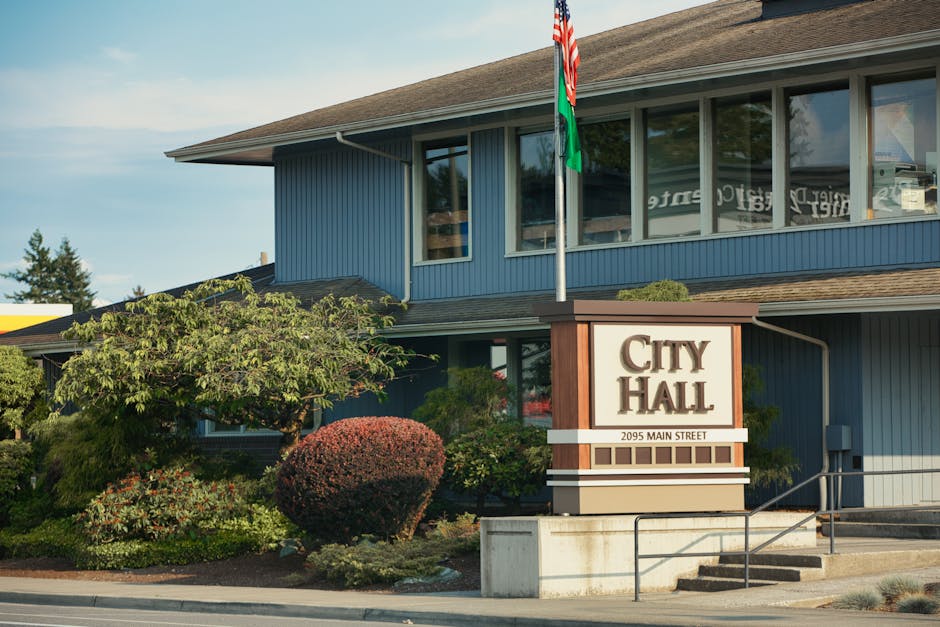
On a damp spring morning in Lower Manhattan, the usual hum of traffic along Broadway was drowned out by the chants of demonstrators gathered outside City Hall. Some waved signs reading “Tax the Rich, Not the Rent!” while others held up charts showing yawning budget gaps and soaring inequality. Inside, State Assemblymember Zohran Mamdani stood before a press corps and a panel of economists, unveiling what he called a “moral budget”—one that not only closes New York City’s $7.4 billion deficit but does so without cuts to housing, transit, or education. The room buzzed with skepticism and hope in equal measure. For decades, fiscal crises in the nation’s largest city have been met with austerity, layoffs, and service reductions. Mamdani’s plan dared to ask: what if the solution isn’t cutting spending—but redistributing wealth?
The Budget That Defies Austerity Logic

Mamdani’s proposed city budget claims to eliminate the projected $7.4 billion shortfall over the next fiscal year through a combination of new revenue streams and targeted reallocations. Central to the plan is a proposed 4.5% surcharge on personal income exceeding $2 million annually—targeting an estimated 12,000 of the city’s highest earners. The measure is projected to generate $5.1 billion in new revenue. Additional funding comes from closing corporate tax loopholes, expanding the commercial rent tax on high-value properties, and redirecting unused pandemic-era relief funds. Notably, the budget avoids layoffs in uniformed services and maintains funding for universal pre-K and NYC’s subway maintenance program. While the plan is not yet law—requiring approval from the City Council and cooperation from Albany—it has ignited a fierce debate over what constitutes fiscal responsibility in an era of extreme wealth concentration. As The New York Times noted, the proposal challenges the long-standing assumption that deficits must be closed on the backs of the working class.
How New York’s Fiscal Crisis Escalated

The current deficit stems from a confluence of post-pandemic economic shifts and structural underfunding. After the 2020 lockdowns, New York City lost nearly 600,000 jobs, eroding its tax base. Remote work reduced foot traffic in commercial districts, slashing sales and property tax revenues. At the same time, increased demand for social services—homelessness shelters, mental health programs, and public transit subsidies—strained the budget. The city’s reliance on volatile income tax revenue, which accounts for nearly 45% of its general funds, made it especially vulnerable to Wall Street’s fluctuations. Previous administrations responded with temporary fixes: borrowing against future revenues, delaying infrastructure projects, and relying on federal aid. But as federal support expired and interest rates climbed, a $7.4 billion gap emerged. Economic analysts at the NYU Wagner School have long warned that without structural reform, the city would face recurring crises—setting the stage for Mamdani’s intervention.
The Architect Behind the Alternative

Zohran Mamdani, a 32-year-old Democratic Socialist and Queens Assemblymember, has built his political career on challenging orthodoxies. Born in Uganda to Tamil refugee parents and raised in Long Island, he cut his teeth organizing tenant unions and leading climate strikes. Elected in 2020, he co-founded the Democratic Socialists of America’s electoral wing in New York and has consistently advocated for rent cancellation, public housing expansion, and a Green New Deal for cities. His budget is not merely a fiscal document but a political manifesto—one that frames economic justice as inseparable from racial and environmental justice. Advisors close to the plan, including economist Julie Su and former NYC Budget Director David Dyssegaard Kallick, emphasize that the proposal is grounded in data, not ideology. “This isn’t about punishing success,” Kallick stated in a recent briefing. “It’s about asking those who benefited most from the city’s recovery to pay their fair share.”
Winners, Losers, and Unintended Consequences

If enacted, Mamdani’s budget would reshape New York’s economic landscape. Middle- and low-income residents stand to benefit from stabilized services and potential rent regulation expansions. Homeless shelters, public schools, and the MTA would see sustained funding, averting the cuts that typically accompany deficits. However, critics warn of unintended fallout. The Real Estate Board of New York cautions that higher taxes on luxury properties and commercial rents could discourage investment and reduce construction jobs. Some fiscal conservatives argue the surcharge might prompt wealthy residents to relocate to Connecticut or Florida, eroding the tax base. Yet historical precedent offers nuance: after California enacted a similar millionaire tax in 2022, state revenues rose without mass exodus, according to Reuters. The bigger risk may be political—whether moderate Democrats and Republicans in Albany will support such a progressive overhaul.
The Bigger Picture
Mamdani’s budget transcends New York. It represents a growing movement among younger policymakers to redefine fiscal responsibility—not as balance-sheet orthodoxy, but as a tool for equity. Cities like Seattle and Boston have floated similar wealth taxes, inspired by research showing that extreme inequality undermines long-term economic stability. The proposal also reflects a shift in public opinion: a 2025 Quinnipiac poll found that 58% of New Yorkers support higher taxes on incomes over $1 million. In an age of climate emergencies and housing shortages, Mamdani’s plan asks whether governments should manage scarcity—or engineer fairness.
What comes next hinges on coalition-building and political will. The City Council is expected to debate the plan over the summer, with amendments likely. Even if the full surcharge fails, elements of the budget—such as corporate loophole closures and green infrastructure investments—may survive. Mamdani has vowed to keep pushing, framing the fight as existential. “We’re not just balancing a budget,” he said in his closing remarks. “We’re deciding what kind of city we want to live in.” Whether that vision becomes reality may determine the future of urban economics in America.
Source: Reddit