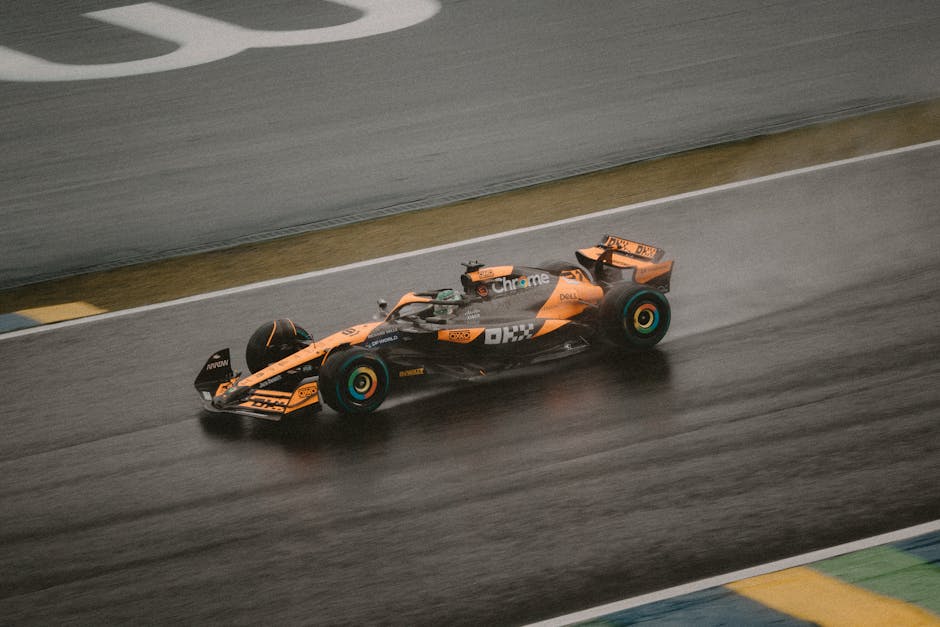
- A 70% chance of precipitation is forecast for the 2026 Canadian Grand Prix, with up to 15mm of rain expected to fall during the two-hour race.
- The unpredictable weather conditions could lead to ‘absolute chaos’ on the track, with minor errors potentially being magnified.
- The Canadian GP has a history of dramatic turnarounds in wet conditions, including Lewis Hamilton’s 2011 victory from 8th on the grid.
- The race has become a pivotal battleground in the 2026 championship, with just 28 points separating the top four drivers.
- New hybrid power units and revised aerodynamic regulations have narrowed performance gaps between teams, adding to the tactical complexity of the race.
Formula 1 faces its most unpredictable race of 2026 so far, with a 70% chance of precipitation forecast for Sunday’s Canadian Grand Prix at the Circuit Gilles Villeneuve. According to meteorological models from Environment Canada, up to 15 millimeters of rain could fall during the two-hour race window, potentially drenching the 4.361-kilometer Montreal track for more than half the race distance. Max Verstappen, the four-time world champion, described the conditions as a recipe for “absolute chaos,” warning that even minor errors could be magnified under slippery track conditions. With title contenders closely bunched in the standings and tire strategy hanging on weather timing, the stage is set for one of the most tactically volatile races in recent memory. Past editions of the Canadian GP have delivered dramatic turnarounds in wet conditions, including Lewis Hamilton’s remarkable 2011 victory from 8th on the grid amid torrential downpours.
Why This Race Could Rewrite the Season

The significance of the Canadian Grand Prix has grown beyond its traditional mid-season slot, now serving as a pivotal battleground in what has become a tightly contested 2026 championship. After five races, just 28 points separate the top four drivers—Max Verstappen, Lando Norris, Charles Leclerc, and rookie sensation Isack Hadjar—making every position crucial. The introduction of new hybrid power units and revised aerodynamic regulations this season has narrowed performance gaps between teams, increasing the role of driver skill and racecraft, especially in adverse conditions. Montreal’s circuit, known for its mix of long straights, tight chicanes, and concrete-lined walls, becomes even more treacherous when wet, with limited runoff areas amplifying the risk of collisions. With Pirelli introducing a new C4 compound designed for intermediate grip, teams are facing uncharted territory in managing tire wear and degradation under fluctuating conditions.
Verstappen Leads Warnings Amid Weather Fears

Max Verstappen, who has dominated wet-weather performances over the past three seasons with Red Bull Racing, voiced concerns during Friday’s press conference, stating, “When it rains here, it doesn’t just sprinkle—it pours, and the track becomes a skating rink.” His comments echoed growing anxiety among drivers and engineers, as the FIA confirmed that the DRS zones would remain active regardless of conditions, increasing the speed differential between cars on straights. Red Bull’s chief race engineer revealed that the team has been running hundreds of simulation models to anticipate rain onset, but uncertainties in the forecast make real-time decisions critical. Meanwhile, Mercedes has quietly upgraded their brake cooling system to handle prolonged use in wet braking zones, while Ferrari opted to skip final practice to conserve intermediate tires. With qualifying already delayed by two hours due to morning showers, the weekend has already deviated from the norm.
Meteorological Models and Race Strategy Dynamics

Advanced forecasting from Reuters Climate Analytics suggests a low-pressure system moving across Quebec will deliver intermittent but heavy rainfall between 1:30 PM and 4:00 PM local time—precisely overlapping with the race window. This creates a complex tactical puzzle: teams must decide whether to start on full wets, intermediates, or even risk slicks in a drying scenario. Historically, misjudgments in tire choice have cost championships; in 2011, McLaren’s hesitation to switch to intermediates handed victory to Hamilton. Data from the last five Canadian GPs shows that finishing position correlates more strongly with tire timing than raw pace in wet conditions. Engineers at McLaren and Alpine have been analyzing moisture absorption rates on asphalt samples from the circuit, noting higher-than-average water retention due to recent resurfacing. These variables could force split strategies, potentially fragmenting the field into multiple competitive groups.
Implications for Drivers and Constructors

If rain materializes as predicted, the Canadian GP could disproportionately impact both the drivers’ and constructors’ championships. Younger drivers like Oscar Piastri and Hadjar, who have limited experience in full wet races, may struggle under pressure, while veterans such as Fernando Alonso and Lewis Hamilton could leverage decades of wet-weather expertise. Mistakes could be costly: with only five DNFs allowed before jeopardizing title math, reliability and composure will be tested. For constructors, tire allocation becomes critical—each team is limited to just four sets of intermediate and three sets of full wet tires for the weekend. A premature deployment could leave teams stranded if conditions deteriorate late in the race. Additionally, safety car periods triggered by incidents could bunch the field, erasing hard-earned gaps and amplifying the role of pit-wall decision-making.
Expert Perspectives
Former F1 race director Michael Masi believes the chaos Verstappen anticipates is both inevitable and necessary. “Wet races are where legends are made,” he said in an interview with BBC Sport. “They test every element of the sport—technology, nerve, and teamwork.” Conversely, safety advocate and ex-driver Nico Rosberg has urged the FIA to consider shortening the race if standing water exceeds 10mm, citing visibility and aquaplaning risks. “We’ve seen too many close calls,” Rosberg warned. “One major crash in these conditions could set the sport back years in terms of safety perception.”
As teams finalize their wet-weather protocols, all eyes will be on the sky above Montreal. Even a 30-minute delay could alter strategy completely. If the rain holds off, favoring dry racing, the battle may come down to pit-stop precision and tire management. But if Verstappen’s prediction comes true, the 2026 Canadian Grand Prix could be remembered not for who was fastest, but for who best survived the storm—both on track and in the war room.
Source: Sky Sports