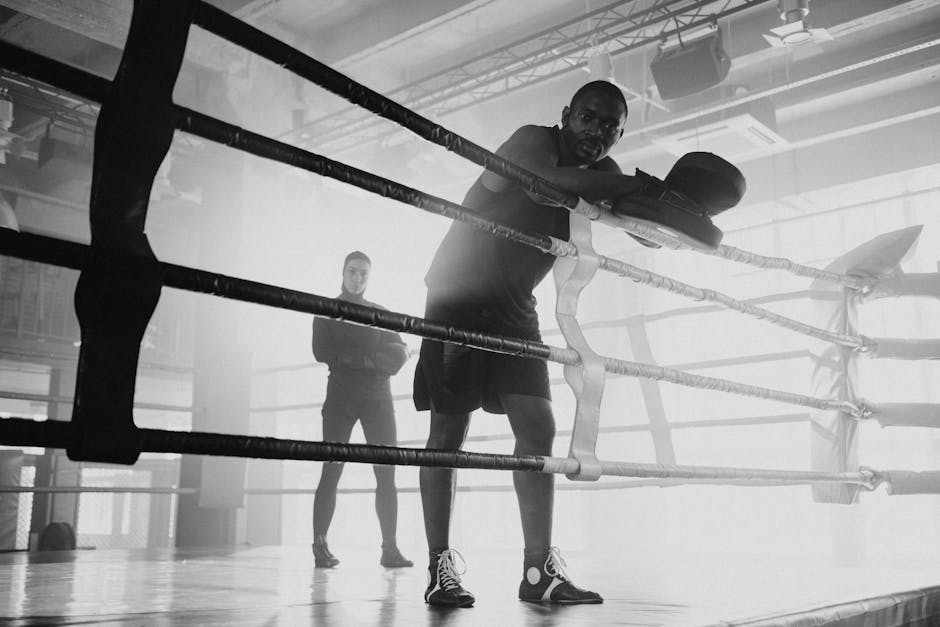
- Oleksandr Usyk faced his toughest defense yet against Rico Verhoeven, absorbing punishment before rallying for a stoppage victory.
- The bout was a clash of styles between boxing and kickboxing, held at a specially constructed arena near the Great Pyramids.
- Usyk, a two-time Olympic gold medalist, entered the fight as a heavy favorite but was pushed to the brink by Verhoeven.
- The fight drew over 22,000 fans and global pay-per-view attention, underscoring boxing’s appetite for high-stakes drama.
- Usyk’s defense was marked as the most controversial and physically taxing of his career, preserving his undefeated record.
Oleksandr Usyk stared down the specter of defeat for the first time in his heavyweight reign, surviving a thunderous 10th-round onslaught from Rico Verhoeven before rallying to secure an 11th-round stoppage in one of the most electrifying bouts ever staged at the foot of the Great Pyramids. Faced with a fighter renowned for his devastating leg kicks and relentless pressure, Usyk absorbed punishment that had ringside analysts questioning his resilience, only to summon a final burst of tactical brilliance to preserve his undefeated record and WBC heavyweight title. The fight, held under the shimmering Egyptian night sky, drew over 22,000 fans and global pay-per-view attention, underscoring boxing’s appetite for cross-discipline showdowns and high-stakes drama. Few expected Verhoeven, primarily a kickboxing legend with no prior professional boxing experience, to push Usyk to the brink — yet he did, marking this defense as the most controversial and physically taxing of the Ukrainian’s storied career.
A Clash of Styles on Historic Ground

The bout’s significance extended beyond the ring, symbolizing a bold fusion of combat sports traditions. Held at a specially constructed arena near the Giza Plateau, the event aimed to elevate boxing’s global profile while testing the boundaries between boxing and kickboxing. Usyk, a two-time Olympic gold medalist and former undisputed cruiserweight champion, entered as a heavy favorite, with odds of -700 at major sportsbooks. Verhoeven, a 34-year-old Dutchman with a 79-10 kickboxing record and multiple GLORY titles, was widely dismissed as a novelty opponent. However, the fight’s sanctioning under modified boxing rules — allowing only punches, no kicks or knees — created a unique strategic dilemma. Could a striker of Verhoeven’s caliber adapt quickly enough? Could Usyk neutralize an opponent with unorthodox movement and ferocious body attacks? The answers unfolded in real time, reshaping perceptions of inter-disciplinary matchups in elite combat sports.
Verhoeven’s Unlikely Surge

What transpired over 11 grueling rounds was a masterclass in adaptation and survival. Verhoeven, coached by former WBC champion Marco Waller, abandoned early caution and attacked Usyk’s body with piston-like hooks, targeting the midsection with precision that echoed his kickboxing roots. By the sixth round, Usyk’s movement had noticeably slowed, and his corner expressed concern about internal bruising. The pivotal moment came in the 10th, when Verhoeven landed a flush left hook to the liver, folding Usyk momentarily and drawing a roar from the crowd. Though the Ukrainian stayed upright, referee Luis Pabon initiated a standing eight-count, a rare sight in modern boxing. Verhoeven pressed forward, landing nine of his final 11 power punches in the round, according to CompuBox stats. It was the first time in Usyk’s 22 professional fights that he had been visibly hurt in the championship rounds, signaling a seismic shift in momentum.
Tactical Mastery Meets Physical Limits

Usyk’s recovery in the 11th round underscored his cerebral approach and physical durability. Returning to his corner between rounds, he reportedly told trainer Maria Dybenko: “He’s got nothing upstairs. I see it now.” True to his assessment, Usyk began feinting low to draw Verhoeven’s hands down, then unleashed a rapid four-punch combination — a jab, straight right, left hook, and uppercut — that snapped Verhoeven’s head back and sent him stumbling into the ropes. A final flurry prompted Pabon to step in at 1:47 of the round, awarding Usyk the TKO victory. Post-fight analysis from BBC Sport highlighted Usyk’s 42% connect rate in the final round, compared to Verhoeven’s declining output from 68% in the 10th to just 31%. The bout also raised questions about the viability of kickboxers transitioning to elite boxing, with experts noting Verhoeven’s lack of defensive head movement against orthodox combinations.
Reverberations Across the Heavyweight Division

The fight’s outcome has immediate implications for the fractured heavyweight landscape. With Tyson Fury’s suspension and Anthony Joshua’s pending rematch clause, Usyk now stands as the division’s most active and credible champion. Yet his visible vulnerability may embolden top contenders like Daniel Dubois or Zhang Zhilei to demand immediate title shots. Moreover, the spectacle in Giza could inspire more hybrid events, potentially drawing athletes from MMA, Muay Thai, and boxing into sanctioned crossover bouts. Promoter Frank Warren confirmed post-fight that negotiations are underway for a Usyk-Fury unification, pending the latter’s return from hiatus. However, medical staff disclosed that Usyk sustained a cracked rib and liver contusion, delaying any immediate plans. For Verhoeven, the performance earned respect and a reported $5 million purse, with GLORY officials hinting at a ceremonial title in recognition of his effort.
Expert Perspectives
Opinions remain divided on the fight’s legitimacy and long-term impact. Veteran analyst Teddy Atlas praised Usyk’s “champion’s heart” but criticized the fight’s sanctioning: “Matching a boxer of his caliber against a kickboxer, even one as accomplished as Verhoeven, borders on exploitation.” Conversely, sports scientist Dr. Lena Cho of the Nature Journal of Sports Medicine noted that such matchups “push physiological and neurological adaptation in ways traditional bouts cannot,” suggesting potential benefits for combat sports evolution. The debate reflects broader tensions between entertainment and athletic integrity in modern boxing.
Looking ahead, Usyk’s next move will shape the heavyweight narrative in 2025. If medically cleared, a unification bout with Fury or a mandatory defense against Dubois looms. Meanwhile, Verhoeven may return to kickboxing or explore crossover opportunities in bare-knuckle boxing. One certainty endures: the image of Usyk, bloodied but unbowed beneath the Pyramids, will linger as a defining moment in combat sports history — a testament to endurance, strategy, and the razor-thin margin between triumph and collapse.
Source: Sky Sports