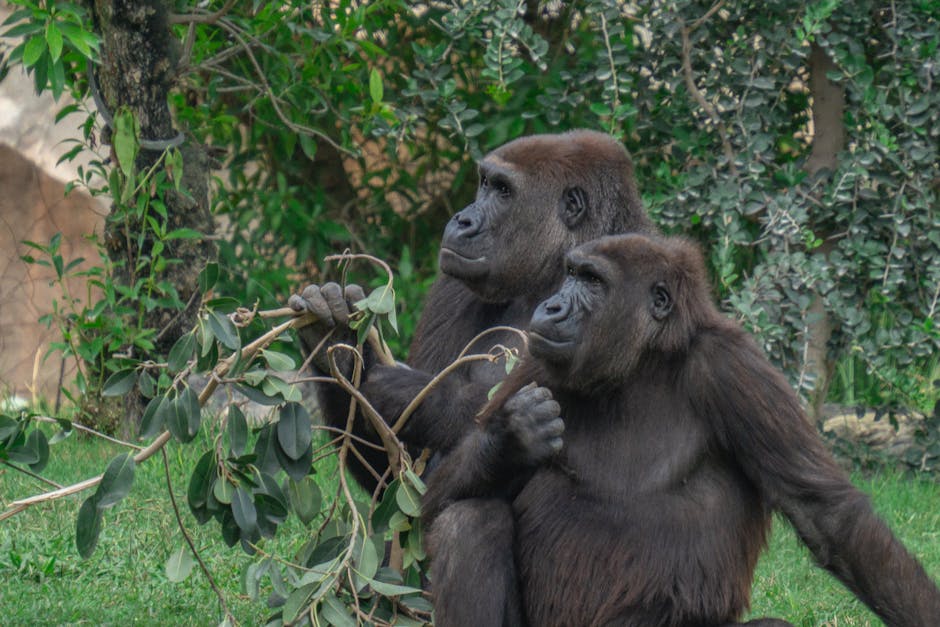
- The ‘Planet of the Apes’ reboot has successfully evolved with intelligence and moral complexity, defying the trend of most modern franchises.
- The series has delivered three critically acclaimed sequels since its revival in 2011, expanding its narrative universe and deepening its philosophical core.
- The upcoming film will reportedly continue the story decades after Caesar’s death, exploring the splintering of ape civilizations into tribes with conflicting ideologies.
- The franchise operates on a deeper wavelength, focusing on empathy, evolution, and the question of what it means to be human.
- The announcement of a fifth installment has reignited hope and curiosity among fans and critics alike, solidifying the series’ relevance in 21st-century cinema.
Deep in the redwood forests of northern California, a quiet colony of apes gathers at dawn. Caesar, once a symbol of rebellion and reason, is gone—but his legacy endures in the wary eyes of those who survived the war for Earth. The air hums with tension, not from machines or weapons, but from the fragile trust between species on the brink of collapse. This is not a scene from a new film—yet—but it could be. The announcement of a fifth installment in the reimagined ‘Planet of the Apes’ saga has reignited hope and curiosity among fans and critics alike. Unlike most modern franchises built on spectacle, this series has always operated on a deeper wavelength: one of empathy, evolution, and the haunting question of what it means to be human.
The Franchise Reaches a New Frontier

The confirmation of a fifth ‘Planet of the Apes’ film marks a rare achievement in 21st-century cinema: a sci-fi reboot that has not only endured but evolved with intelligence and moral complexity. Originally revived in 2011 with ‘Rise of the Planet of the Apes,’ the series has since delivered three critically acclaimed sequels—’Dawn’ (2014), ‘War for the Planet of the Apes’ (2017), and ‘Kingdom of the Planet of the Apes’ (2024)—each expanding the narrative universe while deepening its philosophical core. The upcoming film, still untitled, will reportedly continue the story decades after Caesar’s death, exploring how ape civilizations have splintered into tribes with conflicting ideologies. According to Reuters, the project is already in early development at 20th Century Studios, with longtime collaborators attached in advisory roles. What sets this announcement apart is not just its timing, but its implication: this franchise refuses to devolve into formula.
How the Apes Rose From the Ashes

The original ‘Planet of the Apes’ series, launched in 1968, was a product of Cold War anxieties and civil rights tensions, using primate dominance as an allegory for human folly. After decades of uneven sequels and a poorly received 2001 reboot by Tim Burton, the franchise seemed destined for irrelevance. Then came ‘Rise,’ a surprisingly nuanced origin story grounded in real-world concerns about genetic engineering and animal testing. The film introduced Caesar, a chimpanzee enhanced by the experimental ALZ-112 virus, whose intelligence outpaces his human caretakers. What followed was a trilogy that mirrored the arc of revolutions—idealism, conflict, and tragic sacrifice—rendered with motion-capture performances so lifelike they redefined digital acting. The 2024 sequel, ‘Kingdom,’ shifted focus to a new generation, proving the world could thrive beyond its central hero. Its success—both artistic and commercial—laid the foundation for this latest chapter.
The Minds Behind the Myth

The reboot’s sustained brilliance owes much to a dedicated creative core. Director Matt Reeves, who helmed ‘Dawn’ and ‘War,’ helped shape the trilogy’s somber tone and character-driven stakes before moving on to ‘The Batman.’ Andy Serkis, whose portrayal of Caesar remains one of the most expressive performances in digital cinema, brought emotional gravity to the role, earning widespread acclaim despite Oscar snubs. Writers Mark Bomback and Rick Jaffa & Amanda Silver wove scientific plausibility into the narrative, grounding ape language development and viral mutation in real biological concepts. Even the composers, like Michael Giacchino and now John Paesano, used leitmotifs to echo the emotional lineage between generations. These artists didn’t just reboot a franchise—they treated it as a living chronicle of civilization’s fragility.
What This Means for Sci-Fi and Society

The return of ‘Planet of the Apes’ isn’t merely good news for fans; it signals a rare continuity in genre storytelling that prioritizes theme over spectacle. In an era of cinematic universes built on easter eggs and franchise synergy, this series has remained focused on moral ambiguity, ecological collapse, and the cyclical nature of power. Its depiction of ape cultures developing religion, language, and warfare invites viewers to reflect on human history through a distorted mirror. For scientists, particularly in primatology and cognitive ethology, the films offer a dramatized but thoughtful exploration of animal intelligence and social evolution. Educators have used clips in classrooms to discuss bioethics, while environmental groups have cited the franchise’s warnings about ecological imbalance. A fifth film could further explore how knowledge is preserved—or weaponized—across generations.
The Bigger Picture
At its best, science fiction does not predict the future but interrogates the present. The ‘Planet of the Apes’ reboot has done this with rare consistency, using its premise to examine colonialism, trauma, and the ethics of intelligence. Its longevity proves that audiences crave depth, not just destruction. As real-world debates over AI, genetic modification, and interspecies rights intensify, the franchise’s themes grow more urgent. A new film arriving in this context isn’t escapism—it’s a continuation of a vital conversation about who gets to rule, and why.
What comes next may be the most challenging chapter yet: a world where humans are no longer central, where apes debate philosophy, wage wars, and reinterpret the myths of their origins. The fifth ‘Planet of the Apes’ film has the chance to go beyond survival stories and ask what civilizations are built on—and what they’re willing to destroy to endure. If the past is any guide, this underrated franchise will once again say more about humanity than any human-centric story could.
Source: New Scientist