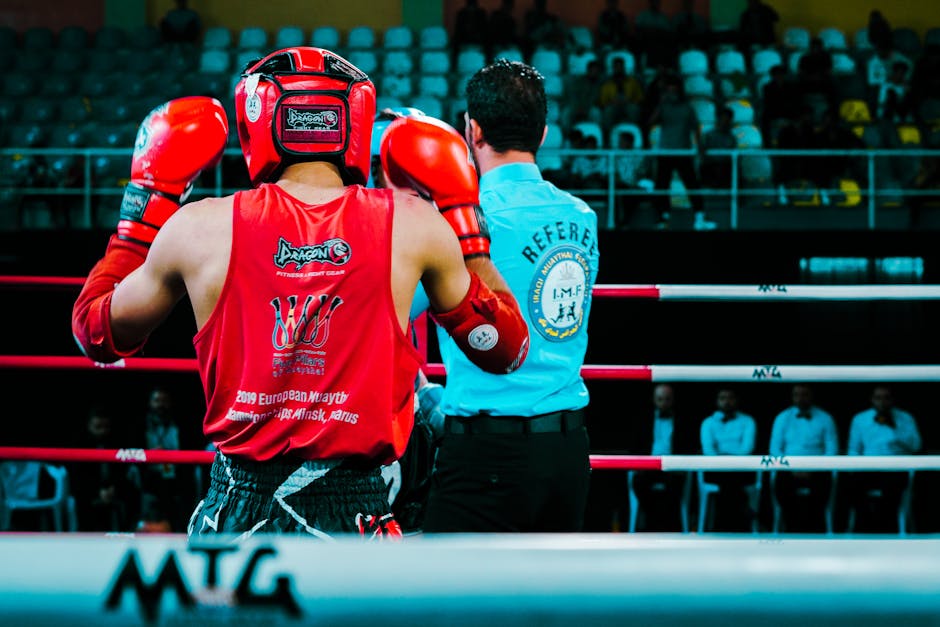
- Oleksandr Usyk retained his heavyweight titles against Rico Verhoeven in a bout that ended with a referee’s decision.
- The stoppage sparked outrage among fans, analysts, and former fighters, raising questions about referee judgment and fighter safety.
- Usyk dominated the fight with technical superiority, breaking down Verhoeven with sharp combinations and relentless pressure.
- Verhoeven was deemed unable to continue by referee Luis Pabon, despite still being on his feet and attempting to defend.
- The stoppage has led to concerns about the integrity of competitive outcomes in modern boxing.
Why was the fight stopped? That’s the question reverberating through the boxing world after Oleksandr Usyk retained his WBA, IBF, WBO, and IBO heavyweight titles in a bout that ended not with a knockout punch, but with a referee’s decision that many believe came far too soon. Facing kickboxing champion Rico Verhoeven in a high-profile crossover bout held in Cairo, Usyk dominated from the opening bell, but the fight was waved off in the eighth round while Verhoeven, though clearly battered, remained upright and defending himself. The stoppage has sparked outrage among fans, analysts, and former fighters alike, raising urgent questions about referee judgment, fighter safety, and the integrity of competitive outcomes in modern boxing.
What Happened in the Eighth Round?

Usyk’s technical superiority over Verhoeven, a combat sports star transitioning from kickboxing with just three professional boxing bouts to his name, was evident throughout the contest. By the eighth round, the Ukrainian had systematically broken down his opponent with sharp combinations, superior footwork, and relentless pressure. Verhoeven, while game and resilient, was taking clean, unanswered shots along the ropes when referee Luis Pabon stepped in to halt the contest with 1:42 remaining in the round. Replays showed Verhoeven still on his feet, gloves up, and attempting to defend—actions that traditionally signal a fighter’s capacity to continue. Despite this, Pabon deemed Verhoeven unable to offer effective resistance, invoking the standing eight-count rule and stopping the fight on technical knockout grounds. While Usyk’s dominance was unquestionable, the timing and justification of the stoppage have drawn sharp criticism for undermining the sport’s fairness and transparency.
What Do the Rules and Experts Say?

According to the Association of Boxing Commissions’ unified rules, a referee may stop a contest when a fighter is “taking unnecessary punishment” or is “unable to defend himself intelligently.” While the intent is to protect athletes, the application remains subjective. Veteran referee and HBO analyst Steve Smoger stated in a post-fight analysis for BBC Sport that while Verhoeven was “clearly outmatched,” the stoppage “felt premature” and “didn’t meet the threshold for intervention when a fighter is still responsive and defending.” Similarly, former WBC president Mauricio Sulaiman acknowledged the challenge referees face but emphasized consistency, noting that “fighters deserve the chance to continue unless they are clearly unconscious or defenseless.” Footage analyzed by ESPN’s boxing desk showed Verhoeven tracking punches and attempting counter-jabs moments before the stoppage, fueling the argument that the decision robbed the Dutchman of a chance to survive the round.
Are There Valid Counterarguments?

Despite widespread criticism, some experts defend the referee’s call. Dr. Margaret Hall, a ringside physician with over two decades of experience, explained in a podcast with The Ring magazine that cumulative damage—especially in a crossover athlete like Verhoeven—is not always visible. “Head trauma can accumulate silently,” she noted. “A fighter may appear alert but be at high risk of a catastrophic injury if allowed to continue.” From this medical standpoint, early intervention can be a necessary safeguard, particularly when a less experienced boxer faces an elite technician like Usyk. Moreover, Verhoeven’s limited boxing pedigree—despite his kickboxing accolades—raises questions about whether he belonged in the ring at this level. Critics argue that promoting such mismatches for spectacle increases the likelihood of controversial stoppages, regardless of the referee’s intent.
What Are the Real-World Consequences?

The fallout from the fight extends beyond a single decision. Verhoeven, despite the loss, has earned respect for stepping into the ring with a world champion, and his promoters are already discussing future boxing ventures. For Usyk, the victory maintains his undefeated record and keeps him in position for a potential rematch with Tyson Fury or a unification bout with Anthony Joshua. But the controversy may tarnish the legacy of what should have been a dominant, career-affirming performance. More importantly, the incident reignites long-standing calls for standardized officiating protocols, including mandatory video reviews for stoppages in title fights. The World Boxing Council has previously experimented with such systems, but adoption remains inconsistent across sanctioning bodies, leaving critical decisions in the hands of individual referees under intense pressure.
What This Means For You
If you’re a boxing fan, this incident underscores the importance of consistent officiating and fighter safety protocols. While Usyk’s skill was never in doubt, the manner of victory raises concerns about how fights are managed and judged at the highest level. It’s a reminder that even in a sport built on subjectivity, transparency and accountability matter. As crossover bouts between athletes from different combat disciplines grow more common, fans should demand clearer standards to preserve the sport’s integrity.
Now, a new question emerges: Should boxing adopt instant replay for stoppages, much like other major sports use for critical calls? If not, how can the sport ensure that fighter safety and competitive fairness are both upheld when the outcome hinges on a split-second decision?
Source: BBC